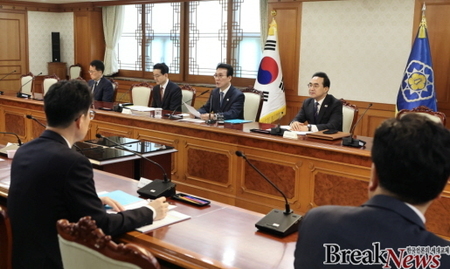
브레이크뉴스 김충열 정치전문기자 = 더불어민주당 전남광주통합특별시장 경선후보인 신정훈 국회 행정안전위원장은 16일 광주광역시의회 브리핑룸에서 비전발표회를 열고 20조 원 규모 재정 활용 구상과 1조 원 규모 청년 창업·도전 펀드 조성, 광주 미래 혁신 7대 핵심 프로젝트 추진 등을 담은 광주권 비전을 공개했다.
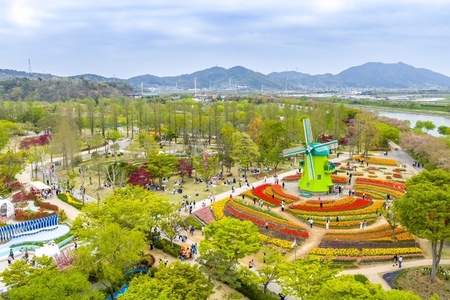
 ▲ 신정훈 후보는 전남광주특별시의 전체 발전 전략으로는 광주권·동부권·서부권의 3축 성장 전략을 제시했다. AI, 에너지, 바이오, 문화관광, 농식품, 반도체, 첨단제조 등 7대 경제 분야를 중심으로 대한민국 남부권의 새로운 성장 구조를 만들겠다는 구상이다. © 사진, 뉴시스/ 김충열 정치전문기자 |
신 후보는 이날 “광주에서 시작되는 대전환, 전남광주의 새로운 100년을 열겠습니다”라며 통합특별시의 방향을 민생 회복, 미래산업 육성, 광역 생활권 구축으로 제시했다.
특히 혁신도시 조성, 한국전력 이전, 한국에너지공과대학 설립 등 나주 발전 경험을 앞세워 “이미 나주에서 증명되었습니다. 지역은 전략과 실행으로 바뀔 수 있습니다”라고 밝히며 이를 통합특별시 성공의 동력으로 삼겠다는 뜻을 내비쳤다.
‘투자협의회’를 통해 재정 운용의 공공성과 투명성 확보
신 후보는 통합특별시에 향후 4년간 약 20조 원의 재정이 투입되는 점을 강조하며 이를 보여주기식 사업이 아니라 어민·소상공인·노동자·돌봄 노동자 등 지역 공동체의 삶을 살리는 데 우선 투입하겠다고 밝혔다. 또 시민·전문가·자치단체가 함께 참여하는 ‘통합특별시 투자협의회’를 통해 재정 운용의 공공성과 투명성을 높이겠다고 강조했다.
청년 정책으로는 1조 원 규모 청년 창업·도전 펀드 조성을 제시했다. 통합특별시 출자와 정부 모태펀드, 민간 벤처투자를 결합해 AI·에너지·문화콘텐츠·바이오 등 전략 산업과 연계하고 청년 창업 1,000개 기업 육성과 2만 개 일자리 창출을 목표로 내걸었다. 광주와 전남을 청년이 떠나는 도시가 아니라 돌아오는 도시, 외지 청년까지 찾아오는 남부권 창업 거점으로 만들겠다는 구상이다.
영산강을 광주와 전남을 잇는 관광·경제 축으로 육성하기 위한 ‘영산강 300리 물빛 자전거길’ 조성 구상도 내놨다. 광주에서 목포까지 이어지는 자전거길과 체류형 관광 인프라를 결합해 남도형 생태관광·지역경제 모델을 만들겠다고 밝혔다.
전남광주특별시의 전체 발전 전략으로는 광주권·동부권·서부권의 3축 성장 전략을 제시했다. AI, 에너지, 바이오, 문화관광, 농식품, 반도체, 첨단제조 등 7대 경제 분야를 중심으로 대한민국 남부권의 새로운 성장 구조를 만들겠다는 구상이다.
광주권 공약으로는 광주 미래 혁신 7대 핵심 프로젝트를 제시했다. 주요 내용은 △군공항 이전 부지 중심의 로봇·AI·자율주행·첨단모빌리티 산업 캠퍼스 조성 △광주천·영산강 르네상스 추진 △문화·생태·미식 관광 플랫폼 구축 △충장로 글로벌 E-스포츠·디지털 문화산업 거리 조성 △청년 창업 허브 도시 육성 △BRT 중심 교통 혁신 △디지털·AI 금융 융합 복합특구 조성 등이다.
광주권역 연계 전략도 함께 제시됐다. 신 후보는 나주를 에너지 기술 클러스터, 화순을 바이오 메디컬 산업 거점, 담양을 생태문화 관광 도시, 장성을 데이터센터·AI 전략 거점, 함평을 RE100 데이터센터·AI 농산업 거점, 영광을 청정에너지·미래모빌리티 산업 거점으로 각각 육성하겠다고 밝혔다.
신 후보는 이와 함께 “어디에서 출발하더라도 1시간 안에 이동할 수 있는 도시가 될 때 광주와 전남은 하나의 경제권이 된다”며 전남광주 초광역 생활권 구상을 제시했다. 이어 광주와 전남의 행정 경계를 넘어 산업·교통·생활이 하나로 연결되는 통합특별시를 실현하겠다고 밝혔다.
또 “통합을 설계한 사람으로서 그 통합을 반드시 성공시키겠다”며 “광주권역에서 시작된 변화가 전남과 광주 전체의 성장으로 이어지도록 만들고, 전남광주특별시를 신남방경제 중심도시로 키우겠다”고 역설했다. hpf21@naver.com
*아래는 위 기사를'구글 번역'으로 번역한 영문 기사의[전문]입니다. '구글번역'은 이해도 높이기를 위해 노력하고 있습니다.영문 번역에 오류가 있을 수 있음을 전제로 합니다.*The following is [the full text] of the English article translated by 'Google Translate'. 'Google Translate' is working hard to improve understanding. It is assumed that there may be errors in the English translation.
Shin Jeong-hoon “Announces Vision for Gwangju Region... 20 Trillion Won in Finances & 1 Trillion Won Fund Injection”
Fostering 1,000 Youth Startups... Unveiling 7 Major Future Innovation Projects
Establishing a 1 Trillion Won Youth Startup & Challenge Fund... Creating 1,000 Youth Startups / 20,000 Jobs
Break News, Political Reporter Kim Choong-lyoul = Shin Jeong-hoon, Chairman of the National Assembly’s Public Administration and Security Committee and a candidate in the Democratic Party of Korea’s primary for the Mayor of the Integrated Special City of Jeonnam-Gwangju, held a vision presentation at the Gwangju Metropolitan Council briefing room on the 16th. He unveiled the vision for the Gwangju region, which includes plans to utilize 20 trillion won in finances, establish a 1 trillion won Youth Startup & Challenge Fund, and promote seven key projects for Gwangju’s future innovation.
On this day, Candidate Shin stated, “A great transformation starting in Gwangju; I will open a new century for Jeonnam-Gwangju,” presenting the direction of the Integrated Special City as the recovery of people’s livelihoods, the fostering of future industries, and the establishment of a metropolitan living zone.
In particular, highlighting Naju’s development experience—such as the creation of the Innovation City, the relocation of KEPCO, and the establishment of the Korea Institute of Energy Engineering—he stated, “This has already been proven in Naju. A region can be transformed through strategy and execution,” signaling his intention to use this as the driving force for the success of the Integrated Special City.
**Securing Publicness and Transparency in Financial Management through the ‘Investment Council’**
Candidate Shin emphasized that approximately 20 trillion won in finances will be injected into the Integrated Special City over the next four years. He stated that this funding would be prioritized for revitalizing the lives of local communities, including fishermen, small business owners, laborers, and care workers, rather than being used for mere showpiece projects. He also stressed that he would enhance the publicness and transparency of financial management through the ‘Integrated Special City Investment Council,’ in which citizens, experts, and local governments participate together.
For youth policy, he proposed the creation of a 1 trillion won Youth Startup and Challenge Fund. By combining contributions from the Integrated Special City, government venture capital funds, and private venture investments, he aims to link this initiative with strategic industries such as AI, energy, cultural content, and biotechnology, with the goal of fostering 1,000 youth startups and creating 20,000 jobs. The plan is to transform Gwangju and Jeonnam from cities where young people leave into cities where they return, becoming a startup hub in the southern region that even attracts young people from outside the area.
A plan to create the "Yeongsan River 300-ri Water Light Bicycle Path" was also unveiled to foster the Yeongsan River as a tourism and economic axis connecting Gwangju and Jeonnam. It was announced that a Namdo-style eco-tourism and regional economy model would be created by combining a bicycle path extending from Gwangju to Mokpo with infrastructure for stay-type tourism.
As the overall development strategy for Jeonnam Gwangju Special City, a three-axis growth strategy focusing on the Gwangju, Eastern, and Western regions was presented. The vision is to establish a new growth structure for the southern region of Korea centered on seven major economic sectors: AI, energy, bio, culture and tourism, agri-food, semiconductors, and high-tech manufacturing.
As for pledges for the Gwangju region, seven core projects for Gwangju's future innovation were presented. The key points include: establishing a campus for robot, AI, autonomous driving, and advanced mobility industries centered on the former military airport site; promoting the Gwangjucheon and Yeongsan River Renaissance; building a culture, ecology, and gastronomic tourism platform; creating a global e-sports and digital culture industry street in Chungjang-ro; fostering a youth startup hub city; innovating transportation centered on BRT; and creating a complex special zone for digital and AI financial convergence.
Strategies for linking the Gwangju region were also presented. Candidate Shin stated that he would develop Naju into an energy technology cluster, Hwasun into a bio-medical industry hub, Damyang into an eco-cultural tourism city, Jangseong into a data center and AI strategic hub, Hampyeong into an RE100 data center and AI agricultural industry hub, and Yeonggwang into a clean energy and future mobility industry hub.
Along with this, Candidate Shin presented a vision for a super-regional living zone between Jeonnam and Gwangju, stating, "Gwangju and Jeonnam will become a single economic zone when they become cities that can be reached within one hour from anywhere." He went on to declare his intention to realize an integrated special city where industry, transportation, and daily life are interconnected, transcending the administrative boundaries of Gwangju and Jeonnam.
He further emphasized, “As the person who designed this integration, I will ensure its success without fail,” adding, “I will ensure that the changes initiated in the Gwangju region lead to the growth of the entire Jeonnam and Gwangju, and I will develop the Jeonnam-Gwangju Special City into a central hub for the New Southern Economy.” hpf21@naver.com