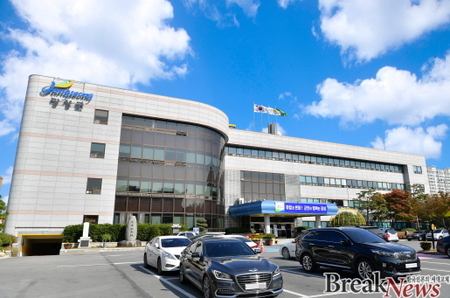
▲ 국립공주대학교 엠블럼 ©국립공주대학교 제공 |
국립공주대학교가 올해 상반기 과학기술정보통신부 개인기초연구사업에서 36개 과제가 최종 선정되며, 약 184.4억 원 규모의 연구비를 확보했다. 대학 측은 “기초연구 경쟁력과 연구자 성장 사다리 구축 성과가 가시화된 결과”라고 평가했다.
개인기초연구사업은 1986년 시작된 국내 대표 기초연구 지원 프로그램으로, 정부는 ‘기초연구 생태계 육성방안’에 따라 세종·신진·핵심연구로 이어지는 연구자 성장단계를 강화하며 올해 선정 규모를 전년 대비 25% 확대했다.
공주대는 이 같은 정책 기조에 힘입어 개인기초연구사업 신규 과제에서 최대 41%의 선정률을 기록해, 평균 선정률 24.1%를 크게 상회했다.
핵심연구(중장기·리더 연구자 육성 트랙)에는 기계자동차·미래자동차·그린스마트건축·지질환경·생명과학·지역건설·신소재·수산생명의학·스마트인프라 등 공주대 주력 분야 교수와 박사후연구원이 대거 이름을 올렸다.
김범주·이세진·전승문 교수(기계자동차공학부), 김현철 교수(미래자동차공학과), 김형국 교수(그린스마트건축공학과), 김형래 교수(지질환경과학과), 도윤호·정기화 교수(생명과학과), 박찬기 교수(지역건설공학과), 송기안 교수(신소재공학부), 이봉주 교수(수산생명의학과), 추연욱 교수(스마트인프라공학과)와 함께, 이만보·이재형 박사후연구원이 연구책임자로 선정됐다.
신진연구(우수 신진연구자 지원 트랙)에서는 수산생명의학, 생물·화학·물리 교육, 광공학, 화학·신소재·소프트웨어·기계자동차·데이터정보물리, 스마트인프라, 동물자원 등 다양한 학과의 젊은 연구자들이 포함됐다.
곽준성(수산생명의학과), 곽희진(생물교육과), 권소영(광공학과), 김보은(화학공학부), 김용강(소프트웨어학과), 박민옥(기계자동차공학부), 박신영(동물자원학과), 봉성율(화학교육과), 서준용·유동우·이찬규·표재범 교수(기계자동차공학부), 송태근·한철희 교수(데이터정보물리학과), 안이삭 교수(스마트인프라공학과), 이승훈 교수(신소재공학부), 임규상 교수(동물자원학과), 최상준 교수(물리교육과) 등이 주도적으로 참여한다.
지난 2월 27일 발표된 신진연구자 인프라지원사업에도 김홍기 교수(화학과), 정명화 교수(수산생명의학과)가 선정돼 연구 장비·환경을 안정적으로 확충할 수 있는 기반을 확보했다.
여기에 세종과학펠로우십(국내 트랙) 신규과제로 김소연 박사후연구원(생명공학연구소)이 뽑히면서, 차세대 핵심 과학기술 인재 양성에서도 의미 있는 성과를 거뒀다.
공주대에 따르면, 이번에 선정된 연구자들은 1년에서 최대 5년 동안 과제당 최대 10억 원의 지원을 받아 스마트기계, 환경, 에너지, 인공지능(AI), 바이오 등 대학의 전략 분야에서 창의적이고 독립적인 기초연구를 수행하게 된다.
*아래는 위 기사를 '구글 번역'으로 번역한 영문 기사의 [전문]입니다. '구글번역'은 이해도를 높이기를 위해 노력하고 있습니다. 영문 번역에 오류가 있을 수 있음을 전제로 합니다.<*The following is [the full text] of the English article translated by 'Google Translate'. 'Google Translate' is working hard to improve understanding. It is assumed that there may be errors in the English translation.>
Gongju National University Selected for 36 Individual Basic Research Projects by Ministry of Science and ICT…
‘Smart, AI, and Bio’ Research Gains Momentum with 18.4 Billion Won in Funding
Gongju National University (President Lim Kyung-ho) secured approximately 18.44 billion won in research funding as 36 projects were finally selected in the Ministry of Science and ICT’s Individual Basic Research Program for the first half of this year. The university assessed this as “a result in which the competitiveness of basic research and the achievements in establishing a researcher growth ladder have become visible.”
The Individual Basic Research Program is a representative domestic basic research support program that began in 1986. In accordance with the government’s ‘Plan to Foster the Basic Research Ecosystem,’ the selection scale for this year was expanded by 25% compared to the previous year to strengthen the researcher growth stages, progressing from Sejong, Emerging, to Core Research.
Leveraging this policy direction, Gongju National University recorded a selection rate of up to 41% for new projects in the Individual Basic Research Program, significantly exceeding the average selection rate of 24.1%. A large number of professors and postdoctoral researchers from Kongju National University’s core fields—including Mechanical & Automotive Engineering, Future Automotive Engineering, Green Smart Architecture, Geological Environment, Life Sciences, Regional Construction, New Materials, Fisheries & Marine Biomedicine, and Smart Infrastructure—have been named to the Core Research (Mid-to-Long-Term and Leader Researcher Development Tracks).
Professors Kim Bum-joo, Lee Se-jin, and Jeon Seung-moon (School of Mechanical & Automotive Engineering); Professor Kim Hyun-chul (Department of Future Automotive Engineering); Professor Kim Hyung-guk (Department of Green Smart Architecture); Professor Kim Hyung-rae (Department of Geological Environment); Professors Do Yun-ho and Jeong Gi-hwa (Department of Life Sciences); Professor Park Chan-gi (Department of Regional Construction Engineering); Professor Song Ki-an (School of New Materials Engineering); Professor Lee Bong-ju (Department of Fisheries & Marine Biomedicine); and Professor Chu Yeon-wook (Department of Smart Infrastructure Engineering) were selected as principal investigators, along with postdoctoral researchers Lee Man-bo and Lee Jae-hyung. The Young Researcher track (Support Track for Excellent Young Researchers) includes young researchers from various departments, such as Fisheries and Marine Biomedicine, Biology, Chemistry, and Physics Education, Optical Engineering, Chemistry, Materials Science and Engineering, Software, Mechanical and Automotive Engineering, Data and Information Physics, Smart Infrastructure, and Animal Resources.
Professors Kwak Jun-seong (Department of Fisheries and Marine Biomedicine), Kwak Hee-jin (Department of Biology Education), Kwon So-young (Department of Optical Engineering), Kim Bo-eun (School of Chemical Engineering), Kim Yong-kang (Department of Software Engineering), Park Min-ok (School of Mechanical and Automotive Engineering), Park Shin-young (Department of Animal Resources), Bong Seong-yul (Department of Chemistry Education), Professors Seo Jun-yong, Yoo Dong-woo, Lee Chan-kyu, and Pyo Jae-beom (School of Mechanical and Automotive Engineering), Professors Song Tae-geun and Han Cheol-hee (Department of Data and Information Physics), Professor Ahn Isaac (Department of Smart Infrastructure Engineering), Professor Lee Seung-hoon (School of Materials Science and Engineering), Professor Lim Kyu-sang (Department of Animal Resources), and Professor Choi Sang-jun (Department of Physics Education). Professor Hong-Ki Kim (Department of Chemistry) and Professor Myung-Hwa Jung (Department of Fisheries and Marine Biology) were selected for the New Researcher Infrastructure Support Project announced on February 27, securing a foundation to stably expand research equipment and environments.
In addition, with the selection of Postdoctoral Researcher So-Yeon Kim (Institute of Biotechnology) as a new project for the Sejong Science Fellowship (Domestic Track), significant achievements have been made in fostering next-generation core science and technology talent.
According to Kongju National University, the researchers selected this time will receive support of up to 1 billion won per project for a period of one to five years to conduct creative and independent basic research in the university's strategic fields, such as smart machinery, environment, energy, artificial intelligence (AI), and bio.
원본 기사 보기:브레이크뉴스대전세종충청