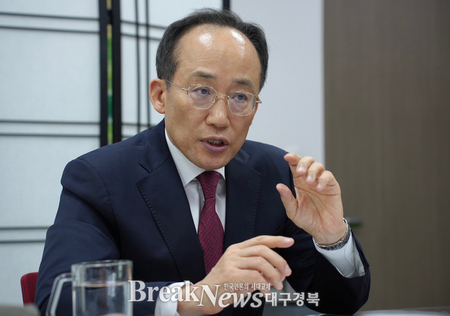
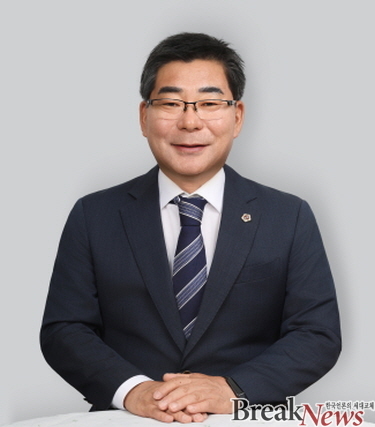
▲양기대 더불어민주당 경기도지사 예비후보 ©브레이크뉴스 |
양기대 더불어민주당 경기도지사 예비후보는 3월17일치 보도자료를 통해 “수원 본청 중심의 경기도 행정 구조를 4개 권역청 중심으로 바꾸는 행정 대개혁 실행 로드맵”을 발표했다.
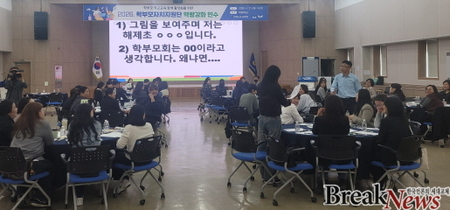
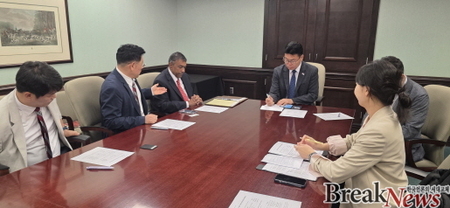
이 자료에 따르면, 양기대 예비후보는 이날 경기도의회에서 열린 ‘경기도 4개 권역청 중심 행정 대개혁’ 토론회에 참석해 “시대 변화를 뒤따라가지 못하는 경기도의 낡은 행정 구조를 갈아엎겠다”며 도지사 당선 즉시 ∆전담 TF 구성, ∆6개월 내 시범 권역청 운영, ∆2년 내 완전 전환 등 구체적인 추진 일정을 밝혔다. 이날 토론회에는 한국지방자치학회장을 지낸 전광섭 호남대 교수 등 전문가와 경기도의원, 수원 성남 안양 등 경기도 각지에서 온 도민들이 참여했다.
양기대 예비후보는 먼저 “경기도는 인구 1400만의 ‘국가급 규모’인데, 수원 본청 중심 행정 구조로는 민원도, 투자도, 갈등도 제때 해결할 수 없다”고 진단했다. 그는 이어 4개 권역청장에게 인사권, 예산 편성권, 전결권을 대폭 이양해 권역청 중심으로 기업과 일자리 문제, 각종 민원 등을 현장에서 즉시 해결하도록 하겠다고 밝혔다. 이를 통해 도민이 체감하는 행정 속도는 2배 이상 빨라지고, 불필요한 이동과 시간 낭비는 절반 이하로 줄어들 것이라고 설명했다.
양기대 예비후보가 제시한 4개 권역청은 31개 시·군의 생활권과 산업 특성을 살린 것으로 ∆북서권(평화경제청) ∆북동권(생태·관광경제청) ∆중서권(스마트행정경제청) ∆동남권(미래산업경제청)이며, 각 권역청장은 부지사급으로 임명하고, 전문성 강화를 위해 필요시 전문가 공모제를 도입할 방침이다. 이날 토론회에 참여한 전문가들도 양 예비후보의 제안에 힘을 실었다.
전광섭 교수는 “권역 단위 행정은 주민 밀착 생활 서비스와 경기도의 성장 엔진을 가속화하는 원스톱 행정 서비스가 될 것”이라며 “이것이 바로 이재명 대통령이 주창하는 실사구시형 행정 대개혁의 모델”이라고 평가했다. 재정 전문가인 이정국 가천대 겸임교수는 “경기도 예산을 권역청별로 편성하면 예산의 현장성, 효율성이 좋아질 것”이라고 강조했다. 고명곤 전 서울시 의원과 김형진 수도 국제대학원 대학교 초빙교수 역시 급변하는 산업 경제 시대에 경기도가 지향해야 할 창조적, 혁신적 행정 개혁이라며 국가 차원에서도 적극 검토해 볼만하다고 기대감을 드러냈다.
양기대 예비후보는 “광명동굴의 기적을 일궈냈던 혁신적인 마인드로 경기도 행정의 틀을 완전히 바꿔 도민의 삶이 더 빠르고 편리하게 변화하도록 만들겠다”고 강조했다.
*아래는 위 기사를 '구글 번역'으로 번역한 영문 기사의 [전문]입니다. '구글번역'은 이해도 높이기를 위해 노력하고 있습니다. 영문 번역에 오류가 있을 수 있음을 전제로 합니다.<*The following is [the full text] of the English article translated by 'Google Translate'. 'Google Translate' is working hard to improve understanding. It is assumed that there may be errors in the English translation.>
Yang Ki-dae, Democratic Party Preliminary Candidate for Gyeonggi Governor: “I Will Overhaul the Suwon-Centered Administrative Structure”
Presenting Administrative Reform Roadmap Centered on 4 Regional Offices in Gyeonggi Province
- Reporter Park Jeong-dae
Yang Ki-dae, the Democratic Party’s preliminary candidate for Gyeonggi Governor, announced a “roadmap for implementing major administrative reform to transform Gyeonggi Province’s administrative structure, currently centered on the Suwon headquarters, into one centered on four regional offices” through a press release dated March 17.
According to the document, Preliminary Candidate Yang attended a forum on “Gyeonggi Province’s Major Administrative Reform Centered on 4 Regional Offices” held at the Gyeonggi Provincial Assembly on that day. Declaring, “I will overhaul Gyeonggi Province’s outdated administrative structure that fails to keep up with the changing times,” he outlined a specific implementation schedule to be executed immediately upon his election as governor, including: ∆ forming a dedicated task force, ∆ operating pilot regional offices within six months, and ∆ a complete transition within two years. The forum was attended by experts, including Professor Jeon Gwang-seop of Honam University (former president of the Korean Association for Local Government Studies), Gyeonggi Provincial Assembly members, and residents from various parts of Gyeonggi Province, including Suwon, Seongnam, and Anyang.
Preliminary candidate Yang Ki-dae first assessed that "Gyeonggi Province is a 'national-scale' province with a population of 14 million, yet an administrative structure centered on the main office in Suwon cannot resolve civil complaints, investments, or conflicts in a timely manner." He went on to announce that he would significantly delegate personnel authority, budget formulation authority, and final decision-making authority to the heads of the four regional offices, enabling them to resolve issues related to businesses and employment, as well as various civil complaints, immediately on-site. He explained that this would more than double the speed of administration perceived by residents and reduce unnecessary travel and wasted time by more than half.
The four regional offices proposed by Preliminary Candidate Yang Ki-dae are designed to leverage the living areas and industrial characteristics of the 31 cities and counties: the Northwest Region (Peace Economy Agency), the Northeast Region (Ecology and Tourism Economy Agency), the Central-West Region (Smart Administration Economy Agency), and the Southeast Region (Future Industry Economy Agency). Each regional office head will be appointed at the level of a Vice Governor, and the plan is to introduce an open recruitment system for experts if necessary to enhance professional expertise. Experts participating in the debate that day also lent their support to the proposals of preliminary candidates Yang and Ki-dae.
Professor Jeon Gwang-seop assessed, “Regional-based administration will provide one-stop administrative services that accelerate residents’ daily lives and Gyeonggi-do’s growth engine,” adding, “This is precisely the model for the pragmatic administrative reform advocated by President Lee Jae-myung.” Lee Jeong-guk, an adjunct professor at Gachon University and a finance expert, emphasized, “If Gyeonggi-do’s budget is organized by regional offices, its practicality and efficiency will improve.” Former Seoul City Council member Ko Myeong-gon and Kim Hyung-jin, a visiting professor at Capital International Graduate University, also expressed optimism, describing it as a creative and innovative administrative reform that Gyeonggi-do should pursue in this era of a rapidly changing industrial economy, noting that it is worth actively considering at the national level.
Preliminary candidate Yang Ki-dae emphasized, “With the innovative mindset that brought about the miracle of Gwangmyeong Cave, I will completely transform the framework of Gyeonggi-do’s administration to make the lives of residents change faster and more convenient.”