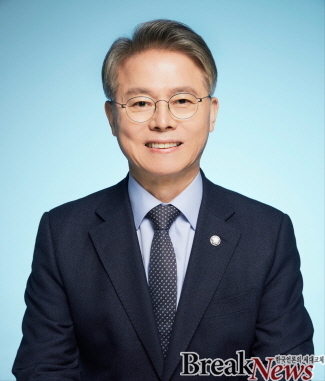
▲ 필자/김정기 칼럼니스트. ©브레이크뉴스 |
더불어민주당 김부겸 전 총리의 대구시장 출마가 가시권에 들어오면서 이번 선거의 성격은 본질적으로 달라졌다. 대구는 더 이상 안심할 수 있는 보수의 안전지대가 아니다. 마지막 보루를 지켜내느냐, 아니면 패배를 허용하느냐의 문제로 바뀌었다. 대구가 흔들리면 보수는 정치적 중심축 하나를 잃는다. 이번 선거는 지방권력의 향배를 넘어 정치 질서의 균형을 가늠하는 시험대가 되고 있다.
이런 상황에서 국민의힘이 먼저 세워야 할 기준은 분명하다. 흥행이 아니라 승리다. 선거는 축제가 아니라 경쟁이다. 누가 더 많은 이름을 올리느냐가 아니라, 누가 김부겸과 맞붙어 실제로 이길 수 있느냐가 기준이 되어야 한다. 경선에서 박수를 받는 후보와 본선에서 표를 확장하는 후보는 다를 수 있다. 지금 대구가 요구하는 것은 전자가 아니라 후자다.
최근 이진숙이 빠르게 부상하고 있다. 정권과 맞서 싸운 이미지, 탄압을 견뎌낸 상징성은 보수 지지층의 강한 결집을 이끌어내고 있다. 여기에 신인과 여성에 대한 제도적 가산점까지 더해지면 경선 구도에서는 분명 경쟁력을 가질 수 있다. 당심(黨心)이 강하게 작동하는 국면에서는 이러한 요소들이 실제 득표 이상의 효과를 내기도 한다. 이진숙이 경선판을 흔드는 변수로 떠오른 이유다. 그러나 여기서 반드시 구분해야 할 것이 있다. 경선 경쟁력과 본선 경쟁력은 다르다. 경선은 결집력이 좌우하지만, 본선은 확장성이 좌우한다. 광역단체장 선거는 구호보다 행정 안정감, 감정보다 제도 이해, 진영 결집보다 중도 확장성이 승부를 가른다. 이 점에서 이진숙은 경선형 후보에 가깝다. 반면 주호영 의원(국회 부의장)은 본선형(本選形) 후보다.
주호영 의원의 강점은 화려한 구호가 아니라 경륜이다. 국회와 당, 지역 정치를 두루 경험하며 쌓아온 제도 이해와 조직 운영 능력은 위기 상황에서 더욱 힘을 발휘한다. 무엇보다 그는 중도 확장이 가능한 구조를 갖고 있다. 이번 선거가 김부겸 전 총리라는 중량급 정치인과의 대결이라는 점을 감안하면, 감정적 동원만으로는 부족하다. 김부겸은 대구에서 당선된 경험을 가진 데다 총리까지 지낸 정치인이다. 선거는 결국 체급 싸움으로 귀결될 가능성이 크다. 이 싸움에서 필요한 것은 상징이 아니라 안정성과 확장성이다.
다른 후보들을 보더라도 기준은 크게 달라지지 않는다. 상징성은 있으나 정치력과 행정 경험이 부족한 경우, 기업 경력은 있지만 공공 행정 경험이 검증되지 않은 경우, 안정적이지만 돌파력이 부족한 경우 모두 본선 경쟁력이라는 기준 앞에서는 한계를 드러낸다. 결국 질문은 하나로 수렴된다. 김부겸을 상대로 누가 더 많은 표를 가져올 수 있는가다.
문제는 공천이다. 최근 국민의힘 대구 공천을 둘러싸고 중진 배제 가능성, 특정 후보 부각, 공관위와 후보 간 충돌이 이어지고 있다. 공정성에 대한 신뢰가 흔들리는 순간, 텃밭이라 해도 균열은 생긴다. 대구처럼 정치적 결속이 강한 지역일수록 절차에 대한 불신은 곧 표의 이탈로 이어질 수 있다. 만약 공천 과정이 자의적으로 보이고 그 결과 보수 표심이 갈라진다면, 그 틈은 상대에게 그대로 열리게 된다. 이는 단순한 변수 수준이 아니라 선거 구도를 바꾸는 요인이 된다. 승부는 외부가 아니라 내부에서 갈린다.
결국 이번 선거의 기준은 단 하나다. 누가 더 상징적인가가 아니라, 누가 더 이길 수 있는가다. 이진숙은 경선에서 강한 동력을 가진 후보다. 그러나 본선의 무게까지 감당할 수 있는지는 별개의 문제다. 주호영은 경선에서의 열광은 덜할지 몰라도, 본선에서 요구되는 안정성과 확장성에서는 더 현실적인 선택지다.
대구는 시험대다. 여기서 균열이 시작되면, 그것은 지역 하나의 문제가 아니라 보수 정치 전체의 문제로 이어진다. 공천은 인사가 아니라 전략이다. 지금 필요한 것은 새로운 얼굴이 아니라, 이길 수 있는 선택이다.
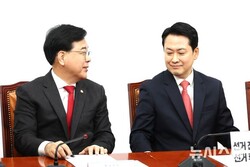
장동혁 지도부와 이정현 공관위에 솔로몬을 기대한다. *Jeongkeekim@naver.com
*필자/김정기
● 학력
- 뉴욕주립대학교(Stony Brook) 정치학과 수석 졸업
- 마케트대학교(Marquette) 로스쿨 법학박사
- 하버드대학교(Harvard) 케네디스쿨 최고위 과정
- 베이징대학교(Peking) 북한학 연구학자
● 경력
- 세계스마트시티기구(WeGO) 사무총장 (현)
- 유엔 국제전기통신연합 (UN ITU) 가상세계 및 AI 글로벌 이니셔티브 집행위원(현)
- 법무법인 대륙아주 중국 총괄 미국변호사
- 동국대학교 경영전문대학원 석좌교수
- 숭실사이버대학교 총장
- 칼럼니스트
● 저서
1. 대학생을 위한 거로영어연구[전 10권](거로출판사)
2. 나는 1%의 가능성에 도전한다(조선일보사)
3. 한국형 협상의 법칙(청년정신사)
4. 대한민국과 세계 이야기 (도서출판 책미듬)
5. Korea and the World (Advance Reader Copy).
*아래는 위 기사를 '구글 번역'으로 번역한 영문 기사의 [전문]입니다. '구글번역'은 이해도 높이기를 위해 노력하고 있습니다. 영문 번역에 오류가 있을 수 있음을 전제로 합니다.<*The following is [the full text] of the English article translated by 'Google Translate'. 'Google Translate' is working hard to improve understanding. It is assumed that there may be errors in the English translation.>
Daegu Mayoral Election: No Safe Zone!... “Joo Ho-young, Stability in the General Election”
- Columnist Kim Jung-ki
With former Prime Minister Kim Boo-kyum of the Democratic Party of Korea coming within sight of running for mayor of Daegu, the nature of this election has fundamentally changed. Daegu is no longer a safe zone for conservatives where they can feel secure. The issue has shifted to whether they can defend their last bastion or allow defeat. If Daegu falters, conservatism loses a central pillar of its political power. This election is becoming a test to gauge the balance of the political order, going beyond the direction of local power.
In this situation, the standard the People Power Party must establish first is clear. It is victory, not hype. An election is a competition, not a festival. The standard should be who can actually defeat Kim Boo-kyum, not who puts more names on the ballot. A candidate who receives applause in the primary can be different from a candidate who expands their voter base in the general election. What Daegu is demanding right now is not the former, but the latter.
Daegu Mayoral Election: No Safe Zone! ... “Joo Ho-young, Stability in the General Election”
- Columnist Kim Jung-ki
As the Democratic Party of Korea's former Prime Minister Kim Boo-kyum's candidacy, the nature of this election has fundamentally changed. Lee Jin-sook has been rapidly rising in prominence recently. Her image of having fought against the administration and her symbolic significance of having endured oppression are drawing strong support from the conservative base. When combined with institutional bonus points for being a newcomer and a woman, she can certainly be competitive in the primary election landscape. In a situation where party sentiment is strongly at play, these factors can have an effect greater than actual vote counts. This is why Lee Jin-sook has emerged as a variable shaking up the primary race. However, there is something that must be distinguished here. Competitiveness in the primary is different from competitiveness in the general election. While the primary is determined by cohesion, the general election is determined by expansiveness. In metropolitan and provincial head elections, the outcome is decided by administrative stability rather than slogans, understanding of the system rather than emotion, and centrist expansion rather than factional cohesion. In this respect, Lee Jin-sook is closer to a primary-type candidate. On the other hand, Representative Joo Ho-young (Deputy Speaker of the National Assembly) is a general-election type candidate.
Representative Joo Ho-young's strength lies not in flashy slogans, but in his experience. His understanding of the system and organizational management skills, honed through extensive experience in the National Assembly, the party, and local politics, prove even more powerful in times of crisis. Above all, he possesses a structure capable of expanding his appeal to the center. Given that this election is a showdown against a heavyweight politician like former Prime Minister Kim Boo-kyum, emotional mobilization alone is insufficient. Kim Boo-kyum is a politician who has not only been elected in Daegu but also served as Prime Minister. The election is highly likely to ultimately come down to a battle of political stature. What is needed in this fight is not symbolism, but stability and scalability.
The criteria do not change significantly when looking at other candidates. Candidates who possess symbolism but lack political acumen and administrative experience, those with corporate backgrounds but unproven public administration experience, and those who are stable but lack breakthrough power all reveal their limitations when faced with the standard of competitiveness in the general election. Ultimately, the question converges on one thing: who can garner more votes against Kim Boo-kyum?
The problem lies in the nomination process. Recently, the People Power Party's nominations in Daegu have been plagued by the possibility of excluding veteran politicians, the highlighting of specific candidates, and ongoing clashes between the nomination committee and the candidates. The moment trust in fairness wavers, cracks appear even in strongholds. In regions with strong political solidarity like Daegu, distrust regarding the process can lead directly to a loss of votes. If the nomination process appears arbitrary and consequently splits the conservative vote, that gap opens wide for the opponent. This is not merely a variable but a factor that alters the electoral landscape. The outcome is decided from within, not from the outside.
Ultimately, there is only one criterion for this election: not who is more symbolic, but who is more likely to win. Lee Jin-sook is a candidate with strong momentum in the primary. However, whether she can shoulder the weight of the general election is a separate matter. While Joo Ho-young may have garnered less enthusiasm in the primary, he is a more realistic choice in terms of the stability and broad appeal required for the general election.
Daegu is the test. If a rift begins here, it will extend beyond a single region to become a problem for conservative politics as a whole. Nominations are not about personnel appointments, but about strategy. What is needed now is not a new face, but a choice that can win.
I look to the Jang Dong-hyuk leadership and the Lee Jung-hyun nomination committee for a Solomon. *Jeongkeekim@naver.com
*Author/Kim Jeong-ki
● Education
- Graduated with honors from the Department of Political Science, State University of New York (Stony Brook)
- Juris Doctor from Marquette Law School
- Executive Program at Harvard Kennedy School
- North Korean Studies Scholar at Peking University
● Career
- Secretary General of the World Smart Cities Organization (WeGO) (Current)
- Executive Committee Member for the Global Initiative on Virtual Worlds and AI, United Nations International Telecommunication Union (ITU) (Current)
- US Attorney General for China at Daeryuk Aju Law Firm
- Distinguished Professor, Graduate School of Business, Dongguk University
- President, Soongsil Cyber University
- Columnist
● Publications
1. Georo English Research for University Students [10 Volumes] (Gero Publishing)
2. I Challenge the 1% Possibility (Chosun Ilbo)
3. Korean-style Negotiation Laws (Cheongnyeonjeongsinsa)
4. The Story of Korea and the World (Chaekmideum Publishing)
5. Korea and the World (Advance Reader Copy).