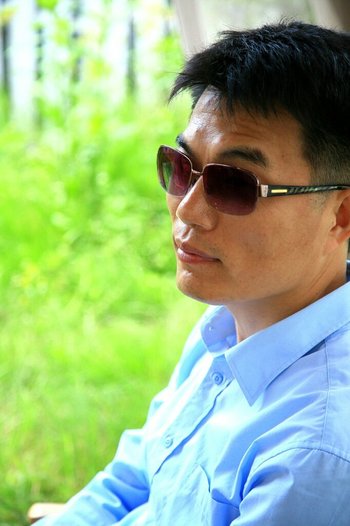
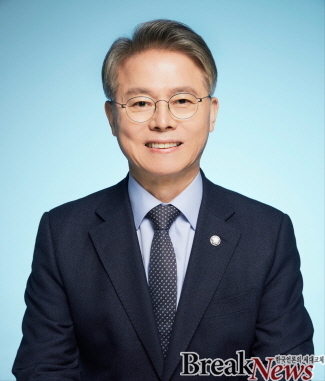
▲ 김정기(2007년 이명박 대통령 후보 캠프 국제위원장) ©브레이크뉴스 |
나는 2007년 이명박 대통령 후보 캠프에서 국제위원장으로 활동하며 대사와 총영사 출신 재외공관장 20명과 함께 글로벌 한인 네트워크를 구축한 바 있다. 어느 날 후보로부터 한반도 대운하 구상과 관련한 조찬 모임에 참석하라는 요청을 받았고, 류우익 서울대 교수 등 정책 설계에 참여한 인사들과 직접 만나 그 구상의 구조와 의도를 들을 기회를 가졌다.
이후 이명박 정부 출범과 함께 대운하 프로젝트는 추진되었지만, 환경 논쟁과 정치적 반발에 가로막혀 현실화되지 못했다. 그 결과 사업은 4대강 정비로 방향이 전환되었고, 본류 준설과 함께 16개의 보가 설치되면서 규모는 축소되었으나 수위를 관리하고 물을 확보한다는 핵심 기능은 유지되었다. 당시에는 진영을 넘어 일부 지방자치단체까지 참여할 정도로, 이 사업은 단순한 토목이 아니라 용수 확보와 지역 발전이라는 현실적 필요 위에서 추진된 측면이 분명했다.
결과적으로 4대강 보는 가뭄 시에도 안정적인 취수를 가능하게 만들었고, 산업 전반에 걸쳐 용수 공급의 확실성을 유지하는 인프라로 기능해 왔다.
이재명 대통령은 지금 다시 한 번 결단의 자리에 서 있다. 4대강 보를 해체할 것인가, 아니면 대한민국 미래 산업의 기반을 지킬 것인가. 이 문제를 환경 논쟁이나 과거 정권에 대한 평가로 접근하는 순간 본질은 흐려진다. 지금 이 사안은 정치가 아니라 국가 생존의 문제다.
반도체 혈전 속에서 4대강 보를 해체해 용수 공급을 흔드는 것은 자해에 가깝다. 정부가 4대강 사업 처리 방안을 재검토하겠다고 밝히자 보 해체론이 다시 떠오르고 있다. 그러나 보는 단순한 토목 구조물이 아니다. 수위를 유지하고 용수를 안정적으로 공급하는 산업 인프라다. 보가 있기 때문에 가뭄에도 취수가 가능하고, 취수가 가능하기 때문에 공장이 멈추지 않는다. 보를 해체한다고 해서 물이 사라지는 것은 아니다. 대신 물의 확실성이 사라진다. 산업은 부족보다 불확실성에서 먼저 무너진다.
대한민국 반도체 산업은 이미 이 수계 위에 올라가 있다. SK하이닉스 이천 공장은 하루 11만 톤의 물을 사용해 HBM을 생산하고 있고, 용인 반도체 클러스터 역시 대규모 취수를 전제로 설계되어 있다. 수위가 흔들리는 순간 생산은 불가능이 아니라 위험으로 바뀐다. 보가 수위를 잡고 있기 때문에 가뭄에도 라인이 유지된다.
여기에 더해, 이제 문제는 반도체에 그치지 않는다. 인공지능과 빅데이터 시대가 본격적으로 열리면서 데이터센터가 새로운 ‘물 산업’으로 등장하고 있다.
AI 데이터센터는 막대한 전력을 소비할 뿐 아니라, 서버를 식히기 위한 냉각수에 의존한다. 특히 고성능 GPU가 밀집된 AI 서버는 발열이 극단적으로 높아, 안정적인 냉각수 공급이 없으면 가동 자체가 불가능하다. 대형 데이터센터 하나가 중형 도시 수준의 물을 지속적으로 소비하는 사례도 이미 해외에서 보고되고 있다.
더 중요한 것은 연속성이다. 반도체 공장과 마찬가지로 데이터센터 역시 24시간, 365일 멈춤 없이 돌아가야 한다. 수위 변동으로 취수가 불안정해지는 순간, 서버는 과열되고 시스템은 셧다운 위험에 직면한다. 이는 단순한 운영 문제가 아니라 국가 데이터 인프라의 붕괴로 이어질 수 있다.
결국 반도체 공장이 ‘물을 먹는 산업’이라면, AI 데이터센터는 ‘물을 식혀야 살아남는 산업’이다. 두 산업 모두 물의 절대량보다 더 중요한 것은 안정성과 예측 가능성이다.
지금 세계는 반도체와 AI를 둘러싼 총력 경쟁에 들어가 있다. 각국 정부는 전력과 물을 국가가 책임지는 방향으로 산업 정책을 설계하고 있다. 이런 상황에서 한국만 용수의 안정성을 스스로 흔든다면 결과는 명확하다. 경쟁력 약화다. 마이크론 테크놀로지(Micron Technology)에 대규모 보조금을 투입하며 생산기지를 확대하고 있는 미국과는 정반대의 길이다.
이 지점에서 중요한 것은 단순한 보 하나의 문제가 아니다. 물을 저장하고 조절하고 연결하는 국가 시스템의 문제다. 4대강 보는 그 일부다. 이를 해체하는 것은 특정 시설을 없애는 것이 아니라 수계 전체의 안정성을 약화시키는 선택이 된다.
해외는 이미 다른 방향으로 움직이고 있다. 미시시피강을 중심으로 한 미국의 수계는 산업과 물류의 핵심 축으로 작동하고 있으며, 안정적인 내륙 수운과 산업용수 체계를 동시에 유지하고 있다. 유럽은 라인-마인-도나우 운하를 통해 북해와 흑해를 연결하며 국가 간 산업 네트워크를 구축했고, 중국 역시 장강을 중심으로 내륙 수로를 산업벨트와 결합시켜 생산기지를 확장하고 있다. 공통점은 분명하다. 물과 에너지를 환경의 대상이 아니라 전략 자산으로 본다는 점이다.
인류의 역사는 결국 물과 불의 역사다. 국가의 기원은 추상적 가치가 아니라 통제 능력에서 출발한다. 그 출발점이 바로 물이다. 중국 고대 요·순 시대에 황제의 정당성은 혈통이 아니라 홍수를 통제하는 능력에서 나왔다. 물을 다스리지 못하면 질서는 무너졌고, 물을 장악하면 국가가 세워졌다.
지금도 본질은 변하지 않았다. 물은 여전히 권력이다. 수위를 조절하고, 저장하고, 필요할 때 공급하는 능력은 곧 국가의 통치 능력이다. 물을 다룬 문명이 농업과 도시를 만들었고, 불을 다룬 문명이 산업을 일으켰다. 오늘날 전기는 불의 다른 형태이고, 냉각수는 산업화된 물이다. 반도체와 AI 데이터센터는 이 두 축 위에서만 존재할 수 있다.
이재명 대통령은 이미 원전 정책에서 현실적 선택을 한 바 있다. 에너지 수급의 안정성을 고려해 기존 기조를 일부 조정한 판단은 산업과 국가 운영의 현실을 반영한 결정이었다. 지금 필요한 것은 같은 수준의 판단이다. 보 해체는 과거를 정리하는 선택일 수 있다. 그러나 그 결과가 산업 기반의 불안정으로 이어진다면 그것은 미래를 희생하는 결정이다. 국가는 과거를 지운다고 강해지지 않는다. 미래를 지킬 때 강해진다.
지금 필요한 것은 복잡한 논쟁이 아니다. 단 하나의 선택이다. 물을 지킬 것인가, 아니면 스스로 흔들 것인가. 대통령의 결단 하나가 산업의 기반을 지킬 수도 있고, 무너뜨릴 수도 있다.
Jeongkeekim@naver.com
*필자/김정기 ● 학력- 뉴욕주립대학교(Stony Brook) 정치학과 수석 졸업- 마케트대학교(Marquette) 로스쿨 법학박사- 하버드대학교(Harvard) 케네디스쿨 최고위 과정- 베이징대학교(Peking) 북한학 연구학자
● 경력
세계스마트시티기구(WeGO) 사무총장 (현) -유엔 국제전기통신연합 (UN ITU) 가상세계 및 AI 글로벌 이니셔티브 집행위원(현) -제8대 주상하이 대한민국 총영사 -2010 상하이 세계 엑스표 대한민국관 정부대표 -법무법인 대륙아주 중국 총괄 미국변호사 -동국대학교 경영전문대학원 석좌교수 –숭실사이버대학교 총장 –칼럼니스트.
● 저서
1. 대학생을 위한 거로영어연구[전 10권](거로출판사) 2. 나는 1%의 가능성에 도전한다(조선일보사) 3. 한국형 협상의 법칙(청년정신사) 4. 대한민국과 세계 이야기 (도서출판 책미듬) 5. Korea and the World (Advance Reader Copy). Jeongkeekim@naver.com
[영문 번역 전문]● A Question to President Lee Jae-myung — What Happens to Semiconductor and AI Data Centers if the Four Rivers Weirs Are Dismantled?
In 2007, I served as Chairman of the International Committee in the presidential campaign office of Lee Myung-bak. Together with 20 former ambassadors and consuls general, I helped build a global Korean network. One day, I was invited by the presidential candidate Lee Myung-bak to attend a breakfast meeting on the Korean Peninsula Grand Canal project, where I had the opportunity to meet key policy architects, including Professor Ryu Woo-ik of Seoul National University, and hear firsthand about the structure and intent of the plan.
After the launch of the Lee Myung-bak administration, the canal project moved forward but ultimately failed to materialize due to environmental controversies and political opposition. As a result, it was redirected into the Four Major Rivers Restoration Project. Although scaled down, the installation of 16 weirs along with dredging of the main rivers preserved the core function: maintaining water levels and securing water resources. At the time, the project gained participation even from local governments across political lines, reflecting that it was not merely a civil engineering endeavor, but a practical response to the need for water security and regional development.
In effect, the Four Rivers weirs have enabled stable water intake even during droughts and have functioned as critical infrastructure ensuring reliability of water supply across industries.
President Lee Jae-myung now stands at another moment of decision. Will he dismantle the weirs, or will he preserve the foundation of Korea’s future industries? The moment this issue is reduced to environmental debate or retrospective political judgment, its essence is lost. This is not a political question—it is a matter of national survival.
In the midst of a global semiconductor war, dismantling the weirs and destabilizing water supply is close to self-inflicted damage. As the government signals a review of the Four Rivers project, calls for dismantling are resurfacing. But the weirs are not mere structures—they are industrial infrastructure that stabilizes water levels and ensures reliable supply. Because the weirs exist, water can be drawn even during drought. Because water can be drawn, factories do not stop. Dismantling the weirs does not eliminate water—it eliminates certainty. Industry collapses not first from shortage, but from uncertainty.
Korea’s semiconductor industry is already built upon this water system. The Icheon plant of SK hynix consumes approximately 110,000 tons of water per day to produce HBM (High Bandwidth Memory). The Yongin semiconductor cluster is likewise designed on the premise of massive water intake. The moment water levels become unstable, production does not merely become difficult—it becomes risky. It is the weirs that hold the water levels steady, allowing production lines to continue even in times of drought.
And now, the issue extends beyond semiconductors. With the full arrival of the AI and big data era, data centers have emerged as a new “water industry.”
AI data centers consume enormous amounts of electricity, but they also depend heavily on water for cooling. High-performance GPU clusters generate extreme heat, making stable cooling water supply indispensable for operation. In some cases, a single large-scale data center consumes as much water as a mid-sized city.
More importantly, continuity is critical. Like semiconductor fabs, data centers must operate 24 hours a day, 365 days a year. The moment water intake becomes unstable due to fluctuating water levels, servers overheat, and systems face shutdown risks. This is not merely an operational issue—it could lead to the collapse of national data infrastructure.
In essence, if semiconductor factories are industries that “consume water,” AI data centers are industries that “must be cooled by water to survive.” In both cases, stability and predictability matter far more than absolute volume.
The world is now engaged in an all-out competition over semiconductors and AI. Governments are designing industrial policies where electricity and water are guaranteed at the national level. If Korea alone chooses to destabilize its water security, the outcome is clear: loss of competitiveness. This stands in stark contrast to the United States, which is expanding production capacity while providing massive subsidies to companies like Micron Technology.
At this point, the issue is not about a single weir. It is about the national system that stores, regulates, and distributes water. The Four Rivers weirs are part of that system. Dismantling them does not simply remove facilities—it weakens the stability of the entire water network.
Other countries are moving in the opposite direction. The United States uses the Mississippi River system as a backbone for both industrial water supply and logistics. Europe has built an integrated industrial network through the Rhine–Main–Danube Canal, connecting the North Sea to the Black Sea. China is expanding its production base by integrating inland waterways centered on the Yangtze River with industrial belts. The common denominator is clear: water and energy are treated not as environmental subjects, but as strategic assets.
Human history is, in essence, a history of water and fire. The origin of the state lies not in abstract values but in the ability to control. And the starting point of that control is water. In ancient China, during the era of Yao and Shun, legitimacy of rulers did not come from bloodline, but from the ability to control floods. When water was not controlled, order collapsed. When it was mastered, the state emerged.
That fundamental truth has not changed. Water is still power. The ability to regulate, store, and supply water when needed is the very essence of governance. Civilizations that mastered water built agriculture and cities; civilizations that mastered fire built industry. Today, electricity is another form of fire, and cooling water is industrialized water. Semiconductors and AI data centers exist only on these two foundations.
President Lee Jae-myung has already demonstrated pragmatic judgment in adjusting nuclear energy policy, recognizing the necessity of stable energy supply. What is required now is the same level of realism. Dismantling the weirs may be seen as closing a chapter of the past. But if it leads to instability in the industrial foundation, it is a decision that sacrifices the future. A nation does not grow stronger by erasing the past—it grows stronger by securing the future.
What is needed now is not a complex debate, but a single decision: Will we protect water, or will we destabilize it ourselves? One decision by the president can either safeguard the foundation of industry—or undermine it.
칼럼니스트 소개 영문 - *Author / Jeong-kee Kim
● Education
-B.A. in Political Science (Summa Cum Laude), State University of New York at Stony Brook
-Doctor of Jurisprudence, Marquette University Law School
-Senior Executive Program, Harvard Kennedy School
-Research Scholar in North Korean Studies, Peking University
● Professional Experience
-Secretary-General, World Smart Sustainable Cities Organization (Current)
-Executive Committee Member, Virtual World & AI Global Initiative, International Telecommunication Union (Current)
-8th Consul General of the Republic of Korea in Shanghai
-Commissioner General, Korea Pavilion, Expo 2010 Shanghai China
-Senior Attorney-at-Law, DR& Aju LLC
-Distinguished Chair Professor, Graduate School of Business, Dongguk University
-President, Soongsil Cyber University
-Columnist
● Publications
-Georo English Studies Series for College Students (Georo Publishing)
-I Challenge the Possibility of One Percent (Chosun Ilbo)
-The Art of K-Negotiation
(Cheongnyeonjeongsin Publishing)
-Korea and the World (Chaekmideum Publishing)
*Email: Jeongkeekim@naver.com