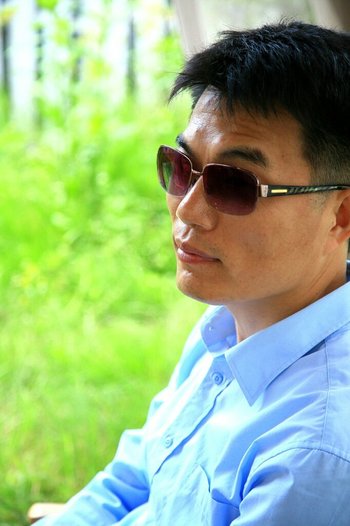
▲ 왼쪽부터 인천대학교 조환호 교수(제1저자), 한양대학교 구리병원 신경과 박성호 교수(교신저자). (사진=인천대 제공) © 박상도 기자 |
(브레이크뉴스인천 박상도 기자) 인천대학교가 17일, 전자공학부 조환호 교수 연구팀이 한양대학교구리병원 신경과 박성호 교수 연구팀과 협력하여, 연속적으로 촬영된 MRI 영상을 기반으로 새롭게 발생한 뇌경색 병변을 자동으로 탐지하는 인공지능 모델을 개발했다고 밝혔다.
인천대에 따르면, 이번 연구는 일정 시간 간격으로 촬영된 MRI를 비교하여 기존 영상에서는 보이지 않던 새로운 뇌경색(new cerebral infarction)을 탐지하는 데 초점을 맞췄다.
특히, 환자가 별다른 증상을 호소하지 않는 경우에도 발견될 수 있는 무증상 뇌경색(silent cerebral infarction)을 체계적으로 검출할 수 있도록 설계됐다.
연구팀은 초기 MRI와 추적 MRI를 함께 입력으로 활용하는 시계열 기반 딥러닝 모델을 구축했으며, FLAIR MRI를 중심으로 미세 병변 탐지 성능을 평가했다.
그 결과, 제안된 모델은 다양한 임상 데이터에서 높은 정확도로 새로운 뇌경색을 탐지했으며, 임상적으로 간과되기 쉬운 작은 병변에서도 유의한 성능을 보였다.
또한, 새롭게 발생한 뇌경색의 존재 여부가 환자의 향후 임상 경과와 통계적으로 유의한 연관성을 보이는 것으로 나타나, 인공지능 기반 시계열 MRI 분석이 뇌졸중 환자의 예후 예측 및 장기 관리에 활용될 가능성을 확인했다.
이번 연구는 임상과 공학의 협력을 통해 수행됐다.
교신저자인 박성호 교수팀은 임상적 문제 정의와 데이터 구축을 담당하였고, 조환호 교수 연구팀은 인공지능 모델 설계 및 분석을 수행했다.
또한, 한양대학교구리병원을 비롯해 인제대학교 백병원, 삼성서울병원, 서울아산병원, 고려대학교 안산병원 등 다수의 의료기관이 참여하여 연구 결과의 신뢰성을 높였다.
이번 연구는 “Automated detection of new cerebral infarctions and prognostic implications using deep learning on serial MRI”라는 제목으로 2026년 3월 npj Digital Medicine (Impact Factor 15.1)에 게재됐으며, JCR 기준 Health Care Sciences & Services 분야 상위 0.3%(1/118), Medical Informatics 분야 상위 3.1%(2/48)에 해당하는 저널이다.
조환호 교수는 “이번 연구는 공학과 의학의 협력을 통해 실제 임상에서 놓치기 쉬운 변화를 자동으로 탐지하고, 이를 환자 예후와 연결했다는 점에서 의미가 있다”며 “향후 영상 데이터뿐 아니라 다양한 임상 정보를 통합하여 실제 진료에 활용 가능한 인공지능 기반 시스템으로 확장해 나갈 계획”이라고 밝혔다.
한편, 이번 연구는 한국연구재단이 지원하는 뇌과학 선도융합기술개발사업과 인천대학교 자체 연구비 지원을 받아 수행됐다.
*아래는 위 기사를 ‘구글 번역’으로 번역한 영문 기사의 [전문]입니다.‘구글번역’은 이해도 높이기를 노력하고 있습니다. 영문 번역에 오류가 있을 수 있음을 전제로 합니다.<*Below is the [full text] of the English version of the article above, translated using 'Google Translate'. 'Google Translate' strives to improve comprehension. It is assumed that there may be errors in the English translation.>
Incheon University Professor Cho Hwan-ho's Research Team Collaborates with Hanyang University Guri Hospital Professor Park Sung-ho's Team... Develops AI Model for Automatic Detection of 'Asymptomatic Cerebral Infarction'
-Break News Incheon Park Sang-do Reporter
On the 17th, Incheon University announced that a research team led by Professor Cho Hwan-ho of the Department of Electronic Engineering, in collaboration with a research team led by Professor Park Sung-ho of the Department of Neurology at Hanyang University Guri Hospital, has developed an artificial intelligence model that automatically detects newly occurring cerebral infarction lesions based on continuously captured MRI images.
According to Incheon University, this research focused on detecting new cerebral infarctions that were not visible in existing images by comparing MRIs captured at regular time intervals.
In particular, it was designed to systematically detect silent cerebral infarction, which can be discovered even when patients do not complain of any specific symptoms.
The research team constructed a time-series-based deep learning model utilizing both initial and follow-up MRIs as inputs and evaluated the performance of detecting micro-lesions, focusing on FLAIR MRI.
As a result, the proposed model detected new cerebral infarctions with high accuracy across various clinical datasets and demonstrated significant performance even in small lesions that are easily overlooked clinically.
Furthermore, the presence of newly occurring cerebral infarctions was found to have a statistically significant association with the patient's future clinical course, confirming the potential for AI-based time-series MRI analysis to be utilized for prognosis prediction and long-term management of stroke patients.
This study was conducted through collaboration between clinical and engineering fields.
Professor Sung-Ho Park's team, the corresponding author, was responsible for defining the clinical problem and constructing the data, while Professor Hwan-Ho Cho's research team performed the AI model design and analysis.
In addition, the participation of numerous medical institutions, including Hanyang University Guri Hospital, Inje University Paik Hospital, Samsung Seoul Hospital, Asan Medical Center, and Korea University Ansan Hospital, enhanced the reliability of the research results.
This study was published in npj Digital Medicine (Impact Factor 15.1) in March 2026 under the title “Automated detection of new cerebral infarctions and prognostic implications using deep learning on serial MRI.” According to JCR standards, this journal ranks in the top 0.3% (1/118) of the Health Care Sciences & Services field and the top 3.1% (2/48) of the Medical Informatics field.
Professor Cho Hwan-ho stated, “This research is significant in that it automatically detects changes easily missed in actual clinical practice through collaboration between engineering and medicine, and links these findings to patient prognosis.” He added, “In the future, we plan to expand this into an AI-based system applicable to actual medical care by integrating not only imaging data but also various clinical information.”
Meanwhile, this research was conducted with funding from the Brain Science Leading Convergence Technology Development Project supported by the National Research Foundation of Korea and internal research funds from Incheon University.
원본 기사 보기:ebreaknews.com