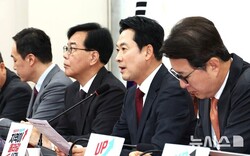
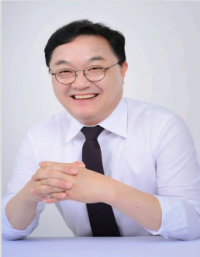
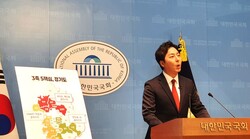
▲ 장상윤 대통령실 사회수석이 28일 용산 대통령실 청사에서 교육발전특구 시범지역 1차 지정 관련 브리핑을 하고 있다. <사진:뉴시스> |
대통령실이 28일 지방자치단체 49곳을 각 지역 특성에 맞는 공교육 체계를 자율적으로 만들 수 있는 교육발전특구 시범지역으로 지정했다고 전했다.
장상윤 사회수석은 이날 용산 대통령실 브리핑에서 "1차 공모서 총 31건, 6개 광역지자체·43개 기초지자체를 교육발전특구로 지정 계획"이라며 "선정되지 못한 9개 기초지자체는 예비지정지역으로 선정, 부족 사항을 보완해 5월부터 시행되는 2차 공모시 추가 지정 가능토록 했다"고 밝혔다.
교육발전특구는 지자체·교육청이 해당 지역내 대학·산업체 등 기관들과 협력해 지역 주민이 원하는 공교육 정책 마련시 중앙정부가 재정을 지원하고 각종 규제를 해소해주는 정책이다.
또 교육발전특구 지정시 특별교부금 경우 최소 30억에서 최대 100억과 각종 규제 특례 지원을 받는다. 앞서 지난 13일 윤석열 대통령은 국민과 함께 하는 민생토론회에서 교육발전특구으로 길러낸 인재로 지방균형발전 선순환을 만들겠다고 밝힌 바 있다.
시범지역 지정은 교육발전특구를 본격 운영하기 앞서 특례 수요·우수한 특구 운영 모델을 발굴하기 위해 이뤄졌다.
지난해 12월부터 이달 초까지 진행된 1차 공모에 들어온 신청은 총 40건(6개 광역지자체·52개 기초지자체)인 가운데 선정 지역을 보면 1유형은 인천·강화, 경기 고양·양주·동두천, 강원 춘천·원주·화천 등 20건이다.
2유형 경우 부산·대구·광주·대전·울산·제주 등 총 6건이 선정됐고, 3유형은 충남(아산)·경북(안동·예천)·경남(진주·사천·고성·창원·김해·양산·거제·밀양)·전북(익산·남원·완주·무주·부안 전남 나주·목포·무안·신안·강진) 등 총 5건이다.
1유형은 기초지자체, 2유형 광역지자체, 3유형 경우 광역지자체가 지정하는 기초지자체 단위로 각각 신청이 진행된 가운데 1차 지정 시범지역은 3년 간 교육발전특구로 시범 운영 후 교육발전특구위 평가를 거쳐 정식 지정 여부가 결정된다.
장 수석은 "전 지역이 특구로 지정되는 부산 경우 0세부터 초등학교 6학년 대상으로 24시간 보살핌 늘봄센터·부산형 365 시간제 보육센터를 설치하며 가칭 '부산 국제 K-팝 고등학교'를 설립해 외국인 유학생을 유치한다"고 전했다.
또 "우주항공청이 설립되는 경남 사천을 비롯 진주·고성 등은 우주항공 분야로 특화시키며 경상국립대를 우주항공 분야 우수대학으로 육성하고, 관련 기업과 연계해 협약형 특성화고교도 도입한다"고 전했다.
더불어 "강원 춘천은 기존 애니메이션 고교를 애니·방송 분야 협약형 특성화고교로 육성하고 춘천고를 자율형 공립고로 지정해 운영하며 강원대·한림대 등은 '푸드테크 바이오학과'를 신설해 지역사업 특화 취·창업 교육을 추진한다"고 덧붙였다.
정부는 시범사업을 통해 각 지역서 제안한 특례를 반영해 '교육발전특구 지정·운영을 위한 특별법'을 연내 마련한다는 방침인 가운데 '교육발전특구가 당장 대입에 영향 미치진 않을 것'이라고 대통령실은 전했다.
대통령실 관계자는 "시범사업에서 각 지역 다양한 아이디어들을 실현하면서 제도상 어떤 부분을 풀어야 할지 발굴할 것이며 특성화고는 내년 대입에 반영되기 어렵다"며 "시범사업으로 출발해 진척 상황을 보고 제도 개선이 같이 이뤄져야 한다"고 말했다.
*아래는 위 기사를 '구글 번역'으로 번역한 영문 기사의 [전문]입니다. '구글번역'은 이해도 높이기를 위해 노력하고 있습니다. 영문 번역에 오류가 있을 수 있음을 전제로 합니다.<*The following is [the full text] of the English article translated by 'Google Translate'. 'Google Translate' is working hard to improve understanding. It is assumed that there may be errors in the English translation
President's Office "Designates 49 local governments as pilot areas for educational development special zones...supports up to KRW 10 billion"
Sang-yoon Jang, Senior Secretary for Social Affairs, "A total of 31 applications were submitted for the first round of public offering, and plans were made to designate 6 metropolitan local governments and 43 basic local governments as special education development zones."
-kihong Kim reporter
The President's Office reported on the 28th that it had designated 49 local governments as pilot special education development zones where public education systems tailored to the characteristics of each region can be autonomously created.
Senior Secretary for Social Affairs Jang Sang-yoon said at a briefing at the Yongsan Presidential Office on this day, "We plan to designate a total of 31 applications in the first round of competition, 6 metropolitan local governments, and 43 basic local governments as special education development zones," and "The 9 basic local governments that were not selected will be designated as preliminary designation areas." “By supplementing the selection and shortcomings, we have made it possible to designate additional candidates in the second public offering, which will be held starting in May,” he said.
A special educational development zone is a policy in which the central government provides financial support and resolves various regulations when local governments and offices of education cooperate with institutions such as universities and industries in the region to develop public education policies desired by local residents.
In addition, when designated as a special educational development zone, special grants of at least KRW 3 billion and up to KRW 10 billion and various regulatory special support are provided. Previously, on the 13th, President Yoon Seok-yeol announced at a public livelihood debate with the people that he would create a virtuous cycle of balanced local development with the talent cultivated in special education development zones.
The designation of a pilot area was made to discover special demand and an excellent special zone operation model prior to full-scale operation of the special education development zone.
There were a total of 40 applications (6 metropolitan local governments and 52 basic local governments) in the first round of competition held from December last year to early this month, and looking at the selected regions, Type 1 is Incheon and Ganghwa, Goyang, Yangju, Dongducheon and Gangwon in Gyeonggi Province. There are 20 cases, including Chuncheon, Wonju, and Hwacheon.
For Type 2, a total of 6 cases were selected, including Busan, Daegu, Gwangju, Daejeon, Ulsan, and Jeju, and for Type 3, Chungnam (Asan), Gyeongbuk (Andong, Yecheon), and Gyeongnam (Jinju, Sacheon, Goseong, Changwon, Gimhae, Yangsan, etc.) There are a total of 5 cases, including Geoje, Miryang) and Jeonbuk (Iksan, Namwon, Wanju, Muju, Buan, Jeonnam Naju, Mokpo, Muan, Shinan, and Gangjin).
Type 1 is a basic local government, Type 2 is a metropolitan local government, and Type 3 is a basic local government designated by the metropolitan local government. While the first designated pilot area is a special education development zone for three years and is subject to pilot operation, evaluation by the Education Development Special Zone Committee. After this, a decision will be made on whether to officially designate it.
Chief Jang said, "In the case of Busan, where the entire region is designated as a special zone, we will establish a 24-hour neulbom center and a Busan-type 365-hour childcare center for children from 0 years old to the 6th grade of elementary school, and establish a tentative name 'Busan International K-Pop High School' to support foreign students. “It attracts people,” he said.
In addition, he said, "Sacheon, Gyeongnam, where the Aerospace Administration will be established, Jinju, and Goseong will specialize in the aerospace field, and Gyeongsang National University will be fostered as an excellent university in the aerospace field, and an agreement-type specialized high school will also be introduced in connection with related companies."
In addition, "Chuncheon, Gangwon-do, fosters existing animation high schools into specialized specialized high schools in the animation and broadcasting fields and designates and operates Chuncheon high schools as autonomous public high schools, and Kangwon National University and Hallym University establish the 'Food Tech Bio Department' to provide local business-specific employment and entrepreneurship education. “We are pursuing this,” he added.
While the government plans to prepare a 'special law for designating and operating special education development zones' within the year, reflecting the special cases proposed by each region through pilot projects, the President's Office said, 'special education development zones will not have an immediate impact on college admissions.' .
An official from the President's Office said, "In the pilot project, we will implement various ideas from each region and discover which parts of the system need to be solved. It is difficult for specialized high schools to be reflected in next year's college admissions." “I do it,” he said.