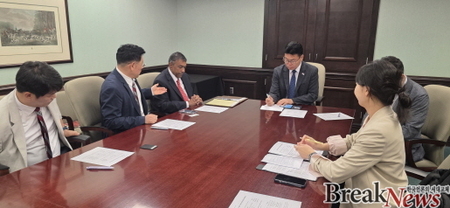
▲ 정길선 박사 ©브레이크뉴스 |
2021년 미얀마에서 민 아잉 훌라잉 사령관의 지휘 하에 군사 쿠데타 발생했고 3일 후, 시민들이 거리로 나와 시위를 벌였다. 도시와 마을에서 수백만 명의 국민들이 군부에 투표를 존중하고 민주주의를 회복할 것을 공개적이고 평화적으로 요청했다. 많은 시위대가 민주주의 민족동맹 깃발을 들고 시위를 벌였지만 시위의 목적과 쟁점은 정당 정치가 아니라 민주주의 체제를 복원하고 군사 독재주의를 규탄하는 것에 있었다.
많은 공무원들 또한 시민 불복종 운동의 형태로 파업을 벌였고, 처음에는 보건 및 교육 부문에서 주도하던 파업이 전체 공무원은 물론 민간 부문까지 확산되면서 경제가 일시 마비 상태까지 치닫게 된다. 전국에서 시위가 이어지면서 미얀마 군부는 무자비한 체포 작전을 벌여 시민들을 학살하고 야간에 주거지를 급습했다. 무차별적인 살인과 체포로 인해 국민들 사이에 억울함과 분노가 일어났다.
당시 미얀마 유엔 특별 인권 조사관 톰 앤드류스(Tom Andrews)는 군부에 대한 반대가 광범위하고도 깊으며 이런 것은 처음 본다고 술회했을 정도다. 그는 미얀마가 여태까지 이처럼 단결된 모습을 보지 못했다면서 모든 연령, 민족, 사회 경제 집단의 국민들이 군부를 반대하기 위해 뭉쳤다고 했다.
그러나 이에 대한 군부의 무자비한 탄압으로 인해 도시의 시위대는 소수민족 무장단체가 관리하는 국경 지역으로 상당수가 도주했다. 그들 중 다수는 군부의 잔혹성에 대응하기 위해 소수 민족 무장 단체로부터 훈련과 무기를 요청하면서 조직적으로 정부에 저항하게 된다. 이에 미얀마 국회의원과 내각 각료 10여 명이 군부의 체포를 피해 소수민족 무장단체로 도주했으며 이들은 소수민족 사이에서 연방 의회 대표 위원회를 만들었다.
그러면서 많은 연방 의회 대표 회원들이 소수민족 무장단체의 보호를 받는 지역에서 활동하고 있다. 톰 앤드류스는 위기로 인해 미얀마 다수 민족인 버마족과 소수민족들 사이에 큰 협력과 단결이 이루어졌다고 하였다. 미얀마 저항 국민 다수는 카렌 민족 해방군, 카렌 민족 연합 산하의 반군, 카친 독립기구 산하 반군 같은 대형 무장 단체를 분리주의 반군 단체에서 합법적인 자위군으로 보며 이에 대한 인정과 더불어 국제사회에 지원을 호소했다. 이들 소수민족 무장단체의 총 병력은 8만여 명으로 추정된다.
연방 의회 대표 위원회는 포괄적인 정부인 국민 통합 정부를 만들고 전례 없이 많은 소수민족 대표들을 지도부에 끌어들여 요직에 임명했다. 국민 통합 정부의 주요 목적과 그 노선은 민주주의를 복원하고 이른바 135개의 소수민족의 대표들을 중심으로 한 “연방민주연합”을 구축하는 것에 있다. 따라서 소수민족 무장단체들과 인민 방위군 사이에 절대적인 협력이 이루어지고, 여기에 미얀마 국민들 중 저항세력들은 확실한 정치적 지원까지 결합하여 군부에 저항하는 강력한 동맹이 형성되고 있는 편이다.
그러나 군부는 토벌군 내에서도 탈영자가 속출했고 전사자가 상당수 생기면서 잠시 흔들렸으나 코로나가 발생하면서 정부군과 반군 모두 사망자들이 다수 발생했고 이에 양측 모두의 역량이 약화되었다. 결국 코로나라고 하는 역대급 전염병이 민주화 운동을 잠재웠고, 더불어 반군들의 행동 반경도 축소시키는 결과까지 가져왔으며 정부군 또한 소수민족 반군에 대한 토벌 의지를 꺾는 결과까지 가져왔다. 그러나 코로나 시즌이 지나고 그 동안 밀림에서 세력을 보충하고 있던 소수민족 반군들의 세력은 더욱 커졌고 이는 사실상 정부군인 미얀마 군부를 다시 위협할 수 있을 정도까지 성장했다.
그러면서 교전은 2022년부터 다시 재개되었다. 소수민족 부대 중 가장 세력이 큰 조직은 카렌 민족해방군과 카렌 민족연합으로 구성된 몬-카렌족의 조직들이다. 미얀마 북부 골든 트라이앵글의 밀림 지대와 동부, 그리고 말레이 반도에 걸쳐있는 미야와디 강 주변의 몬 주에까지 폭넓게 운신하면서 정부군을 상대로 게릴라 전을 펼쳤다. 미얀마 군부는 이들을 확실하게 통제하지 못하고 있는 편이다. 미얀마 군부가 소수민족들을 통제하지 못하는 상황이 벌어지면서 미얀마 전국은 다시 내전의 기운이 솟아나고 있는 중이다.
게다가 몬족과 카렌족의 전사들에, 한동안 잠잠했던 골든 트라이앵글 지역의 샨족복원협의회(RCSS)과 다시 일어서기 시작하면서 내전을 더욱 키우고 있는 셈이다. 게다가 이들이 연합전선이라도 형성하게 되면 이들 강경한 소수민족의 군대는 거의 15만에 육박할 정도가 된다. 이렇게 되면 미얀마 군부는 감당하기 더 버거워진다. 그리고 샨 족의 경우, 미얀마와 적국인 태국 정부의 비호를 받고 있다. 그 이유는 샨 족과 태국의 주 종족인 타이족은 형제 종족이기 때문이다.
태국 입장에서 알게 모르게 샨 족에 대해 상당한 지원을 아끼지 않았었다. 이에 미얀마 군부가 적극적으로 샨 족을 토벌하지 못했던 이유는 태국이 공식적으로 분쟁 개입을 선언하고 군대 투입 가능성을 시사하게 된다면 미얀마 군부 입장에서는 매우 부담스럽기 때문이다. 그리고 이는 샨 족 뿐이 아니다. 몬 족과 카렌 족도 알게 모르게 태국으로부터 지원을 받고 있다. 미얀마 군부를 무력화 시킬 수 있는 무기를 소수민족 반군이 갖고 있다면 가능성은 한 가지다. 미국이나 집단 서방이 태국을 통해 이들 반군들에게 무기 지원을 하고 있을 가능성이 매우 높다.
물론 아직까지는 그런 직접적인 증거가 포착되지 않고 있지만 중국과 매우 친한 미얀마 군부가 중국의 일대일로에 참여하고 있기 때문에 중국을 견제하기 위한 수단으로 미얀마 군부에 간접적인 위협을 가할 가능성은 충분히 농후하기 때문이다. 그리고 2일 전, 미얀마 정부군이 태국과 접경 지역인 메솟, 미야와디 일대에서 카렌 반군에게 크게 패했다. 미얀마 군부는 물자와 인력을 태국으로 대피시켰으며 은행에 보관된 현금성 자산과 문서, 군부 공무원 등이 태국으로 도피했다.
미얀마 군부 또한 인력과 자산을 태국으로 탈출시키려는 시도가 포착됐다. 물자가 실린 항공편이 미얀마 최대 도시 양곤에서 출발해 매솟으로 향했고 태국 외무부는 양곤-매솟 노선이 3편 추가 승인됐다고 확인했다. 이는 카렌 주, 미야와디 지역의 상당수가 카렌 반군에게 점령당했고 모에이 강을 사이에 두고 태국 딱 주와 접경한 미얀마 동부 지역 자체의 통제권을 상실했음을 의미한다. 카렌 군은 미야와디에서 군인과 그 가족 617명의 항복을 받아냈다고 밝혔다. 초기에는 자신들이 미야와디 마을의 약 60~70%를 통제하고 있다고 했으나, 추후 80~90%를 점령했다고 상향했다.
이는 미얀마 군부의 최근 패배 중 가장 충격적인 것으로 평가되고 있다. 군부는 지난 3년 동안 반군부 무장 투쟁에 밀리며 라카인 주와 샨 주에서도 거점을 상실했었다. 이는 미얀마 군부 입장에서도 매우 심각한 문제가 아닐 수 없다. 카렌 주 미야와디 지역이나 몬 주 일대는 태국과의 무역로로 연결되어 있고 미얀마 대외 경제의 60% 이상을 통제하는 곳이다. 이 통제권이 카렌 군에게 넘어갔다는 것은 미얀마 군부가 주도하는 현 정권의 경제력이 큰 타격을 입는 다는 것을 의미하기도 한다.
이 반군들이 미얀마 군부를 상대로 승리를 거두고 있고 무기 성능 또한 정부군보다 뛰어나다는 것은 미국이나 집단 서방의 지원이 있었다는 반증이다. 그렇지 않다면 정부군이 이처럼 속수무책으로 무너질 수는 없는 일이다. 통제력이 약화되어 궁지에 몰린 미얀마 군부의 마지막 비장의 카드는 중국군의 군사적 지원을 받거나 중국군을 끌어들여 소수민족 반군에 대한 공격을 개시하는 것이다. 즉, 자신들의 기반과 기득권을 유지하기 위해 중국의 개입을 원하는 것이다.
중국이 혹시라도 미얀마 내전에 개입하게 된다면 집단 서방과 미국은 이에 반발할 것이고 이들의 군대가 직접적으로 개입할 가능성도 생길 것이다. 그러나 그럴 가능성은 거의 제로에 가깝다. 아마 중국에 대한 경제 제재 정도로 끝날 가능성이 높다고 본다. 그러나 미얀마 군부가 몰릴수록 중국의 개입 가능성은 더 높아지기 마련이다. 이는 중국의 야심작 중 하나인 미얀마 최대 항구 차슈푸 항 때문이다. 중국은 10여 년 동안 공들여온 미트소네 댐을 포기하면서까지 차슈푸 항에 집착하는 이유가 미얀마와 중국을 잇는 송유관의 시작점이자 일대일로 해상 진출의 핵심 거점이기 때문이다.
특히 이 항구는 말레이시아 코타키나발루에서 아프리카 지부티의 오보크 항구를 연결하는 중국의 거대한 ‘진주 목걸이’ 전략의 핵심 거점이다. 차슈푸 항 주변은 석유, 천연가스 등 천연자원이 풍부하고 인도양과 중국, 동남아시아를 잇는 핵심 지역이기 때문에 중국의 입장에서는 매우 중요한 지역이다. 중국은 2017년 차슈푸 항에서 운남성 국경도시 루이리 현을 거쳐 쿤밍까지 이어지는 771㎞ 송유관을 개통했다.
이 송유관을 통해 중국은 벵골만에 위치한 시트웨 가스전에서 생산된 천연가스(연간 120억㎥)와 인도양을 건너온 중동산 석유(연간 2,200만 톤)를 해양을 거치지 않고 직접 공급 받는 에너지 자원의 창구다. 게다가 해적이 자주 출몰하는데다 미국이 통제하고 있는 말라카 해협을 거치지 않아도 되는 중국이 인도양으로 진출할 거대한 야심작 중 하나다. 더불어 쿤밍과 차슈푸 항을 잇는 고속도로까지 건설하고 있는 실정이다. 그렇기 때문에 미얀마에서 무슨 문제가 생기면 중국 입장에서는 굉장히 예민하다. 이걸 지키기 위해서라도 중국군이 개입할 가능성이 높다는 것이다. 양안 문제만큼이나 미얀마 문제에 대해서도 관심 가져야 할 분야 중에 하나라고 본다.
*필자/ 정길선.
노바토포스 회원, 역사학자, 고고인류학자, 칼럼니스트, 러시아 과학아카데미 유라시아 고고인류학연구소 연구교수.
*아래는 위 기사를 '구글 번역'으로 번역한 영문 기사의 [전문]입니다. '구글번역'은 이해도 높이기를 위해 노력하고 있습니다. 영문 번역에 오류가 있을 수 있음을 전제로 합니다.<*The following is [the full text] of the English article translated by 'Google Translate'. 'Google Translate' is working hard to improve understanding. It is assumed that there may be errors in the English translation.>
Does Myanmar's military lose control of all current Myanmar races?
columnist Jeong Gil-sun
In 2021, a military coup took place in Myanmar under the leadership of Commander Min Aing Hulaing, and three days later, citizens took to the streets to protest. Millions of people in cities and towns publicly and peacefully asked the military to respect the vote and restore democracy. Many protesters held the Democratic National League flag, but the purpose and issue of the protest was not party politics, but to restore the democratic system and condemn military dictatorship.
Many civil servants also went on strike in the form of a civil disobedience campaign, and the strike, which was initially led by the health and education sectors, spread to the private sector as well as all civil servants, causing the economy to become temporarily paralyzed. As protests continued across the country, Myanmar's military launched a ruthless arrest operation, slaughtering citizens and storming their residences at night. The people became angry and unjust as a result of indiscriminate killings and arrests.
At the time, Tom Andrews, a special human rights investigator at the United Nations in Myanmar, recalled that opposition to the military was widespread and deep, and that he had never seen anything like it. He said that people of all ages, ethnicities and socio-economic groups had come together to oppose the military, saying that Myanmar had not seen such unity so far.
However, as a result of the military's brutal suppression, many of the city's protesters fled to border areas managed by ethnic minority armed groups. Many of them systematically resist the government, asking for training and weapons from ethnic minority armed groups in response to military brutality. In response, more than 10 Myanmar lawmakers and cabinet ministers fled to ethnic minority armed groups to escape military arrest, and they formed a federal parliamentary representative committee among ethnic minorities.
Many members of the Federal Assembly are active in areas protected by ethnic minority armed groups. Tom Andrews said that the crisis had led to great cooperation and unity between Myanmar's majority Burmese and minority ethnic groups. The majority of Myanmar's resistance against large armed groups such as the Karen National Liberation Army, the Karen National Union rebels, and the Kachin Independence Organization rebels as legitimate self-defense forces in separatist rebel groups, and appealed to the international community for support. The total number of armed groups of these ethnic minorities is estimated to be about 80,000.
The Federal Parliamentary Representatives Committee created a comprehensive government, a national unity government, and appointed an unprecedented number of minority representatives to key positions. The main purpose and line of the national unity government is to restore democracy and to establish a "federal democratic coalition" centered on the representatives of the so-called 135 ethnic minorities. As a result, absolute cooperation between minority armed groups and the People's Defense Forces is taking place, and insurgents among the people of Myanmar have combined solid political support to form a strong alliance against the military.
However, even within the subjugated forces, the military was briefly shaken by the number of deserters and a significant number of deaths, but the outbreak of COVID-19 resulted in a large number of deaths for both government and rebels, which weakened both sides' capabilities. In the end, the all-time epidemic of COVID-19 silenced the democratization movement, reduced the radius of action of the rebels, and even reduced the government army's willingness to subjugate minority rebels. However, after the COVID-19 season, the minority rebels, who had been replenishing their power in the jungle, grew stronger, and it grew to the point where they could threaten the Myanmar military, the de facto government army, once again.
As a result, the fighting resumed in 2022. The Mon-Karen organizations, which are made up of the Karen National Liberation Army and the Karen National Union, are the most powerful of the minority units. They waged guerrilla warfare against government forces, moving extensively to the north of Myanmar's Golden Triangle jungle, the east, and Monju near the Miyawadi River, which spans the Malay Peninsula. The Myanmar military is unable to reliably control these people. As the Myanmar military loses control of its ethnic minorities, the whole country is rekindled with the energy of a civil war.
The civil war is intensifying, with Mon and Karen fighters starting to rise again with the Shan Restoration Council (RCSS) in the Golden Triangle region, which has been dormant for a while. If they even form a united front, their army of hard-line minorities will be close to 150,000. This makes Myanmar's military even more overwhelming. And the Shan are being guarded by Myanmar and its enemy, the government of Thailand. That's because the Shan and Thailand's main ethnic groups, the Thai, are brothers.
Thailand has unknowingly given considerable support to the Shan people. Thailand's military has been unable to actively subdue the Shan people because it would be extremely burdensome for the Myanmar military to formally declare its involvement in the conflict and suggest the possibility of military deployment. And this is not just the Shan people. The Mon and Karens are unknowingly receiving support from Thailand. If minority rebels have weapons that can neutralize the Myanmar military, there is only one possibility. It is very likely that the United States or the collective West are providing weapons assistance to these rebels through Thailand.
Of course, no such direct evidence has been discovered yet, but because the Myanmar military, which is very close to China, is participating in China's Belt and Road Initiative, there is a strong possibility that it will pose an indirect threat to the Myanmar military as a means to keep China in check. And two days ago, Myanmar's government forces were heavily defeated by the Karen rebels in Meso and Miyawadi areas bordering Thailand. Cash equivalents, documents, and military officials stored in banks fled to Thailand as the Myanmar military evacuated supplies and manpower to Thailand.
Myanmar's military has also been spotted attempting to evacuate personnel and assets to Thailand.
A flight carrying supplies departed from Yangon, Myanmar's largest city, to Mae Sot, and Thailand's foreign ministry confirmed that three more Yangon-Mae Sot routes were approved. This means that many of the Karen and Miyawadi regions were occupied by Karen rebels and lost control of eastern Myanmar, which borders Thailand's just province across the Moei River. Karen's military said it had received the surrender of 617 soldiers and their families in Miyawadi. Initially, it said it controlled about 60-70% of Miyawadi village, but later raised it to occupy 80-90%.
This is considered the most shocking of the recent defeats by the Myanmar military. Over the past three years, the military has lost ground in Rakhine and Shan states due to the armed struggle of the insurgents. This is a very serious problem for the Myanmar military as well. The Miyawadi and Mon provinces of Karen are connected by trade routes with Thailand and control more than 60% of Myanmar's external economy. The fact that this control has been transferred to Karen also means that the economic power of the current Myanmar military-led regime is severely damaged.
That these rebels have been victorious over Myanmar's military, and outperformed their government counterparts in arms performance, proves they had the support of the U.S. and the collective West. Otherwise, the government forces cannot fall apart in such a helpless manner. The last resort of Myanmar's military, which has been cornered with weakened control, is to either receive Chinese military support or lure Beijing in to launch an attack on ethnic minority rebels. In other words, they want Beijing's intervention to maintain their base and vested interests.
If China intervenes in Myanmar's civil war, the collective West and the United States will protest, and there is a possibility that their military will directly intervene. However, it is almost zero chance. There is a high possibility that the situation will end up as economic sanctions against China. However, the more Myanmar's military gathers, the higher the possibility of China's involvement. This is due to the Chashupu Port, Myanmar's largest port, one of China's ambitions. China has been sticking to Chashupu Port even while giving up the Mytsone Dam, which has been painstaking for more than a decade, because it is the starting point of the pipeline linking Myanmar to China and a key hub for its One Belt, One Road maritime advancement.
In particular, the port is a key hub for China's huge 'pearl necklace' strategy, connecting Kota Kinabalu, Malaysia, to Obok Port in Djibouti, Africa. The area around Chashupu Port is a very important area for China because it is rich in natural resources such as oil and natural gas and is a key region linking the Indian Ocean, China, and Southeast Asia. In 2017, China opened a 771-kilometer pipeline from Chashupu Port to Kunming through the Yunnan border city of Ruili County.
Through this pipeline, China is a channel of energy resources that directly receives natural gas (12 billion cubic meters per year) from the Sitwe gas field in the Bay of Bengal and Middle Eastern oil (22 million tons per year) from across the Indian Ocean without going through the sea. It is one of the great ambitions for China to enter the Indian Ocean, which is frequently visited by pirates and does not have to go through the Malacca Strait, which is controlled by the United States. In addition, a highway linking Kunming and Chashupu Port is being constructed. That is why if something goes wrong in Myanmar, China is very sensitive. There is a high possibility that the Chinese military will intervene to keep this in mind. I think the Myanmar issue is one of the areas where one should be concerned as much as the cross-strait issue.