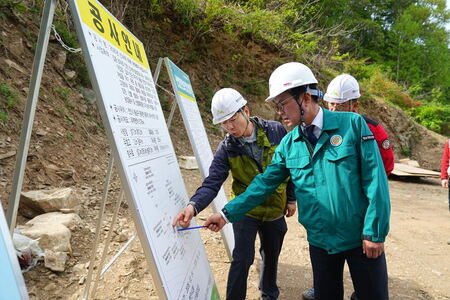
▲ 김승연 회장이 한화오션 시흥R&D캠퍼스를 방문해 임직원들에게 격려의 메시지를 전하고 있다. ©한화그룹 |
브레이크뉴스 문홍철 기자= 김승연 한화그룹 회장이 보유하고 있는 ㈜한화 지분 22.65% 가운데, 절반인 11.32%를 세 아들에게 증여한다.
㈜한화는 31일 공시를 통해 김 회장이 보유한 ㈜한화 지분을 김동관 부회장, 김동원 사장, 김동선 부사장에게 각각 4.86%, 3.23%, 3.23%씩 증여한다고 밝혔다.
증여 후 그룹 지주사격인 ㈜한화의 지분율은 한화에너지 22.16%, 김승연 회장 11.33%, 김동관 부회장 9.77%, 김동원 사장 5.37%, 김동선 부사장 5.37% 등이다.
세 아들은 한화에너지의 지분 100%를 갖고 있어 이번 지분 증여로 세 아들의 ㈜한화 지분율은 42.67%가 돼 경영권 승계가 완료된다.
김 회장은 지분 증여 이후에도 한화그룹 회장직을 유지하며, 전문적인 경영 노하우와 글로벌 네트워크를 바탕으로 경영 자문 및 글로벌 비즈니스 지원을 계속할 예정이다.
김 회장은 경영권 승계와 관련한 불필요한 논란과 오해를 신속히 해소하고 본연의 사업에 집중하기 위해 지분 증여를 결정했다. 정상적, 필수적 사업활동인 한화에어로스페이스의 유상증자 및 한화오션 지분 인수가 승계와 연관되지 않도록 차단하고 나선 것이다.
한화는 “이번 지분 증여로 승계가 완료됨에 따라 한화에어로스페이스 유상증자를 승계와 연결시키는 억측과 왜곡은 불식될 것”이라고 강조했다.
이어 “유럽 방산 블록화, 선진국 경쟁 방산업체들의 견제 등 급변하는 국제 정세 속에 한화에어로스페이스는 ‘투자 실기는 곧 도태’라는 생존전략으로 유상증자를 결정했다”며 “한화에어로스페이스의 한화오션 지분 인수 역시 승계와 무관한, 두 회사의 글로벌 육해공 방산 패키지 영업을 위한 전략적 조치였다”고 설명했다.
또한, “지분 증여에 따른 승계 완료로 ‘㈜한화-한화에너지 합병을 위해 ㈜한화의 기업가치를 낮춘다’는 오해가 바로 잡히고, 주주가치 훼손에 대한 의구심도 해소될 것이다”고 덧붙였다.
지분 증여로 김동관 부회장 등이 내야할 증여세는 2218억원(3월 4일~31일 평균 종가 기준) 규모다. 상속세 및 증여세법에 따라 과세된 세금은 정도경영 원칙에 따라 투명하고 성실하게 납부할 계획이다.
앞서 2006~2007년 김 회장이 ㈜한화 지분 일부를 증여했을 때 세 아들은 1216억원의 증여세를 납부했다. 김 회장도 1981년 당시 역대 최대 수준인 277억원을 상속세로 냈다.
과세기준 가격은 한달 후인 4월 30일 기준 전후 각각 2개월 주가 평균가격으로 결정된다. 상장회사 내부자 주식 거래 사전 공시제도에 따른 것이다. 이에 따라 주가가 낮은 시점에 증여를 결정했다거나, 주식 가격을 의도적으로 낮췄다는 주장은 가능하지 않게 됐다.
㈜한화 주가는 지난 2월 10일 자회사인 한화에어로스페이스가 한화오션 지분 일부를 인수한다고 발표한 뒤 크게 올라 3월 10일 5만2300원을 기록했다. 그 전까지 3년간 ㈜한화 주가는 2~3만원 수준에 머물렀다. 5만원을 넘어선 것은 2017년 8월 이후 8년만이다. ㈜한화 주가는 31일 종가 기준 4만950원이다.
한화그룹은 이번 지분 증여로 승계 관련 논란을 해소하고 방산, 조선해양, 우주항공 등 국가적 차세대 핵심사업에 집중해 기업가치 제고와 국가경제 발전에 기여할 계획이다.
break9874@naver.com
*아래는 위 기사를 '구글 번역'으로 번역한 영문 기사의 [전문]입니다. '구글번역'은 이해도 높이기를 위해 노력하고 있습니다. 영문 번역에 오류가 있을 수 있음을 전제로 합니다.<*The following is [the full text] of the English article translated by 'Google Translate'. 'Google Translate' is working hard to improve understanding. It is assumed that there may be errors in the English translation.>
Kim Seung-yeon, Chairman of Hanwha, donates half of Hanwha shares (11.32%) to his three sons
Kim Seung-yeon, chairman of Hanwha Group, will donate half of the 22.65% of Hanwha shares, or 11.32%, to his three sons.
On the 31st, Hanwha announced through a public disclosure that Chairman Kim will donate 4.86%, 3.23%, and 3.23% of Hanwha shares to Vice Chairman Kim Dong-kwan, President Kim Dong-won, and Vice President Kim Dong-sun, respectively.
After the donation, the stakes of Hanwha, the group's holding company, will be 22.16% for Hanwha Energy, 11.33% for Chairman Kim Seung-yeon, 9.77% for Vice Chairman Kim Dong-kwan, 5.37% for President Kim Dong-won, and 5.37% for Vice President Kim Dong-sun.
The three sons own 100% of Hanwha Energy, so with this donation, the three sons' stakes in Hanwha will be 42.67%, completing the management succession.
Chairman Kim will maintain his position as chairman of Hanwha Group even after the stock donation, and will continue to provide management consulting and global business support based on his professional management know-how and global network.
Chairman Kim decided to donate the stock in order to quickly resolve unnecessary controversy and misunderstandings related to the management succession and to focus on his original business. He has taken steps to block the paid-in capital increase of Hanwha Aerospace and the acquisition of Hanwha Ocean shares, which are normal and essential business activities, from being linked to the succession.
Hanwha emphasized, “As the succession is completed through this stock donation, speculation and distortions linking the paid-in capital increase of Hanwha Aerospace to the succession will be dispelled.”
He continued, “Amidst the rapidly changing international situation, including the European defense bloc and the checks and balances of advanced countries’ competing defense companies, Hanwha Aerospace decided to increase capital with a paid-in capital increase as a survival strategy that ‘investment failures will soon be eliminated’,” and explained, “Hanwha Aerospace’s acquisition of Hanwha Ocean’s stake was also a strategic measure for the two companies’ global land, sea, and air defense package sales, unrelated to the succession.”
He also added, “With the completion of the succession through the equity donation, the misunderstanding that ‘Hanwha’s corporate value is being lowered for the merger of Hanwha and Hanwha Energy’ will be corrected, and doubts about the damage to shareholder value will also be resolved.”
The gift tax that Vice Chairman Kim Dong-kwan and others will have to pay due to the equity donation is 221.8 billion won (based on the average closing price from March 4 to 31). The company plans to pay the taxes levied under the Inheritance Tax and Gift Tax Act transparently and faithfully in accordance with the principle of sound management.
When Chairman Kim donated part of Hanwha shares in 2006-2007, his three sons paid 121.6 billion won in gift tax. Chairman Kim also paid 27.7 billion won in inheritance tax in 1981, the largest amount ever.
The taxable base price is determined by the average stock price for two months before and after April 30, one month later. This is in accordance with the pre-disclosure system for insider stock trading in listed companies. Accordingly, it is no longer possible to claim that the donation was made when the stock price was low or that the stock price was intentionally lowered.
The stock price of Hanwha rose significantly after its subsidiary Hanwha Aerospace announced on February 10 that it would acquire part of Hanwha Ocean shares, reaching 52,300 won on March 10. Until then, the stock price of Hanwha had remained at the 20,000-30,000 won level for three years. It has been eight years since August 2017 that it has surpassed 50,000 won. The stock price of Hanwha Corporation is 49,500 won as of the closing price on the 31st.
With this stock donation, Hanwha Group plans to resolve the controversy over succession and focus on next-generation national core businesses such as defense, shipbuilding, and marine and aerospace, thereby contributing to increasing corporate value and national economic development.