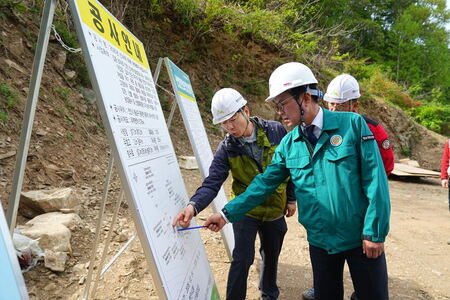
▲ 염생식물 군락지 조성 기념 현판식 및 모종을 심고 있는 중부해경청 해양오염방제과장(중앙)(사진제공:중부지방해양경찰청) © 박상도 기자 |
(브레이크뉴스인천 박상도 기자) 중부지방해양경찰청이 12일, 인천 소래습지생태공원에서 블루카본 및 염생식물을 알리는 현판식과 탄소흡수원 군락 조성을 위한 모종 이식 식재 행사를 개최했다고 밝혔다.
중부해경청에 따르면, 이번 행사는 기후위기 대응 및 해양 탄소흡수원(블루카본) 생태계 보호를 위해 중부해경청을 비롯해 인천광역시, 한국전력 인천본부, 포스코이앤씨, 월드비전 등 5개 기관이 협약을 맺고 공동 추진한 사업이다.
또, 이날 행사에는 기관 관계자와 시민 자원봉사자 100여 명이 참여해 의미를 더했다.
소래습지생태공원은 과거 소금밭으로 활용됐던 지역으로, 중부해경청은 지난 3월과 4월 두 차례에 걸쳐 염생식물 씨앗(해홍나물, 함초, 칠면초) 80kg을 파종한 데 이어, 이날 행사에서 같은 종의 모종 4,000본을 추가로 이식하며 복원 효과와 생존율을 높였다.
이날 행사에서는 생태공원 입구에 군락지 조성을 기념하는 현판식도 함께 진행되어, 시민들에게 염생식물과 블루카본의 의미를 알리고 생태보전에 대한 인식을 확산하는 계기를 마련했다.
중부해경청 관계자는 “이번 행사는 기후위기 시대에 해양이 가진 탄소중립 잠재력을 되살리기 위한 작은 실천”이라며, “해양오염으로부터 생태계를 보호하고, 건강한 바다를 미래 세대에 물려줄 수 있도록 국민 여러분의 지속적인 관심과 참여를 부탁드린다.”고 말했다.
한편, 염생식물은 염분이 높은 해안가와 갯벌에서 자라는 식물로, 대기 중 이산화탄소를 흡수·저장하는 블루카본 생태계의 핵심 자원이다. 우리나라에서는 칠면초, 함초 등이 대표적이다.
*아래는 위 기사를 ‘구글 번역’으로 번역한 영문 기사의 [전문]입니다.‘구글번역’은 이해도 높이기를 노력하고 있습니다. 영문 번역에 오류가 있을 수 있음을 전제로 합니다.<*Below is the [full text] of the English article translated by 'Google Translate'. 'Google Translate' is trying to improve understanding. It is assumed that there may be errors in the English translation.>
Central Coast Guard, public-private cooperation to create 'blue carbon' communities, planting salt-tolerant plants in Sorae Wetland.
Joint practice for creating carbon sink communities, leading the way in responding to the climate crisis
-Break News Incheon Park Sang-do reporter
The Central Coast Guard announced on the 12th that it held a signboard ceremony to promote blue carbon and salt-tolerant plants and a seedling transplantation event for creating carbon sink communities at the Incheon Sorae Wetland Ecological Park.
According to the Central Coast Guard, this event is a joint project promoted by five organizations including the Central Coast Guard, Incheon Metropolitan City, Korea Electric Power Corporation Incheon Headquarters, POSCO E&C, and World Vision to respond to the climate crisis and protect the marine carbon sink (blue carbon) ecosystem.
In addition, the event was more meaningful with the participation of about 100 government officials and citizen volunteers.
Sorae Wetland Ecological Park was a salt field in the past, and the Central Coast Guard planted 80 kg of salt-tolerant plant seeds (sea ginseng, seaweed, and chilmyeoncho) twice in March and April, and transplanted an additional 4,000 seedlings of the same species at the event, increasing the restoration effect and survival rate.
A plaque ceremony commemorating the establishment of the colony was also held at the entrance to the ecological park, providing an opportunity to inform citizens of the meaning of salt-tolerant plants and blue carbon and to spread awareness of ecological conservation.
A Central Coast Guard official said, “This event is a small step toward reviving the carbon-neutral potential of the ocean in the era of climate crisis,” and added, “We ask for the continued interest and participation of the public so that we can protect the ecosystem from marine pollution and pass on a healthy ocean to future generations.”
Meanwhile, halophytes are plants that grow in coastal areas and tidal flats with high salinity, and are a key resource in the blue carbon ecosystem that absorbs and stores carbon dioxide in the atmosphere. Representative plants in Korea include chilmyeoncho and haemcho.
원본 기사 보기:ebreaknews.com