▲ 정길선 박사 ©브레이크뉴스 |
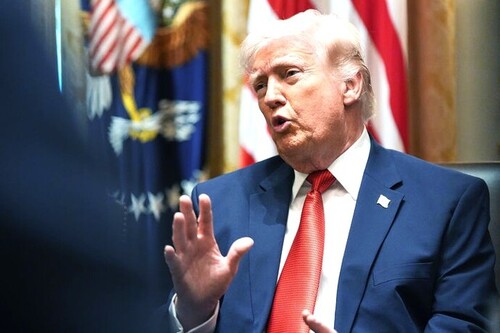
트럼프가 러시아에 대한 중대발표를 하겠다 한 것이 러시아-우크라이나 전쟁과 관련, 마르크 뤼터 나토 사무총장과 회담한 자리에서 앞으로 50일 이내에 러시아-우크라이나 전쟁이 끝나지 않으면 러시아에 100%의 혹독한 관세를 부과할 것(If the Russia-Ukraine war does not end, we will impose a harsh 100% tariff on Russia)이라 밝혔다. 트럼프는 자신들이 러시아에 대해 매우 큰 불만을 갖고 있다며 만약 50일 안에 휴전 합의가 이루어지지 않는다면, 매우 가혹한 경제적 조치가 따를 것이라 했다. 그러면서 트럼프는 14일에 밝힌 관세 조치가 단순한 경제 제재를 넘어 러시아산 원유를 구매하는 국가들까지 합류한 ‘2차 제재(Secondary sanctions)의 형식으로 확대될 것이라고 설명했다. 이는 중국, 인도, 브라질 등 러시아와 에너지 거래를 하고 있는 국가들까지 그 대상이 될 수 있다.
트럼프는 무역이라는 조치를 매우 다양한 방식으로 활용해온 인물이다. 본인 또한 이를 자화자찬(自畵自讚)하고 있다. 이어 전쟁을 멈추는 데도 무역은 매우 훌륭한 수단이라 주장한다. 그러나 본인은 이를 무기로 삼고 있다는 것이 미국에 대해 대단한 마이너스를 불러올 것이라는 것을 잘 모른다. 그리고 트럼프는 우크라이나에 대한 무기 지원 방침도 밝혔다. 그는 최상급의 무기를 생산해 나토 동맹국에 공급할 것이며, 그 무기는 다시 우크라이나에 전달될 예정이라 했다. 구체적으로는 패트리어트 방공 체계를 비롯한 대규모 공격 무기들이 포함되며, 일부 무기는 기존 나토 보유분을 교체해 우크라이나로 이전한다고 한다. 그렇게 되면 러시아와 전쟁으로 붙겠다는 것이다. 러시아 입장에서는 어쩌고 보면 기다려온 순간이라 볼 수 있겠다. 우크라이나는 단지 방어무기 뿐 아니라 미사일, 탄약 등 다양한 범주의 군사 장비를 확보할 수 있을 것이라며 이번 협정은 나토가 전비를 부담하는 조건이라 설명했다. 즉, 나토 동맹국들이 미국의 무기를 구매하여 우크라이나에 직접 전달하는 방식으로 이루어진다는 것이다.
트럼프는 회담 중 푸틴 대통령에 대한 개인적인 실망감도 드러냈다. 그는 푸틴과 대화가 항상 친절했지만, 그 직후 키예프나 다른 도시들이 공격받는 일이 반복됐다며 매우 실망했다 하였다. 그러면서 트럼프는 푸틴이 약속을 지킬 인물이라 생각했으나, 현실은 달랐다고 했다. 그리고 푸틴은 자신이 속였던 전임 대통령들과 마찬가지로 자신도 속이려 했다며 이제는 말보다 결과가 중요하다고 강조했다. 트럼프의 이번 발언은 단순히 경고하는 차원을 넘어 미국의 대외 경제 정책 중 관세는 본격적으로 외교적인 압박 수단으로 사용될 것으로 보인다. 특히 러시아산 원유와 가스를 여전히 수입 중인 국가들에 대한 2차 제재가 현실화 될 경우, 에너지 시장은 물론 국제 정치 지형에도 큰 파장이 있을 것이다. 그러나 이같은 트럼프를 분석해 본다면 그는 친분이 있던 푸틴에게 기대했지만 결국 그와 같은 개인적인 감정에 기대 자신의 말을 들어줄 것이라 생각했을 것으로 보인다.
그런데 푸틴은 순수한 선의 마음으로 국제 관계에 접근했다가 맹우라 여겼던 독일 메르켈 전 총리에게 배신을 당한 바 있다. 따라서 푸틴 입장에서는 공과 사를 분명히 해야 한다는 원칙이 세워졌을 것이다. 푸틴 대통령 또한 트럼프의 자주 바뀌는 말의 성정을 잘 알고 있다. 그리고 러시아-우크라이나 문제는 단순한 친목만으로 해결될 수 없음을 시사하고 있다. 그런데 미국과 간과하고 있는 것이 있다. 미국과 러시아는 무역을 별로 하지 않는다. 각종 경제 제재를 해도 러시아는 잘 버텨왔다. 내수 시장 활성화와 집단 서방의 결정에 반발하는 국가들과 교역하며 이들과 함께 집단 서방에 저항해 왔다. 이미 미국과 러시아는 서로 무역을 하고 있는 것이 없고, 러시아를 달래기 위해 관세를 0%로 마쳤다. 그런데 무역 활동이 없는 러시아한테 100% 관세라는 것은 하나마나한 얘기다. 그와 같은 어처구니 없는 관세 폭탄에 러시아 또한 미국과 맞서 카드 하나를 더 구상할 것이다.
그와 같은 카드는 첫 번째, 미국과 대화 창구를 아예 닫겠다는 것을 언급할 수도 있다. 여태까지 러시아는 대화의 문이 여전히 열려 있다며 협상을 진행해 왔다. 그러나 이제는 미국과의 모든 관계를 단절하고 단교라는 최후의 수단을 쓸 수 있다는 것이다. 그러나 이는 어디까지나 가능성이기에 쓸 가능성은 낮다. 두 번째, 그동안 미국에 제재하지 않았던 필수품목들을 제재할 것이다. 러시아는 전 세계 우라늄 농축 능력의 약 44%를 차지하며, 미국이 수입하는 핵연료의 약 35%를 공급하고 있다. 지난 2023년 미국의 전체 우라늄 수입 중 러시아산 비중은 12%, 농축 우라늄는 27%에 달했다. 작년에도 이는 비슷했다. 러시아는 미국에 우라늄 수출을 0%로 제한할 것이다. 미국은 세계 최대의 원자력 발전 생산국 중 하나이며, 전체 발전량 중 약 19%를 원자력 발전에 의존하고 있는 실정이다. 우라늄이 단절되면 미국의 전력 생산이 원활하지 않을 것이다. 게다가 원자력 발전소 또한 가동이 멈출 가능성이 높다. 그렇게 되면 미국 입장에서 재앙이다.
세 번째, 미국이 원하는 희토류 공동 개발을 취소할 것이다. 푸틴 대통령은 트럼프에게 희토류 공동 개발을 제안한 바 있다. 희토류는 첨단 기술, 국방, 에너지 등 다양한 분야에서 필수적인 전략 자원이기 때문에 중요성이 매우 높은 광물이다. 특히, 전기차, 스마트폰, 풍력 터빈, 디스플레이, 레이저, 의료 기기 등 다양한 첨단 제품의 핵심 부품 제조에 사용되고 있다. 미국 또한 희토류는 존재한다. 다만 채굴된 원석에서 희토류 원소를 분리·정제하는 일인데 미국은 이를 분리하고 정제할 수 없다. 몇 년 전만 해도 미국에는 아예 이와 같은 분리, 정제하는 시설이 없었다. 2023년 MP머티리얼스가 국방부 지원을 받아 희토류 정제시설을 구축했는데 아직 처리 용량이 턱없이 부족한 실정이다. 중국은 환경규제가 느슨한 데다, 저렴한 전기와 노동력 덕분에 비용도 최소화하니까 저렴한 희토류를 대량으로 생산할 수 있었고 정제 과정이 더럽고 복잡한데다 그렇다고 희토류가 금이나 은처럼 그렇게 비싼 금속도 아니니까 돈도 별로 되지가 않으니 미국에서 채굴된 희토류 광석을 정제하기 위해 중국으로 보내졌던 이유였다.
러시아산 원유와 가스를 여전히 수입 중인 국가들에 대한 2차 제재를 할 경우도 마찬가지다. 특히 BRICS 국가들에 대한 트럼프의 노골적인 협박인 셈인데 러시아를 제외한 다른 BRICS 국가들은 러시아와 주로 교역하고 있다. 그러나 트럼프가 이를 건드린다면 이 국가들은 미국에 각종 기본 원자재 제공에 대한 관세를 100% 이상 높이거나 제한하는 측으로 대응할 가능성이 높다. 특히 중국은 미국의 희토류 산업을 쥐고 있기에 이를 대폭 활용성은 더더욱 높다. 트럼프는 최근 들어 러시아와의 관계 개선보다는 국제 공조를 통한 압박 노선을 강조하고 있으며 에너지 및 무역 제재를 활용하면서 다시 우크라이나에 무기를 대고 있다. 역시 마찬가지다. 만약 미국이 나토를 통해 다시 무기를 제공한다면 러시아는 전술핵과 전략핵 두 가지를 전진 배치하여 압박을 가할 가능성이 높다. 게다가 본격적인 전쟁을 선포하여 특수군사작전에서 전쟁을 격상할 가능성이 높아지면서 아마 러시아의 전방위적 공격과 정예병들이 투입되어 빠르게 전쟁을 완료할 것으로 예상된다.
트럼프의 개인적인 감정과 공적인 감정을 구별하지 못하는 이같은 행위, 특히 그의 감정 조절 장애는 미국에 크나큰 재앙을 초래할 수 있다는 것에서 크게 우려되는 바다.
*필자/ 정길선.
노바토포스 회원, 역사학자, 고고인류학자, 칼럼니스트, 러시아 과학아카데미 유라시아 고고인류학연구소 연구교수.
*아래는 위 기사를 '구글 번역'으로 번역한 영문 기사의 [전문]입니다. '구글번역'은 이해도 높이기를 위해 노력하고 있습니다. 영문 번역에 오류가 있을 수 있음을 전제로 합니다.<*The following is [the full text] of the English article translated by 'Google Translate'. 'Google Translate' is working hard to improve understanding. It is assumed that there may be errors in the English translation.>
Trump's tariff threat on Russia, will it be effective?
Columnist Jeong Gil-seon
Trump's announcement of a major announcement on Russia was related to the Russia-Ukraine war. During a meeting with NATO Secretary General Mark Rutte, he said that if the Russia-Ukraine war does not end within the next 50 days, we will impose a harsh 100% tariff on Russia. Trump said that they are very dissatisfied with Russia and that if a ceasefire agreement is not reached within 50 days, very harsh economic measures will follow. Trump explained that the tariff measures announced on the 14th will be expanded beyond simple economic sanctions to include countries that purchase Russian crude oil in the form of "secondary sanctions." This could include countries that trade with Russia, such as China, India, and Brazil.
Trump is a person who has utilized trade measures in a very diverse way. He is also praising himself for this. He also claims that trade is a very good means to stop war. However, he does not know that using it as a weapon will bring about a huge negative for the United States. And Trump also announced a policy of providing weapons to Ukraine. He said that he will produce the best weapons and supply them to NATO allies, and that the weapons will be delivered to Ukraine. Specifically, it includes large-scale offensive weapons including Patriot air defense systems, and some of the weapons will be transferred to Ukraine by replacing existing NATO stocks. If that happens, it means that Russia will go to war. From Russia’s perspective, this could be seen as a moment they have been waiting for. He explained that Ukraine will be able to secure not only defensive weapons but also various categories of military equipment such as missiles and ammunition, and that this agreement is on the condition that NATO will shoulder the cost of war. In other words, NATO allies will purchase weapons from the United States and deliver them directly to Ukraine.
During the meeting, Trump also expressed his personal disappointment with President Putin. He said that he was always friendly in conversations with Putin, but was very disappointed that Kiev and other cities were attacked repeatedly right afterward. He also said that Trump thought Putin would keep his promises, but reality was different. And Putin emphasized that, like the previous presidents he had deceived, he had tried to deceive himself, and now results are more important than words. Trump’s recent remarks go beyond a simple warning, and it seems that tariffs, one of the US’s foreign economic policies, will be used as a full-fledged means of diplomatic pressure. In particular, if secondary sanctions on countries that are still importing Russian crude oil and gas become a reality, there will be significant repercussions not only in the energy market but also in the international political landscape. However, if we analyze Trump, it seems that he expected Putin, with whom he was close, but ultimately thought that he would listen to him based on personal feelings.
However, Putin approached international relations with pure good intentions, but was betrayed by former German Chancellor Merkel, whom he considered a close friend. Therefore, from Putin’s perspective, the principle of clearly distinguishing between public and private affairs must have been established. President Putin is also well aware of Trump’s frequently changing words. And he is suggesting that the Russia-Ukraine issue cannot be resolved through simple friendship. However, there is something that the United States is overlooking. The United States and Russia do not trade much. Russia has endured various economic sanctions. It has resisted the West collectively by activating its domestic market and trading with countries that oppose the decisions of the West collectively. The United States and Russia already do not trade with each other, and have reduced tariffs to 0% in order to appease Russia. However, a 100% tariff is meaningless to Russia, which does not engage in trade. Russia will also come up with another card to deal with the United States in the face of such an absurd tariff bomb.
Such a card could first be mentioned as completely closing the dialogue channel with the United States. Up until now, Russia has been negotiating, saying that the door to dialogue is still open. However, now it can cut off all relations with the United States and use the last resort of severing diplomatic ties. However, this is only a possibility, so it is unlikely to be used. Second, it will sanction essential items that were not previously sanctioned by the United States. Russia accounts for about 44% of the world's uranium enrichment capacity and supplies about 35% of the nuclear fuel imported by the United States. In 2023, Russia accounted for 12% of the total uranium imports by the United States, and 27% of enriched uranium. Last year, it was similar. Russia will limit uranium exports to the United States to 0%. The United States is one of the world's largest producers of nuclear power, and relies on nuclear power for about 19% of its total power generation. If uranium is cut off, power production in the United States will not be smooth. In addition, nuclear power plants are likely to stop operating. That would be a disaster for the United States.
Third, it will cancel the joint development of rare earths that the United States wants. President Putin has proposed joint development of rare earths to Trump. Rare earths are very important minerals because they are essential strategic resources in various fields such as advanced technology, defense, and energy. In particular, it is used in the manufacture of key components for various advanced products such as electric vehicles, smartphones, wind turbines, displays, lasers, and medical devices. Rare earth elements also exist in the United States. However, the United States cannot separate and refine rare earth elements from mined ore. Until a few years ago, there were no such separation and refinement facilities in the United States. In 2023, MP Materials built a rare earth refinery facility with support from the Department of Defense, but its processing capacity is still insufficient. China has lax environmental regulations and has been able to mass-produce inexpensive rare earth elements because its costs are minimized thanks to cheap electricity and labor. The refining process is dirty and complicated, and rare earth elements are not as expensive as gold or silver, so they do not make much money. This is why rare earth ores mined in the United States were sent to China to be refined.
The same goes for imposing secondary sanctions on countries that are still importing Russian crude oil and gas. This is Trump's blatant threat to the BRICS countries, especially since the other BRICS countries, except Russia, mainly trade with Russia. However, if Trump touches on this, these countries are likely to respond by raising tariffs on various basic raw materials provided to the US by more than 100% or limiting them. In particular, China has a large stake in the US rare earth industry, so it is even more likely to utilize this. Recently, Trump has been emphasizing the pressure route through international cooperation rather than improving relations with Russia, and is using energy and trade sanctions to supply weapons to Ukraine again. This is the same. If the US provides weapons again through NATO, Russia is likely to apply pressure by forward-deploying both tactical and strategic nuclear weapons. In addition, as the possibility of declaring a full-scale war and escalating the special military operation to war increases, it is expected that Russia's all-out attack and elite soldiers will be deployed to quickly end the war. Trump's inability to distinguish between his personal and public feelings, especially his emotional control disorder, is of great concern as it could bring about great disaster for the United States.