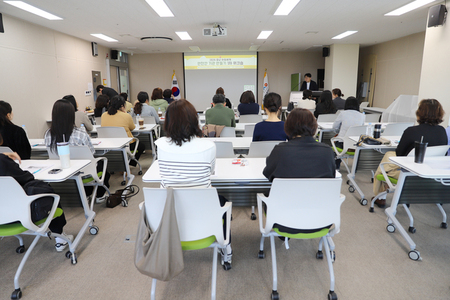
▲ 부산시의회 정채숙 의원이 1일 시정질문을 통해 “부산시교육청의 민주시민교육은 방향성과 운영 전략이 불분명한 상태에서 혼란만 키우고 있다”고 강력 비판하고 있다 © 배종태 기자 |
[브레이크뉴스=배종태 기자] 부산시교육청이 추진 중인 학교민주시민교육이 명확한 기준 없이 운영되며, 정치적 논란을 반복하고 있다는 지적이 제기됐다.
1일 열린 부산시의회 제331회 임시회 시정질문에서 국민의힘 정채숙 의원(비례대표)은 “부산시교육청의 민주시민교육은 방향성과 운영 전략이 불분명한 상태에서 혼란만 키우고 있다”고 강력 비판했다.
정 의원은, 지난 4월 김석준 교육감 취임 이후 불거진 ‘대통령 탄핵 헌법재판소 선고 시청 권고 공문’ 사건을 언급하며 “민주시민교육이라는 이름 아래 정치적 중립성을 훼손한 조치였다”고 비판했다. 해당 공문은 부산 지역 650여 개 초중고에 일괄 배포되었으며, 교육청은 이를 ‘민주시민교육의 일환’으로 해명했지만, 정치적 편향성 논란에 휘말리며 교육계와 지역사회의 큰 반발을 샀다.
이어 정 의원은 민선6대 들어 교육청 조직 개편을 통해 핵심 부서를 ‘민주시민교육과’로 전환하고, ‘민주시민교육팀’ 및 ‘학교혁신팀’을 신설한 점에 대해서도 우려를 표했다. 이는 민선5대 하윤수 교육감 시절 폐지됐던 ‘민주시민교육’과 ‘혁신’ 명칭을 재도입한 것으로, 정 의원은 “교육감의 정치적 성향에 따라 교육정책의 일관성이 무너지고 있다”고 지적했다.
논란은 ‘손바닥 헌법책’ 예산 삭감 과정에서도 이어졌다. 고1 학생에게 헌법 조문이 담긴 소책자를 배부하겠다는 사업이었지만, 부산시의회는 “이념적으로 편향된 특정 단체가 제작한 자료를 교육청이 검증 없이 채택했다”며 전액 삭감했다. 이에 대해 정 의원은 “교육적 타당성과 공감대를 고려하지 않은 일방적인 정책 추진”이라며 비판의 수위를 높였다.
정 의원은 현재 민주시민교육이 ‘무엇을, 어떻게, 누가’ 가르칠 것인지에 대한 교육청 차원의 명확한 지침 없이 운영되고 있다는 점을 문제로 지적했다. 2022년 이후 민주시민교육은 ‘의무실시’에서 ‘권장실시’로 바뀌었으며, 이로 인해 학교 간, 교사 간 편차가 심화될 우려가 있다는 것이다.
또한 민주시민교육은 교육감의 정치적 성향에 따라 예산 및 사업 추진에 큰 변동을 겪고 있다. 실제로 민선4대(진보 성향) 시절 4억8억 원 규모였던 관련 예산이 민선5대(보수 성향) 시기에는 1억2억 원으로 급감했으며, 이는 교육의 지속성과 일관성을 위협하는 대표적 사례로 꼽힌다.
정 의원은 “민주시민교육은 진보와 보수를 떠나, 성숙한 시민의식 함양을 위한 핵심 교육이지만, 현재 부산시교육청은 이를 이념 대립의 장으로 만들고 있다”고 비판하며, ▲학교 현장에서 통용될 수 있는 공통 기준 마련, ▲특정 진영에 치우치지 않는 정책 협의기구 구성, ▲교수학습자료의 철저한 개발 및 검증, ▲교원 역량 강화와 함께 정치적 논란 방지 장치 도입 등의 실질적 대책을 제시했다.
그러면서 정 의원은 “민주시민교육의 명분만을 앞세우는 것이 아니라, 교육공동체 전체가 공감할 수 있는 투명하고 일관된 정책 방향을 수립해야 한다”고 강조했다. 이어 "지금처럼 정치적 성향에 따라 교육 내용과 방식이 좌우된다면, 민주시민교육은 그 본래의 목적을 잃고 학생들에게 혼란만 안길 뿐"이라고 지적했다.
[Here is the English translation of the article] "Busan Office of Education, School Democratic Civic Education Lacks Direction and Operational System"... Amid Political Controversy, Where Is the Essence of Education?
It has been pointed out that the democratic civic education in schools promoted by the Busan Metropolitan Office of Education is being operated without clear standards and is repeatedly causing political controversy.
At the 331st temporary session of the Busan Metropolitan Council held on the 1st, Jeong Chae-sook, a member of the People Power Party (proportional representative), strongly criticized, “The democratic civic education of the Busan Office of Education is only creating confusion due to the lack of clear direction and operational strategy.”
Assemblywoman Jeong mentioned the “recommendation document to watch the Constitutional Court’s ruling on the presidential impeachment” incident that arose after Superintendent Kim Seok-jun took office last April, and criticized it, saying, “It was an action that undermined political neutrality under the name of democratic civic education.” The document was distributed to about 650 elementary, middle, and high schools in the Busan area. Although the education office explained that it was “part of democratic civic education,” it sparked controversy over political bias and faced strong backlash from the education community and local society.
She also expressed concern over the restructuring of the education office under the 6th popularly elected administration, which turned a key department into the "Democratic Civic Education Division" and established the "Democratic Civic Education Team" and the "School Innovation Team." These were names that had been abolished under the 5th popularly elected Superintendent Ha Yoon-soo. Assemblywoman Jeong pointed out, “The consistency of education policy is collapsing depending on the superintendent’s political orientation.”
The controversy continued during the budget cut process for the “palm-sized constitution book.” The project aimed to distribute a booklet containing constitutional provisions to high school first-year students, but the Busan Metropolitan Council cut the entire budget, stating, “The education office adopted material produced by a specific ideologically biased organization without proper verification.” Regarding this, Assemblywoman Jeong further criticized it as “a unilateral policy push without considering educational validity or public consensus.”
Assemblywoman Jeong pointed out that the current democratic civic education is being operated without clear guidelines from the education office on “what to teach, how to teach, and who should teach.” Since 2022, democratic civic education changed from being “mandatory” to “recommended,” raising concerns about widening disparities between schools and teachers.
She also noted that democratic civic education experiences large fluctuations in budget and project implementation depending on the political orientation of the superintendent. In fact, during the 4th popularly elected (progressive) administration, the related budget was in the range of 400 million to 800 million KRW, but during the 5th (conservative) administration, it dropped sharply to 100 million to 200 million KRW. This is cited as a representative case that threatens the continuity and consistency of education.
Assemblywoman Jeong stated, “Democratic civic education is a core education for fostering mature civic consciousness, regardless of progressive or conservative ideologies, but the Busan Office of Education is turning it into a battleground of ideological conflict.” She then proposed practical countermeasures such as ▲establishing common standards applicable in schools, ▲forming a policy consultative body not biased toward any particular political camp, ▲rigorous development and verification of teaching and learning materials, and ▲strengthening teacher capacity while introducing mechanisms to prevent political controversy.
She emphasized, “Rather than prioritizing only the cause of democratic civic education, a transparent and consistent policy direction that the entire educational community can agree on must be established.” She added, “If the content and methods of education continue to be swayed by political leanings as they are now, democratic civic education will lose its original purpose and only cause confusion among students.”
원본 기사 보기:부산브레이크뉴스