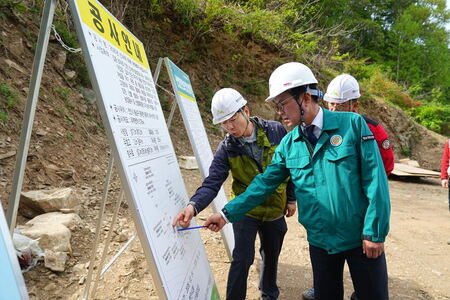
▲ 아산 승계산성 북성벽 모습 © 아산시 제공 |
충남 아산 지역에서 한성백제 시기에 축조된 것으로 보이는 산성이 확인되면서, 문헌 기록에 의존해 왔던 백제의 지방 진출과 지역 경영 양상이 고고학적으로 뒷받침되기 시작했다. 백제 한성기의 영역 확장 과정과 전략적 거점 운영을 해석할 수 있는 실증 자료가 처음으로 확보됐다는 점에서 학술적 의미가 크다.
아산시는 2025년 국가유산청 지원을 받아 진행한 긴급발굴조사 결과, 아산 승계산성이 백제 한성기에 조성된 토축 산성으로 확인됐다고 밝혔다. 성벽 축조 기법과 출토 유물의 성격을 종합하면, 이 산성은 단순한 방어 시설을 넘어 해안과 내륙을 잇는 군사·행정적 요충지로 기능했을 가능성이 제기된다.
그동안 백제의 아산 지역 활동은 '삼국사기' 백제본기 온조왕조에 기록된 대두성·탕정성 축성과 사민 기사 등을 통해 간접적으로만 알려져 왔다. 학계에서는 이들 성을 아산 일대로 비정해 왔지만, 한성기 백제가 실제로 언제 어떤 방식으로 이 지역에 진입했는지를 보여주는 고고학적 증거는 부족했다.
전환점은 2022년 둔포지구 도시개발사업을 위한 지표조사 과정에서 마련됐다. 이 조사에서 그동안 알려지지 않았던 승계산성이 처음 확인됐고, 한성기 토기와 함께 중국 동진제 시유도기가 수습되면서 유적의 성격에 대한 관심이 본격화됐다. 이후 시는 정밀지표조사를 거쳐 기초자료를 축적했고, 그 성과를 토대로 2025년 국가유산청 긴급발굴조사 대상에 선정됐다.
발굴 조사는 2025년 11월 26일부터 12월 10일까지 진행됐으며, 북문지로 추정되는 구간과 성벽 일부, 집수시설, 성내 평탄대지를 중심으로 다수의 트렌치를 설치해 이루어졌다. 조사 결과 성벽은 흙을 층층이 다져 쌓는 판축 기법으로 축조된 토성이었고, 최소 한 차례 이상의 개축 흔적도 확인됐다. 성문 시설과 건물지, 수혈유구 등 성곽 운영과 직결된 유구가 함께 드러나면서 산성의 기능성이 보다 분명해졌다.
출토 유물 역시 주목할 만하다. 동진제 청자와 시유도기, 철제 취사용기 등은 당시 상위 계층이 사용하던 위신재로 분류된다. 이는 승계산성이 지방 방어 거점에 그치지 않고, 백제 중앙 권력과 긴밀히 연결된 정치·군사적 거점이었음을 시사한다. 특히 중국계 도자기의 존재는 한성기 백제가 서해 연안을 매개로 대외 교류와 군사 이동을 병행했을 가능성을 뒷받침한다.
조사단은 이러한 자료를 종합해, 승계산성이 한성기에는 남부 지역 진출을 위한 연해 거점이자 기항지로 활용됐고, 이후 웅진기에는 대고구려 방어 체계의 일부로 기능했을 가능성이 높다고 보고 있다. 이는 아산 지역이 백제 국가 운영에서 차지한 위상을 재평가하게 만드는 대목이다.
아산시는 이번 조사 성과를 토대로 승계산성의 역사적 가치와 성격을 체계적으로 정리하고, 추가 정밀 발굴과 함께 국가유산 지정을 염두에 둔 보존·활용 방안 마련에 나설 방침이다. 한성백제의 지방 지배 구조를 입체적으로 복원할 수 있는 핵심 유적으로서, 승계산성이 갖는 의미는 앞으로 더욱 확장될 것으로 보인다.
*아래는 위 기사를 '구글 번역'으로 번역한 영문 기사의 [전문]입니다. '구글번역'은 이해도를 높이기를 위해 노력하고 있습니다. 영문 번역에 오류가 있을 수 있음을 전제로 합니다.<*The following is [the full text] of the English article translated by 'Google Translate'. 'Google Translate' is working hard to improve understanding. It is assumed that there may be errors in the English translation.>
With the discovery of a mountain fortress believed to have been built during the Hanseong Baekje period in the Asan region of South Chungcheong Province, archaeological evidence has begun to support the understanding of Baekje's expansion into the provinces and its management practices, previously reliant on literary records. This provides significant academic significance, as it provides the first empirical evidence to interpret the territorial expansion and strategic stronghold operations of Baekje during the Hanseong period.
Asan City announced that the results of an emergency excavation conducted in 2025 with support from the National Heritage Administration confirmed that Seunggyesanseong Fortress in Asan was an earthen fortress built during the Hanseong period of Baekje. Considering the wall construction technique and the nature of the excavated artifacts, it is possible that the fortress functioned beyond mere defensive measures and served as a strategic military and administrative hub connecting the coast and the inland.
Until now, Baekje's activities in the Asan region had been known only indirectly through accounts of the construction of Daeduseong Fortress and Tangjeongseong Fortress and the Samguksagi (History of the Three Kingdoms), such as the Onjo Dynasty section of the Baekje Annals, which records the construction of Daeduseong Fortress and Tangjeongseong Fortress. While academics have identified these castles as being located in the Asan area, archaeological evidence demonstrating the exact time and method of Baekje's entry into the region during the Hanseong period was lacking.
A turning point came during a surface survey for the Dunpo District Urban Development Project in 2022. This survey uncovered the previously unknown Seunggyesanseong Fortress. The discovery of Hanseong-period pottery, along with glazed pottery from the Eastern Jin Dynasty, sparked significant interest in the site's nature. The city subsequently conducted a detailed surface survey to accumulate basic data, and based on these findings, the site was selected for an emergency excavation by the National Heritage Administration in 2025.
The excavation, conducted from November 26 to December 10, 2025, involved the installation of multiple trenches, centered on a section presumed to be the northern gate, portions of the fortress wall, water collection facilities, and the flat ground within the fortress. The survey revealed that the fortress wall was constructed using a ramming technique, layering earthen walls and showing at least one instance of renovation. The functionality of the mountain fortress has become clearer with the discovery of remains directly related to its operation, including gate facilities, building sites, and pit remains.
The excavated artifacts are also noteworthy. Eastern Jin Dynasty celadon, glazed pottery, and iron cooking utensils are classified as prestige goods used by the upper class. This suggests that Seunggyesanseong Fortress was not merely a local defensive stronghold, but also a political and military stronghold closely linked to the central government of Baekje. The presence of Chinese ceramics, in particular, supports the possibility that Baekje during the Hanseong period engaged in both external exchanges and military movements via the West Sea coast.
The research team synthesized these data and concluded that Seunggyesanseong Fortress likely served as a coastal base and port of call for southern expansion during the Hanseong period, and later as part of the Goguryeo defense system during the Ungjin period. This suggests a reevaluation of the Asan region's role in the Baekje state's governance.
Based on the findings of this survey, Asan City plans to systematically organize the historical value and character of Seunggyesanseong Fortress. Along with further detailed excavations, the city plans to develop preservation and utilization plans with a view to its designation as a national heritage site. As a key site that can comprehensively reconstruct the local governance structure of the Baekje Kingdom in Hanseong, the significance of Seunggyesanseong Fortress is expected to expand further in the future.
원본 기사 보기:브레이크뉴스대전세종충청