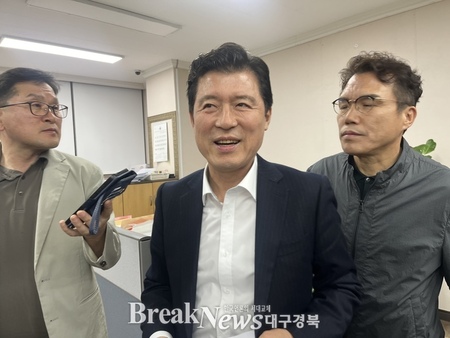
▲ 황명선 국회의원(충남 논산·계룡·금산)=황명선 국회의원실 제공 © 정지완 기자 |
황명선 국회의원(충남 논산·계룡·금산)이 국회 대정부질문에서 지방소멸과 재정 불균형, 지역 산업 기반 약화 문제를 집중적으로 제기하며 정부의 구조적 대응을 촉구했다. 특히 충남과 대전의 행정·산업적 위상을 언급하며, 중부권이 수도권 일극 체제를 완화할 전략 거점으로 기능할 수 있도록 국가 차원의 체계적 지원이 필요하다고 강조했다.
황 의원은 인구 감소와 고령화가 가속화되는 비수도권의 현실을 짚으며, 일부 지역이 소멸 위험 단계에 접어들었음에도 중앙정부의 대응은 여전히 단기 사업 중심에 머물러 있다고 지적했다. 그는 지방이 독자적 성장 동력을 축적하려면 재정 권한과 정책 결정 권한의 실질적 이양이 전제돼야 한다고 밝혔다. 중앙집권적 재정 구조를 유지한 채 균형발전을 논하는 것은 한계가 분명하다는 점도 분명히 했다.
재정분권과 관련해 황 의원은 국세와 지방세 구조의 불균형을 지적하며, 지방정부가 자율적으로 정책을 설계·집행할 수 있는 기반이 취약하다고 설명했다. 교부세 제도와 국고보조사업 체계를 재정비해 지방의 세입 기반을 확충하고, 이전재원 의존도를 낮추는 방향으로 개편이 이뤄져야 한다는 주장이다. 단순한 재정 이전이 아니라 구조적 세원 배분의 재설계가 필요하다는 점을 강조한 대목이다.
산업 정책에 대해서는 수도권 집중 현상이 국가 경쟁력에도 부담이 되고 있다고 분석했다. 반도체, 이차전지, 미래모빌리티 등 전략 산업이 수도권에 과도하게 집적되면서 비수도권은 협력·보조 기능에 머무르는 구조가 고착화되고 있다는 것이다. 황 의원은 지역 거점 대학과 연구기관, 기업을 연계하는 산학연 협력 체계를 제도적으로 강화하고, 연구개발(R&D) 인프라를 지역 중심으로 확충해야 산업 분산 효과가 실질적으로 나타날 수 있다고 밝혔다.
이 과정에서 황 의원은 충남과 대전을 구체적으로 언급했다. 그는 충남이 반도체·디스플레이, 석유화학, 국방·군수 등 전략 산업 기반을 갖추고 있고, 대전은 과학기술 연구 인프라와 공공기관 집적도가 높은 도시라는 점을 상기시켰다. 두 지역이 유기적으로 연계될 경우 연구개발과 생산, 실증이 선순환하는 산업 생태계를 구축할 수 있음에도, 이를 뒷받침할 국가 차원의 종합 전략은 미흡하다고 평가했다.
아울러 대전·충남 행정통합 논의와 관련해서도, 단순한 행정구역 재편을 넘어 중부권 광역경제권을 형성할 수 있는 제도적 설계가 병행돼야 한다고 밝혔다. 통합의 명분이 균형발전이라면, 재정 특례와 권한 이양, 국가 전략사업 배치 등 실질적 지원 장치가 함께 마련돼야 한다는 것이다. 제도적 기반 없이 속도만 앞세울 경우 지역 내 갈등과 행정 혼란을 초래할 수 있다는 점도 짚었다.
공공기관 이전과 혁신도시 정책의 실효성 문제도 거론했다. 1차 공공기관 이전 이후 후속 산업·정주 여건 조성이 충분히 이뤄지지 않아 자족 기능이 제한적이라는 평가다. 황 의원은 충남 혁신도시와 대전의 과학기술 인프라를 연계해 고부가가치 산업을 육성하는 방향으로 정책을 고도화해야 한다고 밝혔다.
황 의원은 지방소멸 대응은 개별 부처의 단편적 사업이 아니라 재정·산업·교육·주거 정책이 연동된 범정부 차원의 통합 로드맵으로 접근해야 한다고 강조했다. 중앙정부가 권한과 재원을 독점한 채 책임을 지방에 전가하는 방식으로는 지속 가능한 발전을 담보하기 어렵다는 점도 분명히 했다.
이번 대정부질문은 지방 위기를 단순한 인구 문제로 환원하지 않고, 재정 구조와 산업 전략의 틀을 재설계해야 한다는 구조적 문제 제기로 확장한 점에서 의미를 갖는다. 충남과 대전을 포함한 중부권이 국가 성장축으로 자리매김할 수 있을지 여부는, 선언적 구호를 넘어선 제도적 결단에 달려 있다는 점을 환기한 발언으로 해석된다.
*아래는 위 기사를 '구글 번역'으로 번역한 영문 기사의 [전문]입니다. '구글번역'은 이해도를 높이기를 위해 노력하고 있습니다. 영문 번역에 오류가 있을 수 있음을 전제로 합니다.<*The following is [the full text] of the English article translated by 'Google Translate'. 'Google Translate' is working hard to improve understanding. It is assumed that there may be errors in the English translation.>
Rep. Hwang Myung-sun: "Responding to Local Extinction: Moving Beyond Declarations and Initiating Structural Reform"… Urges Government to Take Responsibility for Issues in South Chungcheong Province and Daejeon
Reviewing Discussions on Fiscal Decentralization, Balanced National Development, and Administrative Integration… "South Chungcheong Province and Daejeon Must Be Fostered as Growth Axis of the Central Region"
Rep. Hwang Myung-sun (Nonsan, Gyeryong, and Geumsan, South Chungcheong Province) focused on the issues of local extinction, fiscal imbalance, and the weakening of regional industrial bases during a parliamentary interpellation session, urging the government to take a structural approach. He specifically cited the administrative and industrial status of South Chungcheong Province and Daejeon, emphasizing the need for systematic national support to enable the central region to function as a strategic base to mitigate the dominance of the Seoul metropolitan area.
Rep. Hwang highlighted the reality of accelerated population decline and aging in non-metropolitan areas, pointing out that despite some regions approaching the risk of extinction, the central government's response remains focused on short-term projects. He stated that for local governments to build independent growth engines, substantial devolution of fiscal and policy-making authority is a prerequisite. He also made it clear that discussing balanced development while maintaining a centralized fiscal structure has clear limitations.
Regarding fiscal decentralization, Rep. Hwang pointed out the imbalance between national and local tax structures, explaining that local governments lack the foundation to autonomously design and implement policies. He argued that the grant tax system and the national subsidy system should be reorganized to expand local revenue bases and reduce reliance on transferred resources. This emphasized the need for a structural redesign of tax resource allocation, rather than simple fiscal transfers.
Regarding industrial policy, he analyzed that the concentration of resources in the metropolitan area is burdening national competitiveness. He argued that strategic industries such as semiconductors, secondary batteries, and future mobility are excessively concentrated in the metropolitan area, leaving non-metropolitan areas with limited roles in cooperation and support. Rep. Hwang stated that the real effects of industrial decentralization can only be realized by institutionally strengthening industry-academia-research cooperation systems linking regional universities, research institutes, and businesses, and by expanding research and development (R&D) infrastructure to regional centers.
During this process, Rep. Hwang specifically mentioned South Chungcheong Province and Daejeon. He emphasized that South Chungcheong Province possesses a strategic industrial base in semiconductors, displays, petrochemicals, and defense and military industries, while Daejeon boasts a high concentration of science and technology research infrastructure and public institutions. He assessed that while organic linkage between the two regions could create an industrial ecosystem where R&D, production, and demonstrations flow virtuously, a comprehensive national strategy to support this is inadequate.
Furthermore, regarding the discussion of the administrative integration of Daejeon and South Chungcheong Province, he emphasized that institutional design should be pursued in parallel to the creation of a central region economic zone, beyond simple administrative district reorganization. If the goal of integration is balanced development, he argued, practical support mechanisms, such as fiscal incentives, devolution of authority, and the allocation of national strategic projects, must be established. He also noted that a focus on speed without a solid institutional foundation could lead to regional conflict and administrative confusion.
He also raised concerns about the effectiveness of public institution relocations and innovation city policies. Following the relocation of the first round of public institutions, the lack of sufficient follow-up industrial and residential infrastructure has led to limited self-sufficiency. Representative Hwang stated that policies should be refined to foster high value-added industries by linking the Chungnam Innovation City with Daejeon's science and technology infrastructure.
Representative Hwang emphasized that responding to the decline of local governments should not be approached through fragmented projects by individual ministries, but rather as a government-wide, integrated roadmap that links fiscal, industrial, educational, and housing policies. He also made it clear that sustainable development cannot be achieved by the central government monopolizing authority and financial resources while shifting responsibility to local governments.
This interpellation is significant in that it expands the local crisis beyond a simple population issue to raise structural issues that call for a redesign of the fiscal structure and industrial strategy framework. This remark is interpreted as a reminder that whether the central region, including Chungnam and Daejeon, can establish itself as a national growth axis depends on institutional commitments that go beyond declarative slogans.
원본 기사 보기:브레이크뉴스대전세종충청