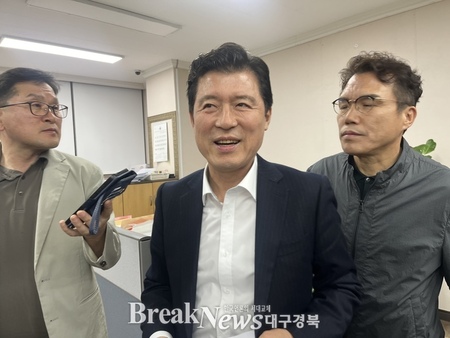
▲ 정장수 대구 중구청장 예비후보 |
【브레이크뉴스 대구】진예솔 기자=6월 3일 치러지는 전국 동시지방선거를 앞두고 기초단체장들의 행정 마인드가 어느 때보다 중요한 화두로 떠올랐다.
특히 대구·경북 지역에서는 오랜 기간 ‘보수 텃밭’으로 불려온 국민의힘이 정권을 넘겨주는 과정에서 지역민을 대표하는 단체장들의 역할이 얼마나 막중한지 다시 한 번 절감하고 있다. 이번 6월 지방선거를 준비하는 각오가 남다를 수밖에 없다.
누구나 선거에 출마할 수 있지만, 모두가 당선의 영광을 안을 수 있는 건 아니다. 결국 지역에 맞는 행정 철학과 이를 실현할 역량을 갖춘 인물이 선택받는다.
이에 본지는 다양한 분야의 질문으로 이번 선거에 나선 후보들의 행정 철학을 검증하고, 유권자들에게 신중한 선택을 할 수 있도록 기획 인터뷰를 마련했다.<편집자 주>
대구 중구청장 예비후보 정장수 전 대구시 경제부시장
“대구 문제의 시작은 일자리… 자부심이 도시를 닫히게 했다”
대구를 바라보는 정장수 대구 중구청장 예비후보의 시선은 비교적 분명하다. 이 도시가 가진 강한 자부심이 때로는 발전의 동력이 아니라 구조적 한계가 되기도 했다는 진단이다.
그는 대구의 가장 큰 문제를 ‘일자리 구조’에서 찾았다. 산업화 시기 대한민국 경제 발전을 이끌었던 도시라는 자긍심이 여전히 남아 있지만, 실제 경제 구조는 그 자부심을 지탱할 만큼 탄탄하지 않다는 것이다.
특히 대기업 기반이 약해지면서 외부 인구가 유입될 만한 일자리 구조가 약화됐다고 봤다. 도시로 사람이 모이는 가장 근본적인 이유는 결국 일자리인데, 대구는 외부에서 이주해 올 만큼 매력적인 일자리 기반을 충분히 만들지 못했다는 평가다.
정 예비후보는 “도시는 결국 일자리 때문에 사람이 모인다”며 “외부 인구가 들어올 일자리 기반이 부족하다 보니 도시가 점점 내부 중심 구조로 굳어졌다”고 말했다.
이 문제는 특정 구만의 문제가 아니라 대구 전체가 함께 풀어야 할 구조적 과제라는 진단이다.
“외부 경험이 오히려 장점”
일각에서는 정 예비후보의 대구 연고가 상대적으로 약하다는 점을 약점으로 지적하기도 한다. 그러나 그는 이를 오히려 장점으로 본다.
대구가 폐쇄적인 도시라는 인식은 여전히 존재하지만, 최근에는 점차 변화하고 있다는 것이다. 실제로 그는 대구·경북 출신이 아닌 인사로서는 처음으로 대구시 경제부시장을 맡았고, 지역 금융기관에서도 외부 출신 인사가 수장에 오르는 흐름이 나타나고 있다고 설명했다.
오랜 시간 지역에 머물러 있던 사람들은 익숙한 문제를 당연하게 받아들이는 경우가 많지만, 외부에서 온 시각은 도시의 문제를 보다 객관적으로 바라볼 수 있다는 주장이다.
관광 도시냐, 사는 도시냐
동성로와 서문시장, 근대골목을 중심으로 한 관광 정책은 그동안 중구의 대표 전략이었다. 그러나 관광 활성화가 실제 상주 인구 회복으로 이어지지 못했다는 지적도 꾸준히 제기돼 왔다.
정 예비후보는 이 두 문제를 대립 관계로 보지 않는다. 핵심은 주민의 삶의 질이라는 것이다.
그는 “중구 정책의 가장 중요한 기준은 주민 삶의 만족도”라며 “주민 삶의 질이 높아져야 도심도 자연스럽게 살아난다”고 말했다.
중구는 단순한 주거 지역이 아니라 대구·경북의 정치·행정 중심이자 문화 중심지였던 도시라는 점도 강조했다. 동성로나 서문시장에서 지역 경제의 흐름을 읽을 수 있었던 시절처럼, 도시의 위상을 다시 세우는 것이 곧 주민 자부심을 높이는 길이라는 설명이다.
인구 정책 역시 단순한 숫자 경쟁에서 벗어나야 한다고 봤다. 최근 중구 인구가 10만 명을 넘었지만 이는 구 정책보다는 과거 대구시 주택 정책의 영향이 컸다는 분석이다.
그는 “이제는 인구 숫자보다 기존 주민의 삶의 질을 높이는 데 정책 초점을 맞춰야 한다”고 말했다.
“밀어버리는 재개발은 중구 해법 아니다”
남산·대신·서성로 일대 노후 주거지의 개발 방향에 대해서도 정 예비후보의 입장은 비교적 분명하다. 전면 재개발 방식에는 동의하기 어렵다는 것이다.
정 예비후보는 일본 도심 재생 사례를 언급하며 “남겨두면서 살려가며 창조하는 방식이 중구에 더 적합하다”고 설명했다. 골목길의 다양성과 오래된 주거가 가진 문화적 자산은 중구만의 경쟁력이기 때문에 이를 모두 없애고 주상복합 중심 개발로 바꾸는 방식은 지역 정체성을 훼손할 수 있다는 판단이다.
재개발 지역에서 원주민은 떠나고 외부 투자자만 남는 구조 역시 문제로 지적했다. 그는 “그런 재개발이 과연 지역에 무엇을 남기는지 고민해야 한다”고 말했다.
흔들리는 동성로 상권
동성로 상권의 변화 역시 자연스러운 흐름이라는 시각을 보였다. 임대료 상승으로 일부 상권이 교동이나 삼덕동으로 이동하는 현상은 시장에서 흔히 나타나는 구조라는 것이다.
다만 이를 완전히 방치할 수는 없다고 봤다. 가장 현실적인 대책으로는 임대료 문제 완화를 꼽았다. 현재 시행 중인 ‘착한 임대료’ 제도를 넘어 지방세 감면 등 정책적 유인을 확대해 건물주가 임대료 인하에 참여하도록 유도할 필요가 있다는 설명이다.
젠트리피케이션 문제 역시 같은 맥락에서 접근했다. 상권 이동은 자유시장 체제에서 어느 정도 자연스러운 흐름이지만, 정책적으로 균형을 맞출 필요가 있다는 것이다.
정 예비후보는 “외지 업체가 기존 상권을 잠식하는 방식은 바람직하지 않다”며 기존 상인의 권리를 보호하면서 유동 인구를 늘리는 정책이 필요하다고 말했다.
중구 곳곳에 남아 있는 산업·문화 골목의 가치도 강조했다. 북성로 공구거리와 교동 전자상가 같은 공간은 단순한 관광지가 아니라 각 골목의 정체성을 살리는 방식으로 발전시켜야 한다는 것이다. 상인들과 협력해 특화 거리를 만들고 외부 방문객에게 중구에서만 느낄 수 있는 경험을 제공하는 것이 중요하다고 봤다.
“도심 문제는 작은 것에서 시작된다”
도심 환경 문제에 대한 접근도 비교적 현실적이다. 그는 도시 이미지가 작은 생활 환경에서부터 만들어진다고 봤다.
예를 들어 동성로 일대에서 발생하는 하수 냄새 문제는 아직 완료되지 않은 우·오수 분리 사업과 관련이 있다고 설명했다. 이런 문제는 대구시와 협의해 사업 우선순위를 조정하고 조기 추진해야 한다는 입장이다.
교통 문제에 대해서는 의외로 긍정적인 평가를 내렸다. 대구는 대도시 가운데 도심 평균 주행 속도가 빠른 편이라는 것이다. 문제는 교통 자체가 아니라 주차라고 봤다.
도심 공간이 제한적인 만큼 주차장을 대폭 늘리기보다는 공공시설과 민간시설의 주차장을 공유하는 방식이 현실적이라는 해법을 제시했다.
보행 환경 역시 단순한 보도 정비로 해결되는 문제가 아니라고 봤다. 주민이 참여해 골목마다 작은 휴식 공간을 만드는 ‘포켓 시트’ 같은 방식으로 걷는 즐거움이 있는 도시 환경을 만들어야 한다는 구상이다.
안전과 도시 관리
중구는 오래된 건물이 밀집한 지역이 많기 때문에 도시 안전 관리 역시 중요한 과제로 꼽힌다. 특히 지하도 상가와 같은 공간은 화재 위험이 있는 만큼 대응 매뉴얼과 안전 설비 점검이 필요하다는 입장이다.
또 오래된 주거 밀집 지역에서는 건물 간 이격거리나 방화 시설 기준을 현실에 맞게 강화할 필요가 있다고 봤다. 필요하다면 공공 지원을 통해 안전 시설 보완을 추진해야 한다는 것이다.
서문시장 4지구 재건축 문제에 대해서는 “결국 한 번은 넘어야 할 과정”이라며 공사 과정에서 상인 불편이 있더라도 재건축 추진이 필요하다는 입장을 밝혔다. 다만 전통시장 전반에 대해 전선과 시설 노후화 문제를 지속적으로 점검해야 한다고 강조했다.
복지와 생활 행정
중구는 고령 인구와 쪽방·고시원 등 취약 주거가 밀집한 지역이기도 하다. 실제로 중구 예산의 절반 이상이 복지 예산이다.
정 예비후보는 복지 정책에서 중요한 것은 예산 규모보다 전달 구조라고 강조했다. “예산이 100 내려가면 실제 수혜자에게 얼마가 전달되는지부터 점검해야 한다”며 복지 예산의 누수를 줄이고 필요한 곳에 집중해야 한다는 입장이다.
“구청장은 세일즈맨이어야 한다”
정 예비후보는 중구 행정의 가장 큰 문제로 적극적인 사업 발굴 부족을 지적했다. 중앙정부 공모사업이나 대구시 사업을 적극적으로 확보하지 못했다는 것이다.
그는 “지금은 전국 225개 기초자치단체가 경쟁하는 시대”라며 “구청장은 중앙부처와 대구시를 찾아다니며 예산과 사업을 확보하는 세일즈맨 역할을 해야 한다”고 말했다.
대구시청 등 핵심 공공기관 이전 이후 중구가 단순히 대구시 정책을 따라가는 구조에서 벗어나, 필요한 사업을 먼저 제안하고 예산을 끌어오는 역할을 해야 한다는 구상이다.
“삶 자체가 자부심이 되는 도시”
정장수 대구 중구청장 예비후보가 그리는 중구의 미래는 화려한 개발 도시가 아니라 문화와 역사, 경제와 생활이 어우러진 도심이다.
그는 “중구에는 충분한 자산이 있다”며 “삶 자체가 자부심이 되는 도시를 만들고 싶다”고 말했다.
이를 위해서는 공무원 조직 문화 변화도 중요하다고 강조했다. 성과를 내면 보상이 따르고 책임은 리더가 지는 조직, 공무원이 마음껏 일할 수 있는 환경이 만들어져야 한다는 것이다.
정 예비후보는 주민들을 직접 만나며 변화 요구도 분명히 느끼고 있다고 말했다. 오랫동안 같은 구청장이 자리를 지켜온 만큼 공개적으로 의견을 표현하는 데 조심스러운 분위기가 있지만, “이제는 바꿔야 한다”는 목소리도 적지 않다는 것이다.
결국 중구의 변화는 도시 구조의 문제만이 아니라 행정 방식의 변화에서 시작된다는 게 그의 생각이다.
<구글 번역으로 번역한 영문 기사의 전문 입니다. 번역에 오류가 있을 수 있음을 밝힙니다.>
With the nationwide local elections scheduled for June 3rd approaching, the administrative mindset of local government heads has become a more crucial topic than ever.
In particular, the Daegu-Gyeongbuk region, long considered a "conservative stronghold," is once again recognizing the crucial role of local government heads representing their constituents as the People Power Party hands over power. The resolve to prepare for this June's local elections is bound to be extraordinary.
While anyone can run for office, not everyone is guaranteed the glory of election. Ultimately, the person chosen will be one with an administrative philosophy suited to the region and the ability to implement it.
Accordingly, this magazine conducted a series of interviews to examine the administrative philosophies of the candidates running in this election through questions from various fields and to help voters make a careful choice. <Editor's Note>
Jang Soo-jung, a prospective candidate for Daegu Jung-gu District Mayor, and former Deputy Mayor for Economic Affairs
"Daegu's problems began with jobs... Pride closed the city."
Jang Soo-jung, a prospective candidate for Daegu Jung-gu District Mayor, has a relatively clear perspective on Daegu. He argues that the city's strong pride has sometimes served as a structural limitation rather than a driving force for development.
He identified Daegu's biggest problem as its "job structure." While the city still prides itself on being a leader in South Korea's economic development during the industrialization period, its actual economic structure is not robust enough to sustain that pride.
In particular, he believes that the weakening of the large corporation base has weakened the job market that attracts outsiders. Ultimately, jobs are the fundamental reason people flock to cities, but Daegu has failed to create a sufficiently attractive job base to attract outsiders.
Candidate Jeong stated, "Ultimately, people flock to cities because of jobs," and added, "Because there's a lack of job opportunities for outsiders, the city has become increasingly inward-focused."
This problem isn't limited to a specific district, but rather a structural challenge that Daegu as a whole must address together.
"External experience is actually an advantage"
Some have pointed out that Candidate Jeong's relatively limited Daegu connections are a weakness. However, he sees this as a strength.
While the perception of Daegu as an insular city persists, this is gradually changing. He explained that he was the first non-Daegu/North Gyeongsang Province native to serve as Deputy Mayor for Economic Affairs, and that there's a growing trend of outsiders taking leadership positions at local financial institutions.
He argues that while long-time residents often take familiar issues for granted, an outsider's perspective offers a more objective perspective on the city's problems.
Tourism or Living?
Tourism policies centered around Dongseong-ro, Seomun Market, and the Modern Alley have long been Jung-gu's signature strategy. However, criticism has been consistently raised that tourism revitalization has failed to lead to a revitalization of the resident population.
Candidate Jeong does not view these two issues as conflicting. He believes the core issue is the quality of life for residents.
He stated, "The most important criterion for Jung-gu policy is resident satisfaction," adding, "Only when the quality of life improves will the downtown area naturally revitalize."
He also emphasized that Jung-gu is not simply a residential area, but the political, administrative, and cultural center of Daegu and North Gyeongsang Province. Just as Dongseong-ro and Seomun Market were the focal points of the local economy, he explained that restoring the city's status is the key to enhancing residents' pride.
He also believed that population policy should go beyond mere competition over numbers. While Jung-gu's population recently surpassed 100,000, analysis suggests that this was largely due to Daegu City's past housing policies rather than district policies.
He said, "Now, policies should focus on improving the quality of life for existing residents, rather than simply focusing on population numbers."
"Redevelopment that demolishes existing buildings is not the solution for Jung-gu."
Candidate Jeong's stance on the development of aging residential areas around Namsan, Daesin, and Seoseong-ro is relatively clear. He disagrees with a comprehensive redevelopment approach.
Referring to the example of urban regeneration in Japan, candidate Jeong explained, "A method of preserving, revitalizing, and creating is more appropriate for Jung-gu." He believes that the diversity of alleyways and the cultural assets of old housing are Jung-gu's unique competitive advantages, and eliminating them entirely and replacing them with mixed-use development could undermine the district's identity.
He also pointed out the problem of redevelopment areas where original residents are forced out, leaving only outside investors. He said, "We need to consider what such redevelopment actually leaves behind for the area."
The Shaken Dongseong-ro Commercial District
He also expressed the view that the changes in the Dongseong-ro commercial district are a natural progression. The relocation of some businesses to Gyo-dong and Samdeok-dong due to rising rents is a common phenomenon in the market.
However, he believed this could not be completely ignored. He suggested alleviating the rent problem as the most realistic solution. He explained that beyond the current "good rent" system, policy incentives such as local tax reductions should be expanded to encourage building owners to participate in rent reductions.
He approached the issue of gentrification in the same context. While the relocation of businesses is a natural process in a free market, he argued that a balance is necessary.
Candidate Jeong stated, "It is undesirable for outside businesses to encroach on existing commercial areas," and emphasized the need for policies that protect the rights of existing merchants while increasing the floating population.
He also emphasized the value of the remaining industrial and cultural alleys throughout Jung-gu. He argued that spaces like Bukseong-ro Tool Street and Gyo-dong Electronics Market should not be simply tourist destinations, but should be developed in a way that preserves the identity of each alley. He believed that it is crucial to collaborate with merchants to create specialized streets and provide visitors with a unique Jung-gu experience.
"Downtown problems start with small things."
He also took a relatively realistic approach to urban environmental issues. He believed that a city's image is shaped by its small living environment.
For example, he explained that the sewage odor problem in the Dongseong-ro area is related to the unfinished sewage separation project. He argued that such issues require consultation with the Daegu Metropolitan Government to adjust project priorities and expedite implementation.
He offered a surprisingly positive assessment of the traffic issue. He noted that Daegu has one of the fastest average driving speeds in the city compared to other major cities. He believed that the problem lies not in traffic itself, but in parking.
Given the limited space in the city center, he suggested that sharing parking lots between public and private facilities is a more realistic solution than drastically increasing parking.
He also believed that the pedestrian environment cannot be solved simply by improving sidewalks. He envisions creating a pleasant urban environment where residents can participate by creating small rest areas in every alley, similar to "pocket seats."
Safety and Urban Management
Jung-gu is home to many areas with a high concentration of old buildings, urban safety management is also a critical issue. He argued that areas like underground shopping malls, in particular, pose a fire risk and require response manuals and safety equipment inspections.
He also emphasized the need to strengthen building spacing and fire prevention standards in older, densely populated residential areas to reflect the current situation. He also argued that safety improvements should be pursued through public support.
Regarding the reconstruction of Seomun Market District 4, he stated, "This is a process that must ultimately be overcome," and that reconstruction is necessary even if it causes inconvenience to merchants during construction. However, he emphasized the need for ongoing inspections of traditional markets for aging electrical wiring and facilities.
Welfare and Living Administration
Jung-gu is also home to a high concentration of elderly residents and vulnerable housing, such as goshiwon (small studio apartments) and gosiwon (small boarding houses). In fact, more than half of Jung-gu's budget is dedicated to welfare.
Candidate Jeong emphasized that the delivery structure is more important than budget size in welfare policies. "If the budget is reduced by 100%, we must first examine how much is actually being delivered to beneficiaries," he said, arguing for reducing welfare budget leakage and focusing on areas where it's needed.
"The district mayor should be a salesman."
Jeong Jang-soo, a prospective candidate for Jung-gu District Mayor, pointed to the lack of proactive project development as the biggest problem with the district's administration. He argued that the district has failed to actively secure central government projects or Daegu City projects.
He stated, "We live in a time where 225 local governments across the country are competing. The district mayor should act as a salesman, visiting central government agencies and the city of Daegu to secure budgets and projects."
He envisions that after the relocation of key public institutions like Daegu City Hall, Jung-gu should move beyond simply following city policies and proactively propose necessary projects and secure funding.
"A city where life itself becomes a source of pride"
Jeong Jang-soo, a prospective candidate for Jung-gu District Mayor, envisions a future for Jung-gu, not a flashy development, but a city where culture, history, economy, and lifestyle are intertwined.
He stated, "Jung-gu has ample assets," and added, "I want to create a city where life itself becomes a source of pride."
He emphasized the importance of changing the culture of civil servant organizations to achieve this goal. He believes that an organization where performance is rewarded and leaders shoulder responsibility, and an environment where public servants can work to their fullest potential, must be created.
Candidate Jeong said that he has clearly sensed the need for change through his personal meetings with residents. While there is a cautious atmosphere about expressing opinions publicly due to the long tenure of the same district mayor, he believes there are also many voices calling for change.
Ultimately, he believes that Jung-gu's transformation begins not just with urban structure but with a shift in administrative methods.
원본 기사 보기:브레이크뉴스 대구경북