▲ 곽태환 전 통일연구원 원장. ©브레이크뉴스 |
2021 후반기 한미연합 군사훈련(8.16-26)이 최소한 규모로 실시가 끝났다. 이번 훈련도 2부로 나누어 제1부는 방어훈련이었고 제2부는 반격 훈련 이었다. 북한이 가장 신랄하게 비판하고 반발했던 부분은 제2부였다. 북한의 시각으로 대북공격훈련 이고 북한지도부의 참수 작전 훈련이기 때문에 강력하게 비난과 반발한 것이다. 바이든 행정부는 이번 한미군사 훈련도 “방어적 훈련”이라고 주장하지만 2부 반격 훈련은 방어 훈련이 아닌 대북공격 훈련임이 알려졌다.
일부 논객들이 이번 한미연합훈련 중에 북한이 어떤 형태로는 군사적 “도발”을 할 것이라고 예상했지만 다행스럽게도 그런 군사적 행동은 없었던 것은 다행이다. 그러나 북한은 매년 여름에 실시하는 하계 군사훈련은 진행했었다. 북한이 한미연합 군사훈련에 대한 분노와 반발로 인해 향후 군사적 행동을 할 것이라고 일부논객들이 고강도 군사 ”도발” 보다 저 강도 군사행동을 할 것으로 예측을 하고 있다.
2021년 후반기 한미연합 훈련의 특징
이번 후반기 훈련 중에 두 가지 특이한 사항이 있어 여기에 논의해 보고자 한다. 첫째, 김정은 국무위원장의 민생 행보의 함의는 무엇인가? 둘째, 성김 미 대북특별대표가 서울방문(8.21-24)의 정치적 함의에 대해 이 글에서 검토해 보고자 한다.
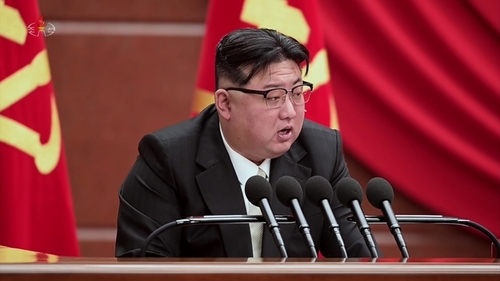
먼저 김정은 국무 위원장의 한미연합 훈련 중에 행보이다. 통상적으로 한미군사 훈련 중에 김정은 국무 위원장은 훈련 중에 숨어서 밖에 나오는 것을 두려워했다. 그러나 이번 후반기 2021 한미연합 훈련 중에 대동강 주택건설 현장을 3번씩이나 현지 지도를 했다는 보도를 했다. 이것은 무슨 의미 인가에 대해 객관적으로 검토해볼 필요가 있다.
필자는 김정은 위원장이 심리적으로 그만큼 자신감이 있음을 세상에 보여준 것이다. 김 위원장이 피 포위강박증(siege mentality)으로 부터 해방되었다는 것은 좋은 소식이다. 한미연합군사 훈련 기간 중 두려움 없이 평양 거리를 다닌다는 사실은 그만큼 자신감을 보여준 것이다. 다시 말하면 북미/남북 간 대화재개가 임박하고 있다고 해석해 볼 수 있는 것이다. 한미연합 훈련이 끝나는 8월26일 이후에 예상되는 저 강도 군사조치가 어떤 모습으로 나타날지가 궁금해진다. 만약 북한이 고강도 군사적 “도발”로 대응하면 미국과 한국정부를 자극하는 것이 국익이 아님을 김 위원장은 너무 잘 이해하고 있기 때문에 저 강도 군사행동의 개연성이 높아 보인다.
둘째, 한미연합군사 훈련 중에 성김 대북특별대사의 서울방문(8.21-24)이 갖는 정치적 함의는 무엇인가이다. 필자는 그의 방문 보따리에 창의적인 방안이 들어 있을 것으로 많은 기대를 하였다. 그러나 그의 보따리에는 텅 비어 있어서 실망했다. 그는 지난 6월 서울방문에서 대북 제안인 북한과의 "조건 없는” 대화 제안을 반복하였다.
북한은 그의 반복한 제안에 대해 어떻게 생각 할까? 북한의 시각에서 미국이 북미 간 핵 협상에 관심이 있는가? 에 대한 재평가를 할 것이다. 그래서 예상하고 있는 대로 북한이 저 강도 군사조치를 기획하고 있을 것으로 생각한다. 바이든 행정부의 “성의 없는 대북정책 때문에 한반도는 다시 위기국면으로 회귀 할 것으로 보여 심히 염려스럽고 실망스럽다. 현 시점에서 바이든 대통령은 지금 아프간 이슈로 인해 한반도문제가 우선순위에서 멀어져 관심이 없는 것 같아 더욱더 안타깝다.
바이든 행정부의 현실에 대한 인식 문제
앞에서 지적한 대로 성김 미 북한특별대표가 서울에서 2021 후반기 한미연합 군사훈련은 “순수한 방어적” 훈련이라고 주장하였다. 과연 그런 주장이 사실과 맞는가에 대해 객관적 분석이 필요하다. 제1부는 방어 훈련이 맞다. 그러나 제2부 "반격"훈련은 작계 5015 공격. 참수 작전을 컴퓨터 시뮬레이션 지휘소 훈련(CPX)을 실시하였는데 이것도 "순수한 방어훈련"인가? 이것이 방어 훈련이라고 주장하는 미 국무부 대변인도 그렇게 주장하였다. 미국의 대북정책은 트럼프 전 행정부 보다 더 강력한 대북정책을 추구하고 있다는 인상이다. 과연 미국이 한반도비핵화 하려는 의지와 의도가 있는지도 의심케 한다.
미국과 북한은 기(氣) 싸움이 지금 진행 중이다. 북한과 미국은 기 싸움 그만 하고 성실하게 북미관계의 교착상태를 타결하기 위해 노력해 줄 것을 촉구한다. 교착상태에 빠진 북미관계의 돌파구를 모색하기 위해서는 상호 양보와 타협이 없이는 풀 수 없다. 그러나 양측이 상호 양보하려는 노력이 안 보인다. 왜냐하면 어느 누구도 국내정치적 이유로 유화책을 제시하길 거부하고 국내적으로 나약해 보이기를 싫어하기 때문이다.
그래서 미국은 바이든식 오바마 대통령의 "전략적 인내"정책으로 뒤 돌아가고 있는 것 같이 보이고 있다. 바이든 행정부는 반복하여 북한에게 "조건 없는 대화" 하자고 하면 북한이 나올 것으로 이해하면 큰 오산이다. 미국이 조건 없이 대화에 나오라 하면 북한이 나오지 않을 것을 미국은 뻔히 알면서 반복하고 있어 미국이 과연 북한과 비핵화 협상을 원하지 에 대해 진실성의 문제가 제기 된다.
미국이 조금만 양보하면 북한이 대화에 나오게 되어 있다. 그럼에도 불구하고 "조건 없이 대화에 나오라고만 반복하는 것은 미국이 북한과의 한반도 비핵화협상과 한반도 평화프로세스가 미중패권시대에 국익이 아니라는 점을 의심케 한다. 필자의 견해는 바이든 행정부가 북한에게 새로운 셈법을 제시해야 북미 간 대화재개가 이뤄질 것이다. 미국이 최소한 범위 내에서 북한의 요구를 들어주고 미국이 원하는 것을 상호 맞교환하면 되는데 국내정치적 요인으로 미국이 양보를 꺼리고 있으니 결과적으로 바이든식 "전략적 인내 정책" 이란 평가를 받게 된 것이다.
마지막으로 북한이 요구하는 "본질적인 문제해결"없이 북한의 체면도 있는데 북한이 "인도적 남북 간 협력"이 이뤄질지 불투명하다. 교착상태에 빠진 북미관계의 돌파구를 마련하기 위해 미국과 남북한에 필자의 해법을 제안한다. 첫째, 북한과 미국 양측이 상호 양보와 타협하려는 자세가 있어야 한다. 이것이 전제조건이다. 단계적 동시 행동의 원칙이 적용되어야 한다. 북한이 요구사항 중 일부분이라도 미국이 수용한다면 대화는 가능하다. 미국과 한국이 제안한 인도적 대북지원을 북한이 심각하게 고려하여 수용하는 것이 바람직하다.
둘째, 미국은 북한의 요구하는 대북제재 완화 일부분을 수용해야 한다. 북미 간 대화 재개를 위해 최소한 북한이 요구하는 대북제재완화 즉 광물질 수출허용, 생 필수품 수입 허용, 그리고 정유수입허용 등을 미국이 수용하면 이에 대한 보상으로 북한은 핵 실험, 장거리 미사일 테스트 유예 지속하고 영변 핵시설 일부분을 해체 하겠다고 서약 하면 북미 간 실무협상이 개최될 것이다. 이렇게 “단계적, 동시 행동 접근”을 통해 북미 간 한반도 비핵화 협상을 이어지게 될 것이다. 한반도 비핵-평화프로세스가 재가동 될 수 있도록 함께 꿈을 꾸면 반드시 그 꿈이 이뤄질 것이다. thkwak38@hotmail.com.
*필자/곽태환 박사
미 이스턴 켄터키 대 명예교수/전 통일연구원 원장. 한국외국어대 학사, 미국 Clark 대학원 석사, 미 Claremont 대학원 국제관계학 박사. 전 경남대 극동문제연구소 소장/교수; 전 통일연구원 원장. 현재 미국 이스턴 켄터키 대 명예교수, 경남대 초빙 석좌교수, 한반도미래 전략 연구원 이사장, 통일전략연구협의회(LA) 회장, 미주 민주참여포럼(KAPAC)상임고문, 평통자문회의 LA 협의회 상임고문 등, 경남대 명예정치학 박사 수여(2019),글로벌평화재단(Global Peace Foundation)의 혁신학술 연구 분야 평화상 수상(2012). 32권의 저서, 공저 및 편저; 칼럼, 시론, 학술논문 등 450편 이상 출판; 주요저서: 『한반도평화, 비핵화 그리고 통일: 어떻게 이룰 것인가?』 (통일뉴스, 2019), 『국제정치 속의 한반도: 평화와 통일구상』등; 영문책 Co-editor: One Korea: Visions of Korean Unification (Routledge, 2017) 등.
*아래는 위 기사를 '구글 번역'으로 번역한 영문 기사의 [전문]이다. * Below is the [full text] of an English article translated from the above article as'Google Translate'.
Prospects and Tasks for the Peace Process on the Korean Peninsula
“If we dream together so that the denuclearization-peace process on the Korean Peninsula can be restarted, that dream will surely come true.
-Kwak Tae-hwan, former president of the Institute for National Unification
The South Korea-U.S. combined military exercise (8.16-26) in the second half of 2021 was completed on a minimal scale. This training was also divided into two parts, the first part was defensive training and the second part was counterattack training. The second part was the part that North Korea criticized and protested the most. From the North's point of view, it was an attack on North Korea and a training for the North Korean leadership's beheading operation, so they strongly criticized and opposed it. Although the Biden administration insists that the ROK-US military exercise is also a “defensive exercise,” it is known that the second part of the counterattack exercise is not a defensive exercise but an attack on North Korea.
While some commentators expected that North Korea would make some form of military “provocation” during this joint US-ROK exercise, fortunately there was no such military action. However, North Korea conducted summer military exercises every summer. Some commentators predict that North Korea will take military action in the future due to anger and resistance against the ROK-U.S. joint military exercise, and that it will perform low-intensity military actions rather than high-intensity military “provocations.”
Characteristics of the ROK-U.S. Combined Exercise in the Second Half of 2021
There are two unusual things about this second half of training that I want to discuss here. First, what are the implications of Chairman Kim Jong-un's actions for livelihood? Second, in this article, I would like to review the political implications of US Special Representative for North Korea Sung Kim's visit to Seoul (8.21-24).
First, it is during the joint US-ROK training exercise of Chairman Kim Jong-un. Normally during ROK-U.S. military exercises, Chairman Kim Jong-un hid during training and was afraid to come out. However, it was reported that during the South Korea-U.S. joint exercise in the second half of this year, he conducted on-site guidance at the Taedong River housing construction site three times. It is necessary to examine objectively what this means.
I have shown the world that Chairman Kim Jong-un is psychologically so confident. The good news is that Chairman Kim is freed from siege mentality. The fact that he walked the streets of Pyongyang without fear during the ROK-U.S. combined military exercise showed that much confidence. In other words, it can be interpreted that the resumption of dialogue between North Korea and South Korea is imminent. I wonder what the expected low-intensity military action will look like after August 26, when the ROK-US joint exercise ends. If North Korea responds with high-intensity military “provocations,” Kim understands too well that it is not in the national interest to provoke the US and South Korean governments, so low-intensity military action seems highly likely.
Second, what are the political implications of Special Ambassador Sung Kim's visit to Seoul (8.21-24) during the ROK-US combined military exercise? I expected a lot of creative ideas to be included in his visiting bag. But he was disappointed that his bag was empty. During his visit to Seoul in June, he repeated his proposal for an "unconditional" dialogue with North Korea.
What will North Korea think of his repeated proposals? From North Korea's perspective, is the US interested in nuclear negotiations between the US and North Korea? will be re-evaluated. So, as expected, I think North Korea is planning low-intensity military measures. “It is deeply worrying and disappointing to see that the Korean Peninsula will return to a crisis state because of the Biden administration's disrespectful policy toward North Korea. At this point, it is even more regrettable that President Biden does not seem to be interested in the issue of the Korean Peninsula because of the current Afghan issue.
The Biden Administration's Perceptions of Reality
As pointed out earlier, US Special Representative for North Korea Sung Kim insisted that the ROK-US joint military exercise in Seoul in the second half of 2021 was “purely defensive”. An objective analysis is needed to determine whether such a claim is true or not. Part 1 is defensive training. However, the second part of the "counterattack" training is Operation 5015 attack. Computer simulation command post training (CPX) was conducted for the beheading operation, but is this also "pure defense training"? A U.S. State Department spokesman, who claims this was a defensive exercise, said so too. The impression is that the US policy toward North Korea is pursuing a stronger North Korea policy than the former Trump administration. It also raises doubts whether the United States has the will and intention to denuclearize the Korean Peninsula.
The U.S. and North Korea are in a battle for energy right now. We urge North Korea and the United States to stop fighting and sincerely work to settle the stalemate in US-DPRK relations. In order to find a breakthrough in the stalemate in North Korea-U.S. relations, it cannot be solved without mutual concessions and compromises. However, it does not appear that the two sides are trying to make concessions to each other. This is because no one refuses to offer appeasement for domestic political reasons and does not like to appear weak domestically.
So it seems the United States is going back to the Biden-style "strategic patience" policy of President Obama. If the Biden administration repeatedly asked North Korea to engage in “unconditional dialogue,” it would be a big mistake to understand that North Korea would come out. If the US asks the US to come to the dialogue without conditions, the US repeatedly knows that North Korea will not come out, raising the question of sincerity as to whether the US really wants denuclearization negotiations with North Korea.
If the US makes a small concession, North Korea is expected to come into the dialogue. Nevertheless, “repeating the U.S. to come to the dialogue without conditions raises suspicions that the U.S. is not in the national interest of the denuclearization negotiations with North Korea and the peace process on the Korean Peninsula in the era of U.S.-China hegemony. The US can resume dialogue between North Korea and the U.S. only by proposing a calculation method. The US can at least satisfy North Korea's demands and trade what the US wants, but the US is reluctant to make concessions due to domestic political factors. policy" was evaluated.
Finally, there is also the face of North Korea without the “essential problem solving” that North Korea demands, but it is unclear whether North Korea will achieve “humanitarian inter-Korean cooperation”. In order to make a breakthrough in the stalemate in North Korea-U.S. relations, I propose my solution to the United States and North and South Korea. First, both North Korea and the United States must have a willingness to make mutual concessions and compromise. This is a prerequisite. The principle of step-by-step simultaneous action should be applied. If the US accepts even some of North Korea's demands, dialogue is possible. It is desirable for North Korea to seriously consider and accept the humanitarian aid offered by the United States and South Korea.
Second, the United States must accept some of the sanctions relief North Korea demands. If the U.S. accepts at least the easing of sanctions that North Korea demands for resuming dialogue between the United States and North Korea, such as permitting exports of minerals, permitting imports of daily necessities, and permitting imports of refined oil, North Korea will continue to suspend nuclear tests and long-range missile tests as compensation for this. If they pledge to dismantle some of their nuclear facilities, working-level negotiations between the US and North Korea will be held. This “step-by-step, simultaneous action approach” will lead to negotiations on the denuclearization of the Korean Peninsula between the US and North Korea. If we dream together so that the denuclearization-peace process on the Korean Peninsula can be restarted, that dream will surely come true.
<About the author>
Dr. Tae-Hwan Kwak (East Professor Emeritus at Eastern Kentucky University/Former Director of the Institute for National Unification)
BA from Hankuk University of Foreign Studies, MA from Clark Graduate School, USA, Ph.D. from Claremont Graduate School for International Relations. Former Director/Professor of the Institute for Far Eastern Studies, Kyungnam University; Former Director of the Institute for National Unification. Currently emeritus professor at Eastern Kentucky University in the US, visiting chair professor at Kyungnam University, chairman of the Korean Peninsula Future Strategy Institute, president of the Unification Strategy Research Council (LA), a standing advisor to the American Democratic Participation Forum (KAPAC), a standing advisor to the LA Council of the Commonwealth Advisory Council, etc., honorary political science at Kyungnam University Conferred a doctorate (2019), awarded the Global Peace Foundation's Peace Prize in innovative academic research (2012). 32 books, co-authored and edited; Published more than 450 articles, including columns, poems, and academic papers; Major books: 『Peace, denuclearization and unification of the Korean Peninsula: How to achieve it?』 (Unification News, 2019), 『The Korean Peninsula in International Politics: Peace and Unification Initiative』, etc.; English book Co-editor: One Korea: Visions of Korean Unification (Routledge, 2017), etc.
thkwak38@hotmail.com.