▲ LG유플러스 황현식사장(왼쪽에서 네번째)을 비롯해 LG유플러스 및 협력사 임원들이 평촌2센터의 준공식을 마치고 테이프 커팅을 하고 있다. © LG유플러스 |
브레이크뉴스 정민우 기자= LG유플러스가 초대형 인터넷데이터센터(IDC)인 ‘평촌2센터’의 준공을 완료했다.
LG유플러스는 경기도 안양시에 신규 IDC인 평촌2센터의 준공을 완료했다고 26일 밝혔다.
지하 3층, 지상 9층에 걸쳐 연면적 4만450㎡에 달하는 축구장 약 6개 규모로, 20만대 이상의 서버를 수용할 수 있는 초대형 IDC다.
평촌2센터는 2015년 오픈한 ‘평촌메가센터’에 이어 LG유플러스가 구축한 두 번째 초대형 IDC다. LG유플러스는 두 개의 IDC를 기반으로 클라우드 전환, 초거대 AI 및 빅데이터 활용으로 인해 급격히 증가하는 기업 고객들의 데이터센터 수요에 빠르게 대응한다는 방침이다.
IDC는 고객의 IT 시스템이 안정적으로 운영되도록 냉방·보안·전력 등 인프라를 유지하고 서버를 관리한다. 따라서 △온도관리 △보안 △무중단 전력 공급이 IDC 품질의 필수요소다. LG유플러스는 평촌2센터의 설계단계에서부터 고객사의 니즈를 분석해 세가지 요소를 강화했다.
IDC의 특성상 IT 장비에서 배출되는 열과 온도 관리가 중요하다. 평촌2센터의 가장 큰 특징은 LG유플러스의 자체 냉방 기술을 적용해 최적 냉방을 제공하고 에너지 효율을 높였다는 점이다.
LG유플러스는 자체 기술을 기반으로 IDC 상층부에 팬을 설치하고 냉각 공기량을 늘려 서버에서 발생하는 열을 효율적으로 관리할 수 있게 했다. 초대형 IDC일수록 발생하는 열이 많고 주변 환경 관리가 중요한만큼 최적의 온도관리 시스템을 구성해 에너지 효율을 높였다는 설명이다.
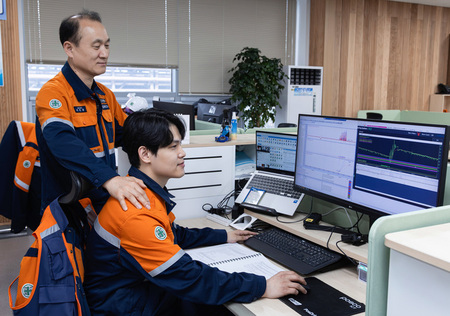
보안을 우려하는 고객 요구에 맞춰 사무동과 전산동을 물리적으로 분리하고 센터 출입구부터 전산실에 이르기까지 총 5단계에 이르는 보안 시스템을 구축했다. 장비와 네트워크 상태를 실시간 모니터링하고, 관제 상황을 고객사에 공유해 기업이 서버 현황을 파악해 안정적으로 관리할 수 있도록 했다.
아울러 평촌2센터는 Tier-Ⅳ*급의 전원, 냉방설비 이중화 구성을 통해 입주 기업에게 100% 무중단 전산환경 서비스를 제공한다. 이는 앞선 평촌메가센터의 Tier-Ⅲ 가용성을 초과하는 것으로, 등급이 높을수록 IDC 안정성이 높은 것으로 평가받는다.
규모와 품질 외에 친환경 요소를 강화한 것도 특징이다. 평촌2센터는 내부 온도 관리시 차가운 외기를 활용할 수 있는 새로운 냉방시스템을 도입했다. 바깥온도가 24도 이하일때는 차가운 외기를 이용할 수 있도록 해 기존 센터 대비 냉방에너지를 50% 이상 획기적으로 절감할 수 있게 됐다. 6.9m에 달하는 높은 층고와 벽체 단열성능을 높여 에너지 효율을 높였다.
신재생 에너지 사용도 강화했다. 사무동은 지열을 활용해 냉·난방을 이용하고, 태양광 설비와 연료전지의 신재생에너지 시스템을 통해 전력사용량을 줄였다. 냉방 및 가습용 물 사용량을 모니터링할 수 있는 시스템을 구축해 물사용량을 최적화했다. 옥상 녹지화 및 투수블럭 설치, 재활용 자재 및 친환경 자재 사용도 늘렸다.
LG유플러스는 이를 통해 약 10만명이 1년간 소비할 수 있는 전력인 121GWh의 에너지를 절감하고, 5만5000톤의 탄소배출량 감축할 수 있을 것으로 기대하고 있다. 디지털전환 흐름속에서 IDC 수요가 증가하는 만큼 ESG를 기반으로 에너지절감 솔루션을 적극 도입해 친환경 공간으로 거듭난다는 방침이다.
LG유플러스 관계자는 “최근 기업들의 DX 전환, 초거대 AI 활용에 따른 초대형 IDC의 수요가 꾸준히 증가하고 있다”며 “최고 수준의 고품질 IDC를 구축하는 동시에 에너지 절감을 위한 지속적인 연구개발로 ESG 친환경 IDC 트렌드를 선도할 것이다”고 말했다.
break9874@naver.com
*아래는 위 기사를 '구글 번역'으로 번역한 영문 기사의 [전문]입니다. '구글번역'은 이해도 높이기를 위해 노력하고 있습니다. 영문 번역에 오류가 있을 수 있음을 전제로 합니다.<*The following is [the full text] of the English article translated by 'Google Translate'. 'Google Translate' is working hard to improve understanding. It is assumed that there may be errors in the English translation.>
LGU+ completes construction of ultra-large internet data center ‘Pyeongchon 2 Center’
Break News Reporter Jeong Min-woo= LG U+ has completed the construction of ‘Pyeongchon 2 Center’, a large Internet Data Center (IDC).
LG U+ announced on the 26th that it completed the completion of Pyeongchon 2 Center, a new IDC in Anyang-si, Gyeonggi-do.
It is a very large IDC that is the size of about 6 soccer fields, with a total floor area of 40,450㎡ over 3 underground levels and 9 above-ground levels, and can accommodate more than 200,000 servers.
Pyeongchon 2 Center is the second large IDC built by LG U+, following the ‘Pyeongchon Mega Center’ opened in 2015. Based on two IDCs, LG U+ plans to quickly respond to the rapidly increasing data center demand from corporate customers due to cloud conversion and the use of ultra-large AI and big data.
IDC maintains infrastructure such as cooling, security, and power and manages servers to ensure that customers' IT systems operate stably. Therefore, temperature management, security, and uninterrupted power supply are essential elements of IDC quality. LG U+ analyzed the needs of customers from the design stage of Pyeongchon Center 2 and strengthened three elements.
Due to the nature of IDC, it is important to manage the heat and temperature emitted from IT equipment. The biggest feature of Pyeongchon 2 Center is that LG U+'s own cooling technology was applied to provide optimal cooling and increase energy efficiency.
Based on its own technology, LG U+ installed a fan in the upper part of the IDC and increased the amount of cooling air to efficiently manage the heat generated by the server. The explanation is that the larger the IDC, the more heat it generates and the importance of managing the surrounding environment, so energy efficiency was improved by configuring an optimal temperature management system.
In response to customer concerns about security, we physically separated the office building and the computer building and established a five-level security system from the center entrance to the computer room. Equipment and network status are monitored in real time, and the control situation is shared with customers, allowing companies to identify the server status and manage it stably.
In addition, Pyeongchon 2 Center provides 100% uninterrupted computer environment services to tenant companies through Tier-IV* level dual power and cooling equipment configuration. This exceeds the Tier-Ⅲ availability of the previous Pyeongchon Mega Center, and the higher the grade, the higher the IDC stability.
In addition to size and quality, it is also characterized by strengthened eco-friendly elements. Pyeongchon Center 2 introduced a new cooling system that utilizes cold outside air to manage internal temperature. By allowing the use of cold outdoor air when the outside temperature is below 24 degrees, cooling energy can be dramatically reduced by more than 50% compared to existing centers. Energy efficiency has been improved through a high floor height of 6.9m and increased wall insulation performance.
The use of new and renewable energy was also strengthened. The office building utilizes geothermal energy for cooling and heating, and reduces power usage through a renewable energy system of solar power facilities and fuel cells. We optimized water usage by establishing a system to monitor water usage for cooling and humidification. Rooftop greening, installation of permeable blocks, and use of recycled and eco-friendly materials were also increased.
LG U+ expects that through this, it will be able to save 121GWh of energy, which is enough power to be consumed by about 100,000 people for a year, and reduce carbon emissions by 55,000 tons. As the demand for IDC increases amid the digital transformation, the plan is to actively introduce energy-saving solutions based on ESG to become an eco-friendly space.
An official from LG U+ said, “Recently, the demand for ultra-large IDCs is steadily increasing due to companies’ DX transition and the use of ultra-large AI,” adding, “We are building an ESG-friendly IDC through continuous research and development to save energy while building the highest quality IDC.” “We will lead the trend,” he said.