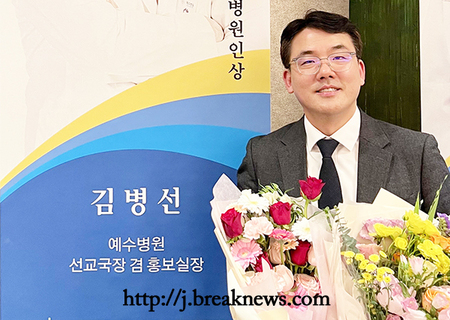
▲ 필자/정길선 박사 ©브레이크뉴스 |
18~19세기 전환기 시대에 이르러 동북아시아에는 산업혁명의 와중에서 바다 건너 온 서양인들이 많았다. 특히 조선에는 네덜란드인 벨테브레와 하멜이 대표적이었고 청나라와 바다에서 조우했던 서양인들도 많았다. 러시아의 경우, 17세기부터 봉북아시아에 모습을 드러내 조선과는 만주 및 연해주 일대에서 나선전쟁을 벌이는 등, 이미 몇 차례 러시아와 조우한 바 있었다. 그리고 이는 강력한 쇄국정책을 펼치던 에도막부의 일본도 마찬가지였다. 특히 러시아령 시베리아로 표류한 일본인들이 많았는데, 러시아 측은 이들 표류민들을 송환하면서 쇄국정책을 고수하던 에도막부의 일본과 통상무역을 시작하는 계기로 삼고자 하였다. 그리고 다이코쿠야 코다유(大黑屋光太夫)라는 선장이 이끄는 배가 서기 1783년에 중부 일본의 이세(伊勢) 지역에서 출항하였다가 알래스카의 알류샨 열도(Aleutian Islands)에 표착하는 사건이 발생한다.
다이코쿠야 코다유(大黑屋光太夫)는 어떤 인물이었을까?
코다유는 이세 지역 와카마쓰(현재 미에현 스즈카)에서 태어났다. 그는 어린 시절에 이세 지역의 상인이자 어부였던 다이코쿠야에게 입양되었기 때문에 "다이코쿠야 코다유"라는 이름을 갖게 되었다. 그는 양부의 뒤를 이어 가업인 어업을 물려 받았는데 좀 더 원양어업을 통해 일본에서 장사를 늘려 나갈 생각으로 신쇼마루(神昌丸)호를 사들여 선장이 되었다. 그리고 선원들을 모아 출항했고 시즈오카 서쪽 해안에서 풍랑을 만나 배가 표류하게 되었던 것이다. 정처없이 떠돌던 코다유 일행은 북쪽으로 해류를 따라 표류하여 북쪽 끝 알류샨 열도의 암치트카 섬에 도착하게 된다. 이 시기 암치트카 섬은 예카테리나 2세의 식민 정책으로 인해 토착 원주민인 알류트 인과 러시아 인이 섞여 살았는데, 이 때 모피 교역 문제로 인해 상당히 많은 갈등이 있었고, 알류트 인들이 러시아 인들에 분노해 봉기도 발생했다.
코다유 일행은 당시 북아메리카 일대에서 상업 활동, 즉 모피 교역을 펼치고 있던 러시아 인들에게 구조되었지만 1784년 알류트 인들이 러시아 인들을 상대로 봉기를 일으키는 과정을 목격하게 된다. 그러한 상황에서 코다유 일행은 러시아 인들과 섞여 살면서 러시아어를 배우게 되고 이들 일행들은 러시아어를 아주 능숙하게 구사할 수 있게 되었다고 한다. 이 때 러시아 선박이 표류하던 일본인들을 데리러 오게 되었지만 그 역시 풍랑으로 인해 침몰하게 되고 선박에서 생존한 러시아 선원들과 코다유 일행은 힘을 합쳐 함선을 만들게 된다. 함선을 만든 코다유 일행과 러시아 선원들은 암치트카 섬을 탈출했고 우선 캄차카 반도에 도착하게 된다. 캄차카 반도에 도착한 코다유 일행은 프랑스 외교관 바르텔레미를 만나게 되는데 그를 통해 일본으로 돌아가고자 하였지만 우선 캄차카 러시아 총독의 허가를 받아야 했다. 그러나 캄차카 총독은 이르쿠츠크로 소환되었기 때문에 캄차카를 비운 상태였고 코다유 일행은 한 동안 캄차카에서 지내게 된다.
프랑스 외교관 바르텔레미는 후일 회고록에서 코다유 일행에 대해 코다유가 러시아어를 빠르게 말했기 때문에 러시아어에 익숙하지 않은 바르텔레미가 종종 알아들을 수 없었다고 적었다. 그리고 날씨 추운 지방이라 목을 가리라는 조언에도 불구하고 목이 훤히 다 드러나는 일본 옷을 입고 있었다고 술회했다. 이후 캄차카에서 만난 러시아 대위는 캄차카에서 총독을 기다릴 것이 아니라 이르쿠츠크로 직접 가서 총독을 만나길 제안했고 코다유는 이에 응하여 오호츠크 방면을 돌아 이르쿠츠크에 오게 된다. 그러나 캄차카의 총독은 예카테리나 여제의 소환을 받아 상트페테르부르크로 떠난 이후였고 코다유는 이르쿠츠크에서 기약없는 기다림을 가질 수 밖에 없었다. 물론 이와 같이 러시아 땅으로 이주한 일본인들은 물론 코다유가 처음은 아니었다. 17세기 말부터 시베리아에 표착한 일본의 표류민들은 적지 않았고 이르쿠츠크에서도 이미 코다유보다 앞선 일본인들이 정착한 경우가 많았다.
코다유 일행은 이르쿠츠크에 체류하면서 여러 러시아 인사들과 접촉하게 되었고 그 중 시베리아에서 활동하던 고고학자 아담 키릴로비치 락스만(Адам Кириллович Лаксман)울 만나게 된다. 락스만은 코다유 일행의 사정을 듣고는 상트페테르부르크로 가서 예카테리나 여제를 알현하여 귀국에 대한 여제의 승락을 받자고 제안하게 되었고 이로써 코다유 일행은 일본인으로써 최초로 상트페테르부르크를 방문하게 된다. 코다유는 알래스카-캄차카-시베리아-오호츠크-이르쿠츠크-상트페테르부르크로 이어지는 엄청난 여정으로 이어졌고 이는 동양인 최초로 유라시아를 횡단한 인물로 기록된다. 이어 상트페테르부르크에 도착한 코다유 일행은 마침내 일본인으로써 처음으로 러시아의 차르를 알현하게 된다. 예카테리나 여제를 알현한 코다유 일행은 일본으로의 귀국을 요청하게 되고 예카테리아 여제는 코다유 일행의 귀국을 승인하게 된다. 이로써 코다유 일행은 상트페테르부르크를 거쳐 1792년에 일본으로 무사히 귀국하게 되었는데 이는 9년 만의 귀국으로 처음 출항할 때 12명이었던 코다유의 일행이 일본에 귀국할 때 코다유를 포함에 3명에 지나지 않았다고 한다.
러시아에 정착하지 않고 일본으로 귀국한 것은 코다유 일행이 처음이었다. 이러한 코다유의 모험을 기록한 사람은 일본 열도의 근대를 예비한 네덜란드학 연구자 가쓰라가와 호슈(桂川甫周)였다. 가쓰라가와 호슈(桂川甫周)는 <북사문략(北槎聞略)>을 편찬하면서 코다유로부터 러시아에 대한 정보를 상세히 기입하였고 서책 말미에 코다유가 작성한 일본어와 러시아어의 대조표까지 재작성하게 된다. 이 <북사문략(北槎聞略)>은 일본의 러시아학의 중요한 교본이 되었으며 일본에서 러시아학을 연구할 때 가장 먼저 공부해야 하는 교과로까지 자리잡게 된다. 그리고 코다유가 작성한 일본어와 러시아어의 대조표는 "일본식 러시아어"의 시초가 되었고 이는 8~90년대 한국에서 최초의 소련학을 공부했던 한국 러시아학 1세대들의 최초 교본이 된다. 8~90년대 한국에서 소련학을 공부했던 1세대 러시아어문학 원로 교수들의 러시아어 발음이 일본틱스러웠던 이유가 바로 이 때문이다.
그리고 이 다이코쿠야 코다유(大黒屋光太夫) 이야기는 일본의 작가 이노우에 야스시(井上靖)의 소설 <오로시야국 취몽담(おろしや国粋夢譚)>으로 출판되었고 사토 준야(佐藤純彌) 감독이 메가폰을 잡고 1992년에 상영되었다. 그리고 영문판으로도 <Dreams of Russia>으로 출시되었고 러시아에서도 <Сны о России>로 출시되었다.
*필자/ 정길선.
노바토포스 회원, 역사학자, 고고인류학자, 칼럼니스트, 러시아 과학아카데미 유라시아 고고인류학연구소 연구교수.
*아래는 위 기사를 '구글 번역'으로 번역한 영문 기사의 [전문]입니다. '구글번역'은 이해도 높이기를 위해 노력하고 있습니다. 영문 번역에 오류가 있을 수 있음을 전제로 합니다.<*The following is [the full text] of the English article translated by 'Google Translate'. 'Google Translate' is working hard to improve understanding. It is assumed that there may be errors in the English translation.>
The First Japanese to Contact the Empress Catherine of the Romanov Empire of Russia
- Columnist Jeong Gil-seon
During the transition period from the 18th to the 19th century, many Westerners came from across the sea to Northeast Asia during the Industrial Revolution. In particular, the Dutch Weltevre and Hamel were representative figures in Joseon, and there were also many Westerners who encountered the Qing Dynasty at sea. In the case of Russia, it had already encountered Russia several times, such as by appearing in Northeast Asia in the 17th century and fighting the Spiral War with Joseon in the Manchuria and Primorsky Krai regions. The same was true for Japan, which had a strong isolationist policy. In particular, many Japanese drifted to Russian Siberia, and the Russian side wanted to use this as an opportunity to start trade with Japan, which had maintained an isolationist policy, by repatriating these drifters. And in 1783, a ship led by a captain named Daikokuya Kodayu set sail from the Ise region of central Japan and drifted to the Aleutian Islands of Alaska.
Who was Daikokuya Kodayu?
Kodayu was born in Wakamatsu, Ise (currently Suzuka, Mie Prefecture). He was adopted by Daikokuya, a merchant and fisherman in the Ise region, as a child, and thus he was given the name "Daikokuya Kodayu." He inherited the family fishing business from his adoptive father, and with the intention of expanding his business in Japan through deep-sea fishing, he bought the Shinsho Maru and became its captain. Then, they gathered sailors and set sail, but the ship was hit by a storm off the west coast of Shizuoka and drifted. The Kodayu party drifted northward along the ocean current and arrived at Amchitka Island in the northernmost Aleutian Islands. At that time, Amchitka Island was inhabited by the indigenous Aleutians and Russians due to Catherine II's colonial policy. There was considerable conflict over the fur trade, and the Aleuts were angry at the Russians and even uprising.
The Kodayu party was rescued by the Russians who were conducting commercial activities in North America at the time, namely the fur trade, but they witnessed the Aleuts rising up against the Russians in 1784. In that situation, the Kodayu party learned Russian while living with the Russians, and it is said that the party became very fluent in Russian. At this time, a Russian ship came to pick up the drifting Japanese, but it also sank due to a storm, and the Russian sailors who survived the ship and Kodayu's party joined forces to build a ship. Kodayu's party and the Russian sailors who built the ship escaped Amchitka Island and first arrived at the Kamchatka Peninsula. Upon arriving at the Kamchatka Peninsula, Kodayu's party met French diplomat Barthelemy, who wanted to return to Japan through him, but first had to obtain permission from the Russian governor of Kamchatka. However, the governor of Kamchatka was summoned to Irkutsk, so he was away from Kamchatka, and Kodayu's party stayed in Kamchatka for a while.
French diplomat Barthelemy later wrote in his memoir that Kodayu spoke Russian so quickly that Barthelemy, who was not familiar with Russian, often had difficulty understanding Kodayu's party. And he said that he was wearing Japanese clothes that revealed his neck despite the advice to cover his neck because it was a cold region. Later, the Russian captain he met in Kamchatka suggested that he should go directly to Irkutsk to meet the governor instead of waiting for the governor in Kamchatka, and Kodayu agreed and went around Okhotsk to Irkutsk. However, the governor of Kamchatka had already left for St. Petersburg at the summons of Empress Catherine, and Kodayu had no choice but to wait indefinitely in Irkutsk. Of course, Kodayu was not the first Japanese to immigrate to Russia. There were many Japanese drifters who had drifted to Siberia since the end of the 17th century, and there were many cases of Japanese people settling in Irkutsk before Kodayu. While staying in Irkutsk, Kodayu and his party came into contact with several Russian figures, and among them met Adam Kirillovich Laxman, an archaeologist who was active in Siberia. After hearing about the situation of Kodayu and his party, Laxman suggested that they go to St. Petersburg to meet Empress Catherine the Great and ask for her permission to return to Russia. As a result, Kodayu and his party became the first Japanese to visit St. Petersburg. Kodayu went on an incredible journey from Alaska to Kamchatka to Siberia to Okhotsk to Irkutsk to St. Petersburg, and he is recorded as the first Asian to cross Eurasia. Upon arriving in St. Petersburg, Kodayu and his party finally became the first Japanese to meet the Tsar of Russia. After meeting with Empress Catherine, Kodayu and his party requested to return to Japan, and Empress Catherine approved the return of Kodayu and his party. As a result, Kodayu and his party safely returned to Japan in 1792 via St. Petersburg. This was their first return in nine years, and it is said that when they first set sail, there were twelve people in Kodayu's party, but when they returned to Japan, there were only three, including Kodayu.
Kodayu and his party were the first to return to Japan without settling in Russia. The person who recorded Kodayu's adventure was Katsuragawa Hoshu, a Dutch scholar who prepared for the modernization of the Japanese archipelago. When Katsuragawa Hoshu compiled the <北槎聞略>, he entered detailed information about Russia from Kodayu and even rewrote the Japanese and Russian comparison table written by Kodayu at the end of the book. This <北槎聞略> became an important textbook for Russian studies in Japan and became the first subject to study when studying Russian studies in Japan. Furthermore, the Japanese and Russian comparison table written by Kodayu became the beginning of “Japanese Russian,” which became the first textbook for the first generation of Korean Russian studies who studied Soviet studies in Korea in the 1980s and 1990s. This is precisely why the Russian pronunciation of the first generation of senior Russian literature professors who studied Soviet studies in Korea in the 1980s and 1990s sounded Japanese. And this story of Daikokuya Kodayu was published as the novel <Oroshiya no Kuni Shuimondan> by Japanese writer Inoue Yasushi and directed by Sato Junya and screened in 1992. It was also released in English as <Dreams of Russia> and in Russia as <Сны о России>.
lukybaby7@gmail.com
*Author/ Jeong Gil-seon.
Novatopos member, historian, paleoanthropologist, columnist, research professor at the Institute of Eurasian Paleoanthropology, Russian Academy of Sciences.