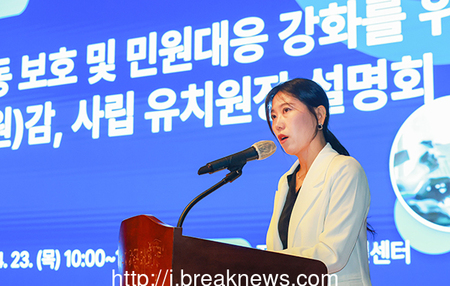
▲ <사진=속초시청> © 이용하 기자 |
<브레이크뉴스 속초=이용하 기자>전체 가구의 절반 가까이가 1인 가구인 속초시가 사회적 고립과 고독사 문제를 해결하기 위해 팔을 걷어붙였다.
속초시는 1인 가구의 급격한 증가와 이로 인한 공동체 약화에 선제적으로 대응하고자 ‘2026년 고독사 예방 시행계획’을 수립하고 본격적인 추진에 나선다고 13일 밝혔다.
시에 따르면 2025년 말 기준 속초시의 1인 가구는 총 18,963가구로, 전체의 약 46%를 차지한다. 특히 주목할 점은 35세부터 64세까지의 중장년층 1인 가구 비중이 45%에 달해, 노인 1인 가구 비중(43%)을 넘어섰다는 것이다. 이에 따라 시는 고독사의 위험이 중장년층까지 폭넓게 확산되고 있다고 판단, 생애주기별 맞춤형 지원을 강화하기로 했다.
우선 시는 ICT(정보통신기술)를 활용한 디지털 돌봄을 확대한다. 전력과 통신 사용량을 분석해 이상 징후를 감지하는 안부 확인 서비스와 함께, AI(인공지능)를 활용한 양방향 안부 확인 체계를 더욱 고도화할 방침이다. 돌봄 로봇 지원과 우유 배달 서비스 등 비대면 관리 역시 병행된다.
인적 네트워크를 통한 지역 밀착형 발굴 체계도 튼튼해진다. 편의점, 식당 등 생활 밀접 업종과 연계한 ‘우리동네 돌봄가게’를 통해 위기 가구를 실시간으로 신고받고, 복지위기 발굴단을 운영해 복지 사각지대를 샅샅이 살핀다. 특히 사회적 관계가 끊기기 쉬운 중장년층을 위해 자조 모임과 관계망 형성 프로그램을 대폭 늘려 세상 밖으로 나올 수 있는 통로를 마련할 계획이다.
이병선 속초시장은 “고독사는 더 이상 개인의 문제가 아니라 우리 사회 전체가 함께 짊어져야 할 숙제”라며, “AI 기술과 주민 참여를 결합한 촘촘한 안전망을 통해 단 한 사람의 시민도 소외되지 않는 따뜻한 속초를 만들어 나가겠다”고 강조했다.
dydgksmssk@naver.com
*아래는 위 기사를 '구글 번역'으로 번역한 영문 기사의 [전문]입니다. '구글번역'은 이해도 높이기를 위해 노력하고 있습니다. 영문 번역에 오류가 있을 수 있음을 전제로 합니다.
*The following is [the full text] of the English article translated by 'Google Translate'. 'Google Translate' is working hard to improve understanding. It is assumed that there may be errors in the English translation.
"46% of Households Are Alone"... Sokcho City Creates a 'Zero-Solitary Death City' Free from Isolation
- Middle-aged and older single-person households account for 45%, surpassing the elderly (43%)... Strengthening customized responses across life stages
- From two-way AI check-ups to 'Neighborhood Care Stores'... Building a robust digital and human safety net
<Break News Sokcho=Reporter Lee Yong-ha>
Sokcho City, where nearly half of all households are single-person, is rolling up its sleeves to address the problems of social isolation and lonely deaths.
Sokcho City announced on the 13th that it will establish and fully implement the "2026 Lonely Death Prevention Plan" to proactively address the rapid increase in single-person households and the resulting weakening of communities.
According to the city, as of the end of 2025, there will be 18,963 single-person households in Sokcho City, accounting for approximately 46% of the total. Of particular note is that the proportion of single-person households among middle-aged and older adults (ages 35 to 64) has reached 45%, surpassing the proportion of single-person elderly households (43%). Consequently, the city has determined that the risk of lonely deaths is spreading widely to the middle-aged and older population, and has decided to strengthen customized support across the life cycle.
First, the city will expand digital care utilizing ICT (Information and Communication Technology). Along with a safety check service that analyzes electricity and communication usage to detect abnormalities, the city plans to further enhance a two-way safety check system utilizing AI (Artificial Intelligence). Non-face-to-face management, such as care robot support and milk delivery services, will also be implemented.
A community-based detection system based on human networks will also be strengthened. "Our Neighborhood Care Stores," linked to businesses closely related to daily life, such as convenience stores and restaurants, will receive real-time reports of households in crisis, and a welfare crisis detection team will thoroughly investigate blind spots in welfare services. In particular, for middle-aged and older adults, who are prone to social isolation, the plan is to significantly increase self-help groups and networking programs to provide them with an outlet for social interaction.
Sokcho Mayor Lee Byung-sun stated, "Solitary death is no longer an individual problem; it is a task our entire society must shoulder together." He emphasized, "Through a tight safety net that combines AI technology and resident participation, we will create a warm Sokcho where no one is left behind."
dydgksmssk@naver.com
원본 기사 보기:브레이크뉴스 강원