▲*필자/곽태환 박사. ©브레이크뉴스 |
21세기 국제질서는 미•중 전략 경쟁의 구조적 심화 속에서 새로운 전환점을 맞이하고 있다. 미국은 규범•가치•동맹 네트워크를 중심으로 인도•태평양 전략을 강화하며 중국의 부상을 견제하고 있으며, 중국은 경제력과 기술력, 군사력을 기반으로 국제질서의 재편을 시도하고 있다. 이러한 전략적 경쟁 구도는 단순한 양자 간 갈등을 넘어 동북아 전체의 안보•경제•외교 환경을 규정하는 핵심 변수로 작용하고 있다.
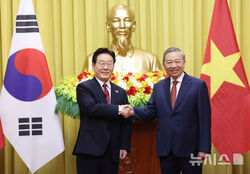
대한민국은 미•중 전략 경쟁의 최전선에 위치한 중견 국가로서, 미국과의 동맹을 유지하면서도 중국과의 전략적 협력 파트너십을 관리해야 하는 복합적 과제를 동시에 안고 있다. 특히 2026년 1월 5일 베이징 한중정상회담은 이러한 구조적 맥락 속에서 한국 외교의 방향성을 재정립할 중요한 계기가 되었다. 이번 정상회담은 90분간의 심도 있는 논의와 14개 분야의 양해각서(MOU) 체결을 통해 한중 관계의 “전면 복원”을 공식화하는 상징적 사건으로 평가된다.
이러한 현실은 미•중 경쟁 속에서 이재명 정부가 핵 없는 한반도 평화구축을 위해 향후 선택해야 할 외교 전략에 대해 근본적 질문을 제기하였다. 대한민국은 어느 한쪽에 일방적으로 기울 수 없는 지정학적• 지경학적 조건을 갖고 있으며, 동시에 지속 가능한 한반도 평화의 제도화와 경제 안보의 지속성을 확보해야 하는 국가적 책무를 지니고 있다. 따라서 필자는 향후 한국 외교의 방향은 단순한 균형자론이나 중재자론을 넘어, 미•중 사이에서 가교 역할(bridge-building role)을 수행해야 하며 균형된 외교(balanced diplomacy)를 제도화하는 방향으로 나아갈 필요가 있다고 주장한다.
 ▲ 도널드 트럼프(왼쪽) 미국 대통령과 시진핑 중국 국가주석(오른쪽). ©. AP/뉴시스 |
본 칼럼의 목적과 방법
본 칼럼은 미•중 경쟁이 동북아의 안보 질서를 규정하는 핵심 구조로 자리 잡았으며, 대한민국은 미•중 경쟁시대에 복합적 전략 선택을 요구 받고 있는 이러한 구조적 환경 속에서 대한민국이 추구해야 할 균형된 외교 전략을 분석하고, 2026년 한중정상회담을 평가하고, 향후 한국 외교의 새로운 방향성을 제시하는 것이 목적이다.
구체적으로 미•중 경쟁 시대, 한국 외교의 전략적 방향성을 이론적•사례적•정책적으로 분석하는 데 목적을 두었다. 첫째, 전략적 파트너십, 전략적 회색지대, 균형된 외교, 가교 역할 등 한국 외교를 규정하는 핵심 개념을 이론적으로 정교화 하였다. 둘째, 2026년 한중 정상 회담을 중심으로 한국 외교가 실제로 어떻게 구현되고 있는지를 분석하였다. 특히 북핵 문제, 대만 문제, 서해 경계 획정, 경제•기술 협력, 문화•인적 교류 등 핵심 의제를 중심으로 양국 관계의 구조적 변화를 살펴보았다. 셋째, 이러한 분석을 바탕으로 한국이 향후 취해야 할 전략적 프레임워크를 제시하려고 하였다. 이는 가교 역할의 제도화, 균형된 외교의 실천, 경제안보 전략, 한반도 평화 전략 등을 포함하였다.
 ▲트람프 미 대통령(왼쪽)-이재명 대통령(오른쪽). |
 ▲ 이재명 대통령과 시진핑 중국 국가주석이 지난 1월5일 베이징 인민대회당에서 열린 한중 MOU 체결식에서 악수하고 있다 ©뉴시스 |
베이징 한중 정상회담의 핵심 내용과 평가
이번 한•중 핵심 내용과 성과를 필자는 5개 분야로 나누어 평가하고자 한다.
1. 중국의 전략적 파트너십 개념과 한국의 위상
중국은 외교 관계를 위계적으로 분류하는 독특한 체계를 유지하고 있다. 이를 통해 국가별 전략적 중요도를 구분한다. 중국의 외교 관계는 일반적 협력 관계, 전략적 파트너 관계, 전략적 협력 동반자 관계, 전면적 전략 동반자 관계의 4단계로 구성된다. 한국은 이 중 전략적 협력 동반자 관계에 해당하며, 이는 중국이 한국을 단순한 경제 파트너가 아니라 정치•안보•경제 전반에서 협력 가능한 중견국으로 인정하고 있음을 의미한다.
2026년 정상회담에서 시진핑 주석은 “한중 새 시대의 든든한 기초를 다졌다”는 표현을 사용하였고 양국 관계의 복원을 강조하였다. 이는 중국이 한국을 다시 전략적 파트너로 인정하고, 양국 관계를 장기적•안정적 틀 속에서 관리하려는 의지를 보여주는 상징적 발언이었다. 이재명 대통령도 한•중 관계의 복원의 원년이라고 표현했다.
2. 대만 문제와 한국의 전략적 가치
대만 문제는 중국의 핵심 이익 중의 핵심 이익이며, 중국 외교의 최우선 과제이다. 이번 정상회담에서 중국은 대만 문제와 관련하여 한국에 새로운 요구를 제기하지 않았다. 이는 중국이 이재명 정부의 입장인 “하나의 중국(One China)” 존중을 충분히 신뢰하고 있으며, 한국이 대만 문제에서 미국과 동일한 군사적 이해를 갖지 않는다는 점을 인정한 것으로 해석할 수 있다.
한국은 지정학적•군사적 조건상 대만해협 문제에 직접 개입할 개연성(probability)이 낮으며, 이는 중국이 한국을 전략적 회색지대 국가로 인식하는 중요한 근거가 된다. 중국은 한국이 대만 문제에서 전략적 중립을 유지하는 한, 한국과의 전략적 파트너십을 안정적으로 유지할 수 있다고 판단하는 것으로 보인다.
3. 한반도 문제: 중국의 ‘건설적 역할’
이번 정상회담에서 양국 정상은 한반도의 평화 프로세스를 위해 북한과의 대화 재개 필요성에 공감하였다. 중국은 “건설적 역할을 하고 있으며 앞으로도 지속하겠다”고 언급하며 기존 입장을 반복하였다. 이는 중국이 북핵 문제에서 적극적 해결사가 되기보다는 대화 재개와 한반도 평화 분위기 조성과 긴장 완화의 환경을 조성하는 환경 조성자 역할을 수행하겠다는 의지를 보여준 것이다.
이재명 정부는 중국의 이러한 소극적 역할을 현실적으로 평가하면서도, 중국이 한반도 문제 해법을 모색하는 과정에서 “건설적 역할”을 기대하지만 최소한의 협력적 태도를 유지하는 것이 중요하다는 점을 강조하였다.
4. 서해 경계획정: 8년 만의 공식 의제 복귀
서해 경계획정 문제는 한•중 간 가장 민감한 안보 현안 중 하나이다. 이번 정상회담에서 양국은 올해부터 차관급 회담을 재개하기로 합의하였다. 이는 8년 만에 공식 의제로 복귀한 것으로, 한중 관계의 복원의 중요한 지표로 평가된다. 위성락 안보 실장은 “조심스럽지만 진전을 기대할 수 있다”고 언급하며 협상 재개의 의미를 강조하였다.
5. 경제•기술•문화 협력: 14개 MOU의 구조적 의미
이번 정상회담에서 체결된 14개 MOU는 경제•기술•환경•문화•역사 등 전 분야를 포괄하는 한중 관계의 “전면 복원 패키지”로 기능한다. 핵심 광물 수급 협력, 산업•기술 협력, 환경•기후 협력, 교통•물류 협력, 문화•체육 교류, 독립운동 사적지 보호, 지식재산권 보호, 판다 대여 협의 등이 포함되었다. 이는 한•중 관계가 경제•기술•문화•역사 전 분야에서 다시 정상화로 진전되고 있음을 의미한다.
중국은 한국을 대만 문제에서 중립적이며, 한반도 문제에서 협력 가능한 국가로 평가하고 있다. 또한 경제•기술 협력에서 상호의존성이 높고, 미•중 경쟁 속에서 전략적 회색 지대에 위치한 국가로 인식하고 있다. 2026년 정상회담은 이러한 중국의 인식을 공식화한 사건이며, 한국 외교의 새로운 전략적 공간을 열어주는 계기가 되었다고 판단된다.
▲정책제언: 이재명 정부가 추진 해야 할 일
필자는 이번 정상회담이후 이재명 정부가 국익을 바탕으로 균형된 외교전략을 추진할 것을 8개 분야로 나누어 균형된 실용주의 외교정책을 추진할 것을 제언하고자 한다.
첫째, 한중 전략적 파트너십을 재정립해야 한다. 앞에서 지적 한 바와 같이, 시진핑 주석이 “한중 새 시대의 든든한 기초를 다졌다”고 언급한 것은 단순한 외교적 수사가 아니라, 중국이 한국을 다시 전략적 파트너로 인정 하고자 하는 의지를 명확히 드러낸 것으로 판단된다. 이재명 정부는 이러한 흐름을 활용하여 전략적 파트너십을 단순한 협력의 틀을 넘어 국가전략의 핵심 축으로 재정립해야 할 것이다.
전략적 파트너십의 재정립은 세 가지 방향에서 추진될 필요가 있다. (1) 정상 간 연례 회담의 제도화를 통해 양국 관계의 안정성을 강화해야 할 것이다. 정상 간 정례적 소통은 미•중 경쟁 속에서 발생할 수 있는 오해와 갈등을 최소화하는 데 중요한 역할을 한다. (2) 외교•안보•경제 분야의 고위급 대화 채널을 복원•확대하여 전략적 소통의 기반을 강화해야 한다. (3) 전략적 민감 사안에 대한 사전 협의 메커니즘을 구축하여 위기 상황에서의 대응 능력을 높여야 할 것이다.
둘째, 대만 문제와 관련하여 대한민국은 전략적 중립성을 유지해야 한다. 대만 문제는 미•중 경쟁의 중심축이자 중국의 핵심 이익이다. 이번 정상회담에서 중국이 한국에 새로운 요구를 제기하지 않은 것은 한국의 One China 존중과 전략적 중립성을 인정한 결과이다. 한국은 이러한 중국의 태도를 활용하여 대만 문제에서 원칙적•중립적•일관된 입장을 유지해야 할 것이다.
한국의 전략적 중립성은 다음과 같은 정책적 함의를 갖는다. 첫째, 한국은 대만 문제를 한•중 관계의 갈등 요인으로 확대하지 않도록 정책적 절제와 신중함을 유지해야 한다. 둘째, 미국과의 동맹을 유지하되, 대만 문제에서 군사적 개입 가능성을 명확히 배제함으로써 중국의 우려를 완화할 필요가 있다. 셋째, 대만해협의 안정이 동북아 전체의 안보에 중요하다는 원칙적 입장을 유지함으로써 국제사회와의 조화를 도모해야 한다.
셋째, 북핵•한반도 평화 프로세스의 단계적 접근이 바람직하다. 이번 정상회담에서 양국 정상은 지속 가능한 한반도 평화의 제도화를 위한 북한과의 대화 재개 필요성에 공감하였다. 시진핑 주석은 “건설적 역할을 하고 있으며 앞으로도 지속하겠다”고 언급하며 기존 입장을 유지하였다. 이는 중국의 역할이 제한적임을 보여주지만, 동시에 한국이 중국과의 협력을 통해 대화 재개의 환경을 조성할 수 있음을 의미한다.
이재명 정부는 한반도 평화와 북핵 문제에서 다음과 같은 전략을 추진해야 할 것이다. (1) 한미 공조를 기반으로 한 북핵 억제력 강화와 중국과의 협력을 통한 대화 분위기 조성을 병행해야 할 것이다. (2) 북핵 문제를 미•중 경쟁의 도구로 활용하지 않도록 한반도 문제의 비정치화(de-politicization) 전략을 추진해야 한다. (3) 남북•북미•남북미중, 양자, 3자, 4자 등 다양한 대화 포맷을 활용하여 다층적 양자 혹은 다자 대화와 협상 구조를 구축해야 할 것이다.
넷째, 서해 경계획정 및 해양안보 협력의 제도화가 시급하다. 서해 경계 정정을 위한 차관급 회담의 재개 합의는 한•중 간 해양안보 협력의 중요한 전환점이다. 이는 양국이 민감한 안보 현안을 대화와 협상을 통해 해결하려는 의지를 보여주는 사례이며, 한중 관계의 안정성을 강화하는 요인으로 작용하게 될 것이다.
따라서, 이재명 정부는 서해 문제에서 다음과 같은 정책을 즉시 추진해야 한다. (1) 차관급 회담의 정례화를 통해 협상 구조를 안정적으로 유지해야 한다. (2) 해양과학•환경•어업 등 비군사적 분야에서의 협력을 확대하여 신뢰 구축 조치(CBM)를 강화해야 한다. (3) 서해에서의 우발적 무력충돌을 방지하기 위한 군사적 소통 채널을 복원해야 한다.
다섯째, 한•중 간 경제•기술•산업 협력을 적극적으로 추진해야 한다. 이번 정상회담에서 체결된 14개 MOU는 경제•기술•환경•문화 등 전 분야를 포괄하는 협력 패키지로 기능한다. 특히 핵심 광물 수급 협력, 산업•기술 협력, 지식재산권 보호 강화 등은 한국의 경제안보 전략과 직결되는 중요한 요소이다.
한국은 다음과 같은 방향에서 경제•기술 협력을 추진해야 할 것이다. (1) 공급망 리스크 분산을 위해 중국과의 협력을 선택적•전략적 방식으로 관리해야 한다. (2) 반도체•배터리•AI 등 전략산업에서 기술 자립도 강화를 추진해야 한다. (3) 중국의 통용허가제 도입을 활용하여 핵심 광물 확보의 안정성을 높여야 할 것이다.
여섯째, 대한민국의 가교 역할을 제도화해야 한다. 대한민국은 미•중 경쟁 속에서 가교 역할을 제도화할 필요가 있다. 가교 역할은 단순한 외교적 수사가 아니라, 한국이 국제질서 속에서 전략적 자율성을 확보하기 위한 핵심 전략이어야 한다. 한국은 미•중 간 소통의 통로로 기능하며, 협력 가능한 의제를 발굴하고, 긴장 완화의 공간을 창출하는 역할을 수행해야 할 것이다.
가교 역할의 제도화는 다음과 같은 방식으로 추진될 수 있을 것이다. (1) 기후•보건•공급망•디지털 규범 등 안전지대 이슈(safe-zone issues)를 중심으로 미•중 간 협력 플랫폼을 구축해야 한다. (2) ASEAN•EU•MIKTA 등 중견국 네트워크와의 협력을 강화하여 다자적 가교 플랫폼을 형성해야 한다. (3) 국내적으로는 외교•안보•경제를 통합적으로 조정하는 국가 전략 컨트롤타워를 강화해야 할 것이다. 특히 대북정책과 관련하여 정부 내 한 목소리를 내는 것이 성공적인 대북정책 추진에 필수적 요소이다.
일곱째, 균형된 외교(balanced diplomacy) 원칙을 추진해야 한다. 이재명 정부의 균형된 실용 외교는 안보•경제•외교 전 분야에서 정교하게 실천되어야 한다. 다시 한 번 강조한다. (1) 안보 영역에서는 한미동맹을 기반으로 억제력을 강화하되, 중국과의 전략적 협력 동반자로서 소통을 유지해야 한다. (2) 경제•기술 영역에서는 중국과의 협력 공간을 유지하면서도 공급망 다변화를 추진해야 한다. (3) 대만 문제에서는 전략적 중립성을 유지하며, 한반도 문제에서는 한국의 중도성을 강화해야 할 것이다.
여덟째, 대한민국의 중장기 평화 전략 프레임워크(framework)가 필요하다. 이재명 정부는 미•중 경쟁 시대에 다음과 같은 중장기 평화 전략을 추진해야 한다. (1) 가교 역할의 제도화를 통해 국제질서 속에서 전략적 자율성을 확보해야 한다. (2) 균형된 외교를 기반으로 한미동맹과 한중 파트너십을 조화롭게 관리해야 한다. (3) 경제안보 전략을 강화하여 공급망 안정성과 기술 경쟁력을 확보해야 한다. (4) 한반도 평화 전략을 다층적•단계적 방식으로 추진해야 할 것이다.
마지막으로 미•중 경쟁 시대, 대한민국 외교의 핵심 과제는 전략적 자율성을 확보하면서도 한반도 평화와 경제적 지속성을 유지하는 것이다. 한국은 미국과의 동맹을 유지하면서도 중국과의 전략적 파트너십을 안정적으로 관리해야 할 것을 다시 강조하고자 한다. 이번 한•중 정상회담은 이러한 전략적 방향성을 공식화한 사건으로 평가된다. 이번 정상회담에서 한중 관계의 전면 복원을 선언하였고, 북핵•서해•경제•문화 등 전 분야에서 협력 구조를 재정립하였다고 판단된다.
이재명 정부가 미•중 경쟁 속에서 단순한 선택의 딜레마를 넘어, 가교국가로서의 전략적 정체성을 확립할 수 있음을 보여준 것이다. 한국정부가 이러한 전략을 일관되게 추진할 때, 미•중 경쟁이라는 구조적 압력 속에서도 대한민국의 국가이익을 극대화하고 외교적 공간을 확장할 수 있을 것으로 기대한다.
*필자/곽태환 박사.
전 통일연구원 원장, 한반도미래전략연구원 이사장. 미 Claremont 대학원 대학교 국제관계학 박사. 전 미 Eastern Kentucky 대학교 국제정치학 교수; 전 경남대 극동문제연구소 소장/교수; 6대 통일연구원 원장. 현재 미국 이스턴 켄터키 대 명예교수, 경남대 초빙 석좌교수, 한반도미래전략연구원 이사장 등, 통일뉴스 특별 공로상 수상 (2021), 경남대 명예 정치학 박사 수여(2019), 글로벌평화재단(GPF)의 혁신 학술 연구 분야 평화상 수상(2012). 36권의 저서, 공저 및 편저; 칼럼, 시론, 학술논문 등 600편 이상 출판; 주요 저서: 『한반도 평화, 비핵화 그리고 통일: 어떻게 이룰 것인가?』 (통일뉴스, 2019), 공저: 『한반도 문제 해법: 새로운 모색』(학술정보, 2024), 『한반도 비핵•평화 체제의 모색』(매봉, 2023) 등; 영문 책 Editor/co-editor: One Korea: Visions of Korean Unification (Routledge, 2017); 등. 이 메일: thkwak38@hotmail.com
*아래는 위 기사를 '구글 번역'으로 번역한 영문 기사의 [전문]입니다. '구글번역'은 이해도 높이기를 위해 노력하고 있습니다. 영문 번역에 오류가 있을 수 있음을 전제로 합니다.<*The following is [the full text] of the English article translated by 'Google Translate'. 'Google Translate' is working hard to improve understanding. It is assumed that there may be errors in the English translation.>
South Korea's Balanced Diplomatic Strategy in the Era of US-China Competition... "Bridging Role & Strategic Partnership"
- Kwak Tae-hwan, Former President of the Korea Institute for National Unification
The 21st century international order is facing a new turning point amid the structural intensification of US-China strategic competition. The United States is strengthening its Indo-Pacific strategy, centered on norms, values, and alliance networks, to contain China's rise. China, on the other hand, is attempting to reorganize the international order based on its economic, technological, and military prowess. This strategic competition goes beyond mere bilateral conflict and is a key variable shaping the security, economic, and diplomatic environment of Northeast Asia as a whole.
As a middle power at the forefront of the US-China strategic competition, South Korea faces the complex task of maintaining its alliance with the United States while simultaneously managing a strategic cooperative partnership with China. The January 5, 2026, South Korea-China Summit in Beijing served as a crucial opportunity to re-establish the direction of South Korea's diplomacy within this structural context. This summit, with its 90-minute in-depth discussions and the signing of a Memorandum of Understanding (MOU) covering 14 areas, is considered a symbolic event formalizing the "full restoration" of South Korea-China relations.
This reality raises fundamental questions about the diplomatic strategy the Lee Jae-myung administration must adopt to establish peace on a nuclear-free Korean Peninsula amidst the US-China rivalry. South Korea possesses geopolitical and geoeconomic conditions that prevent it from unilaterally leaning toward either side, while simultaneously bearing the national responsibility of institutionalizing sustainable peace on the Korean Peninsula and ensuring the sustainability of economic security. Therefore, I argue that the future direction of South Korea's diplomacy must go beyond mere balancer or mediator theory, to play a bridge-building role between the US and China and institutionalize balanced diplomacy. Purpose and Method of This Column
This column analyzes the balanced diplomatic strategy South Korea should pursue in this structural environment, where US-China competition has become a core structure defining the security order in Northeast Asia and South Korea is required to make complex strategic choices in this era of US-China competition. It also evaluates the 2026 South Korea-China Summit and proposes a new direction for South Korea's diplomacy going forward.
Specifically, this column aims to analyze the strategic direction of South Korea's diplomacy in this era of US-China competition from a theoretical, case-based, and policy perspective. First, it theoretically elaborates on key concepts defining South Korea's diplomacy, such as strategic partnership, strategic gray zone, balanced diplomacy, and bridging roles. Second, it analyzes how South Korea's diplomacy is being implemented in practice, focusing on the 2026 South Korea-China Summit. Specifically, it examines the structural changes in bilateral relations, focusing on key agendas such as the North Korean nuclear issue, the Taiwan issue, the West Sea border demarcation, economic and technological cooperation, and cultural and people-to-people exchanges. Third, based on this analysis, it proposes a strategic framework for South Korea going forward. This included institutionalizing the bridging role, practicing balanced diplomacy, economic and security strategies, and a Korean Peninsula peace strategy.
Key Aspects and Evaluation of the Beijing South Korea-China Summit
The author will assess the key aspects and achievements of this summit between South Korea and China in five areas.
1. China's Concept of Strategic Partnership and South Korea's Status
China maintains a unique hierarchical system for classifying diplomatic relations. This hierarchy distinguishes the strategic importance of each country. China's diplomatic relations are categorized into four levels: general cooperative relations, strategic partnerships, strategic cooperative partnerships, and comprehensive strategic partnerships. South Korea falls into this category, demonstrating that China recognizes South Korea not merely as an economic partner but as a middle power capable of cooperation across the political, security, and economic spectrum.
At the 2026 summit, President Xi Jinping used the expression "laid a solid foundation for a new era for South Korea and China" and emphasized the restoration of bilateral relations. This was a symbolic statement demonstrating China's renewed recognition of South Korea as a strategic partner and its commitment to managing the relationship within a long-term and stable framework. President Lee Jae-myung also described this as the first year of restoration of South Korea-China relations.
2. The Taiwan Issue and South Korea's Strategic Value
The Taiwan issue is a core interest of China's core interests and a top priority for Chinese diplomacy. At this summit, China did not make any new demands on South Korea regarding the Taiwan issue. This can be interpreted as China fully trusting the Lee Jae-myung administration's "One China" policy and acknowledging that South Korea does not share the same military interests with the United States on the Taiwan issue.
Given the geopolitical and military circumstances, South Korea is unlikely to directly intervene in the Taiwan Strait issue, which serves as a significant basis for China's perception of South Korea as a strategic gray zone country. China appears to believe that as long as South Korea maintains strategic neutrality on the Taiwan issue, it can maintain a stable strategic partnership with South Korea.
3. The Korean Peninsula Issue: China's "Constructive Role"
At this summit, the two leaders agreed on the need to resume dialogue with North Korea for the sake of the peace process on the Korean Peninsula. China reiterated its previous position, stating that it was "playing a constructive role and will continue to do so." This demonstrates China's commitment to fostering an environment conducive to dialogue, peace, and easing tensions on the Korean Peninsula, rather than acting as an active problem solver in the North Korean nuclear issue.
The Lee Jae-myung administration, while realistically assessing China's passive role, emphasized the importance of maintaining a minimal cooperative attitude while expecting China to play a "constructive role" in seeking a solution to the Korean Peninsula issue.
4. West Sea Boundary Delimitation: Return to Official Agenda After Eight Years
The West Sea Boundary Delimitation issue is one of the most sensitive security issues between South Korea and China. At this summit, the two countries agreed to resume vice-ministerial talks starting this year. This return to the official agenda after eight years is seen as a significant indicator of the restoration of South Korea-China relations. National Security Advisor Wi Sung-rak emphasized the significance of the resumption of negotiations, stating, "We are cautious, but we can expect progress."
5. Economic, Technological, and Cultural Cooperation: Structural Significance of the 14 MOUs
The 14 MOUs signed at this summit function as a "comprehensive restoration package" for South Korea-China relations, encompassing all areas, including economy, technology, environment, culture, and history. These include cooperation on the supply and demand of key minerals, industrial and technological cooperation, environmental and climate cooperation, transportation and logistics cooperation, cultural and sports exchanges, protection of historical sites of the independence movement, intellectual property rights protection, and agreements on panda leasing. This signifies the normalization of South Korea-China relations across all areas, including economy, technology, culture, and history.
China views South Korea as neutral on the Taiwan issue and a potential partner on Korean Peninsula issues. Furthermore, China views South Korea as highly interdependent in economic and technological cooperation and as a strategic gray area within the US-China rivalry. The 2026 summit formalized this perception in China and is believed to have opened up new strategic space for South Korea's diplomacy.
▲Policy Recommendations: What the Lee Jae-myung Administration Should Do
After this summit, I propose that the Lee Jae-myung administration pursue a balanced foreign policy based on national interests, categorized into eight areas. This strategy should be divided into three categories:
First, the South Korea-China strategic partnership must be reestablished. As previously noted, President Xi Jinping's statement that "a solid foundation has been laid for a new era between South Korea and China" is not mere diplomatic rhetoric; it clearly demonstrates China's willingness to once again recognize South Korea as a strategic partner. The Lee Jae-myung administration should capitalize on this trend and reestablish the strategic partnership beyond a framework of mere cooperation and as a core pillar of national strategy.
Reestablishing the strategic partnership should be pursued in three directions: (1) Strengthening the stability of bilateral relations through the institutionalization of annual summit meetings. Regular communication between leaders plays a crucial role in minimizing misunderstandings and conflicts that can arise amidst the US-China competition. (2) We must strengthen the foundation for strategic communication by restoring and expanding high-level dialogue channels in the areas of diplomacy, security, and economics. (3) We must establish a prior consultation mechanism on strategically sensitive issues to enhance our ability to respond in times of crisis.
Second, South Korea must maintain strategic neutrality regarding the Taiwan issue. The Taiwan issue is a central axis of the US-China rivalry and a core interest of China. China's refusal to make new demands on South Korea during this summit reflects its recognition of South Korea's respect for the "One China" principle and its strategic neutrality. South Korea should leverage this Chinese stance to maintain a principled, neutral, and consistent stance on the Taiwan issue.
South Korea's strategic neutrality has the following policy implications. First, South Korea must maintain policy restraint and prudence to avoid escalating the Taiwan issue into a source of conflict in South Korea-China relations. Second, while maintaining its alliance with the US, it must allay China's concerns by clearly excluding the possibility of military intervention in the Taiwan issue. Third, South Korea must foster harmony with the international community by maintaining the principled position that the stability of the Taiwan Strait is crucial to the security of Northeast Asia as a whole. Third, a phased approach to the North Korean nuclear issue and the Korean Peninsula peace process is desirable. At this summit, the two leaders agreed on the need to resume dialogue with North Korea to institutionalize sustainable peace on the Korean Peninsula. President Xi Jinping maintained his position, stating, "We are playing a constructive role and will continue to do so." This demonstrates China's limited role, but also implies that South Korea can create an environment for dialogue through cooperation with China.
The Lee Jae-myung administration should pursue the following strategies for peace on the Korean Peninsula and the North Korean nuclear issue: (1) Strengthening North Korean nuclear deterrence based on ROK-US cooperation should be pursued in parallel with fostering a climate for dialogue through cooperation with China. (2) A strategy of depoliticizing the Korean Peninsula issue should be pursued to avoid using the North Korean nuclear issue as a tool for US-China competition. (3) A multi-layered bilateral or multilateral dialogue and negotiation structure should be established utilizing various dialogue formats, including inter-Korean, North Korea-US, South Korea-US-US-China, bilateral, trilateral, and quadrilateral.
Fourth, institutionalizing West Sea boundary demarcation and maritime security cooperation is urgent. The agreement to resume vice-ministerial talks to delineate the West Sea boundary marks a significant turning point in maritime security cooperation between South Korea and China. This demonstrates the willingness of both countries to resolve sensitive security issues through dialogue and negotiation, and will serve as a factor in strengthening the stability of South Korea-China relations.
Therefore, the Lee Jae-myung administration should immediately pursue the following policies on West Sea issues: (1) Maintain a stable negotiation structure by regularizing vice-ministerial talks. (2) Strengthen confidence-building measures (CBMs) by expanding cooperation in non-military areas such as marine science, the environment, and fisheries. (3) Restore military communication channels to prevent unintentional armed conflicts in the West Sea.
Fifth, South Korea and China must actively pursue economic, technological, and industrial cooperation. The 14 MOUs signed at this summit serve as a comprehensive cooperation package covering all areas, including economy, technology, environment, and culture. In particular, cooperation in the supply and demand of key minerals, industrial and technological cooperation, and strengthening intellectual property rights protection are critical elements directly linked to Korea's economic and security strategy.
Korea should pursue economic and technological cooperation in the following directions: (1) Cooperation with China should be managed selectively and strategically to diversify supply chain risks. (2) Technological independence should be strengthened in strategic industries such as semiconductors, batteries, and AI. (3) The introduction of China's universal licensing system should be utilized to enhance the stability of securing key minerals.
Sixth, South Korea's bridging role must be institutionalized. South Korea needs to institutionalize its bridging role amidst the US-China competition. This bridging role should not be mere diplomatic rhetoric; it should be a core strategy for South Korea to secure strategic autonomy within the international order. South Korea should serve as a channel of communication between the US and China, identify potential cooperative agendas, and create space for easing tensions.
The institutionalization of this bridging role can be pursued in the following ways. (1) A US-China cooperation platform must be established, focusing on safe-zone issues such as climate, health, supply chains, and digital norms. (2) Cooperation with middle power networks such as ASEAN, the EU, and MIKTA must be strengthened to form a multilateral bridging platform. (3) Domestically, the national strategic control tower that integrates diplomacy, security, and the economy must be strengthened. Specifically, speaking with a unified voice within the government regarding North Korea policy is essential for its successful implementation.
Seventh, the principle of balanced diplomacy must be pursued. The Lee Jae-myung administration's balanced, pragmatic diplomacy must be meticulously implemented across all areas of security, economy, and diplomacy. This emphasis must be reiterated: (1) In the security domain, deterrence must be strengthened based on the ROK-US alliance, while communication with China must be maintained as a strategic cooperative partner. (2) In the economic and technological domains, supply chain diversification must be pursued while maintaining space for cooperation with China. (3) Strategic neutrality must be maintained on the Taiwan issue, and South Korea's moderation in Korean Peninsula issues must be strengthened. Eighth, South Korea needs a mid- to long-term peace strategy framework. The Lee Jae-myung administration must pursue the following mid- to long-term peace strategy in the era of US-China competition: (1) Secure strategic autonomy within the international order by institutionalizing bridging roles. (2) Harmoniously manage the ROK-US alliance and the ROK-China partnership based on balanced diplomacy. (3) Strengthen economic security strategies to ensure supply chain stability and technological competitiveness. (4) A Korean Peninsula peace strategy must be pursued in a multi-layered and phased manner.
Finally, in the era of US-China competition, the core task of South Korea's diplomacy is to secure strategic autonomy while maintaining peace and economic sustainability on the Korean Peninsula. South Korea must reemphasize its commitment to maintaining its alliance with the United States while stably managing its strategic partnership with China. This South Korea-China summit is seen as an event that formalized this strategic direction. The summit declared a full restoration of South Korea-China relations and reestablished a cooperative structure across all areas, including the North Korean nuclear issue, the West Sea, the economy, and culture. The Lee Jae-myung administration has demonstrated that it can transcend the simple dilemma of choice amidst the US-China competition and establish its strategic identity as a bridge nation. If the South Korean government consistently pursues this strategy, it is expected to maximize South Korea's national interests and expand its diplomatic space even amid the structural pressures of the US-China competition.
*Author: Dr. Kwak Tae-hwan.
Former President of the Korea Institute for National Unification and Chairman of the Korea Institute for Future Strategy. He holds a Ph.D. in International Relations from Claremont Graduate University. Former Professor of International Politics at Eastern Kentucky University; Former Director/Professor of the Institute for Far Eastern Studies at Kyungnam University; and the sixth President of the Korea Institute for National Unification. Currently Professor Emeritus at Eastern Kentucky University, Visiting Professor at Kyungnam University, and Chairman of the Korea Institute for Future Strategy. He received the Unification News Special Achievement Award (2021), an Honorary Doctorate in Political Science from Kyungnam University (2019), and the Global Peace Foundation (GPF) Peace Prize for Innovative Academic Research (2012). He has authored, co-authored, and edited 36 books. He has published over 600 columns, opinion pieces, and academic papers. His major publications include "Peace, Denuclearization, and Unification on the Korean Peninsula: How Can We Achieve It?" (Tongil News, 2019), co-authored "Solution to the Korean Peninsula Problem: A New Exploration" (Haksul Information, 2024), and "Search for a Denuclearization and Peace Regime on the Korean Peninsula" (Maebong, 2023). He is the Editor/Co-editor of English books: One Korea: Visions of Korean Unification (Routledge, 2017). Email: thkwak38@hotmail.com