1. 예관 신규식 선생의 생애와 업적
 ▲ 신상구 국학박사 |
2022년 9월 25일 예관 신규식(申圭植) 선생 순국 100주년을 맞이하여 추모사업회와 학술대회가 개최되고 있어 언론의 주목을 받고 있다.
교육자이자 항일독립운동가인 신규식 선생은 1879년 1월 13일 충북 청주시 상당구 가덕면 인차리에서 아버지 신용우(申龍雨)와 어머니 전주 최씨 사이의 차남으로 태어났다.
아버지 신용우는 중추원 의관(議官)을 지냈다. 이명(異名)은 신정(申檉)·신성(申誠)·신목성(申木聖), 자는 공집(公執), 호는 예관·여서(余胥)·일민(一民)·청구(靑丘)·한인(恨人), 본관은 고령신씨(高靈申氏) 이다.
 ▲ 임시정부의 아버지, 예관 신규식 선생 |
그 당시에 청주에 세거를 하는 고령(산동) 신씨 문중에는 조선의 3천재인 예관 신규식(申圭植), 단재(丹齋) 신채호(申采浩), 경부(?夫) 신백우(申伯雨)를 비롯해 약31인의 애국지사가가 태어났다. 이들 모두는 후일 항일과 공화주의 독립혁명가의 생애을 살았다.
어린 시절 신규식은 비교적 여유 있는 유교 가문에서 태어나 자랐고, 한학을 공부했다.
1895년 상경하여 한성부 중서 정선방 이동(현 서울특별시 종로구 운니동)에 거주했다. 1896년 4월 20일 관립한어학교에 입학하여 3년간 중국어, 한국사, 지리 등을 배웠다.
1900년 9월 14일에는 육군무관학교에 입학해 군사교육을 받고 1903년 9월 20일 졸업해 장교로 활동했고, 고향에 산동학교·덕남서숙 등을 세워 신학문 보급에 앞장섰다 했다.
1905년에는 6품에 승륙(陞六)되었고, 1906년에는 정3품에 올랐다. 그후 부위(副尉)로 승진하여 재직하던 중 1905년 고향에서 을사조약이 강제 체결된 소식을 듣고 지방 진위대와 연락해 거사를 계획하다가 실패하였다.
이에 음독자살을 기도하였으나 목숨은 건졌고 대신 오른쪽 눈의 시력을 잃었다. 그래도 대한자강회, 대한협회 등 애국 계몽 단체에 참가하였고, 중동학교·청동학교·문동학교 등의 교육 기관을 설립하였다.
1909년 대종교에 귀의하며 광산을 경영하다가 1910년 경술국치의 소식을 듣고 다시 음독자살을 기도했으나 대종교 창시자인 홍암(弘巖) 나철(羅喆)의 만류로 재차 목숨을 건졌다.
1911년 중국 상하이로 망명 후 일선(逸仙) 쑨원(孫文), 던추(鈍初) 쑹자오런, 실암(實庵) 천두슈(陳獨秀), 잉스(英士) 천치메이(陳其美) 등 중국의 혁명가들과 교류하면서 중국동맹회에 가입해 한국인으로 중국의 신해혁명에 참여하였으며 중국에서 줄곧 독립운동을 하였다.
이런 인연으로 훗날 수립된 대한민국 임시정부에 대해 쑨원의 호법 정부와 그를 계승한 장제스(蔣介石, 본명 蔣中正)의 중국 국민당이 지지하게 된다.
군사 교육도 장려하여 한국 청년들을 중국 각지의 군사 학교에 입학시키고, 독립운동가 철기(鐵驥) 이범석(李範奭, 1900-1972)을 쑨원에 소개해 운남육군강무학교에 입학시켰다.
1912년 7월에 '동주공제'(同舟共濟)라는 뜻의 동제사(同濟社)를 조직하여 공화주의 독립혁명을 총괄 지도했다. 동해의 신해혁명계 인사들과 친교를 맺기 위해 신아동제사를 조직하였다.
신아동제사에는 총재 백암(白岩) 박은식(朴殷植)을 비롯해 우사(尤史) 김규식(金奎植), 신채호, 경중(敬仲) 조소앙(趙素昻,), 벽초(碧初) 홍명희(洪命憙), 몽양(夢陽) 여운형(呂運亨), 유정(榴亭) 조동호(趙東祜), 소해(宵海) 장건상(張建相, 아명 張明相4) 등이 가입했다.
이들은 1917년 7월에 공화주의 독립선언서인 대동단결선언을 발표했다.
1918년 제1차 세계대전 종전에 앞서 미국 대통령 토머스 우드로 윌슨(Thomas Woodrow Wilson)이 14개조의 민족 자결주의를 발표한 이후 신한청년당을 조직하였다. 1919년 대한민국 임시정부가 수립되자 법무총장에 취임하였다.
1921년 11월 3일에 쑨원이 이끄는 중화민국 정부로부터 임시정부의 승인과 지원을 얻어내는데 결정적인 역할을 했다. 1922년 임시정부의 내분으로 우남(雩南) 이승만(李承晩, 초명 李承龍)에 대한 대통령 불신임안이 그의 불참 속에서 통과되었다.
이에 병상에서 25일간 절식을 하다가 독립을 기원하는 유언을 남기고 얼마 뒤 병세가 악화되어 1922년 9월 25일 중국 상하이에서 별세하였다. 그의 유해는 1993년 8월 10일 국립서울현충원 임시정부요인 묘역 8호에 이장되었다.
저서로는 동제사 결성 때 연설한 내용을 정리한『한국혼(韓國魂)』과 유고 시집인『아목루(兒目淚)』가 있다. 1962년 대한민국 정부로부터 '건국훈장 대통령장'을 추서받았다.
이번 순국 100주년 기념 추모사업회와 학술대회 개최를 계기로 예관 김관식 선생의 생애와 업적이 국내외에 널리 알려져 창조적으로 계승 발전하기를 기대한다.
2. 예관 신규식 선생의 추모사업과 학술대회 개최
예관 신규식 선생 순국 100주년 기념사업 추진위원회는 예관 선생의 독립정신과 통합정신을 기리고 이를 계승하기 위해 선생의 순국 100주년을 맞아 9월 22일 청남대 임시정부 기념관 광장에서 추모식과 특별기획전을 열었다.
그리고 다음날엔 충북도미래여성플라자에서 선생의 한국혼과 독립운동을 조명하는 학술회의를 개최했다.
예관신규식선생순국100주년기념사업추진위원회와 청남대가 공동 주최한 이날 추모식은 청남대 대한민국임시정부 광장에서 진행됐다.
황원채 대전지방보훈청장은 예관 선생의 외손인 민영백 씨에게 선생의 가족관계부를 전수했다.
 ▲ 예관 신규식 선생 순국 100주년 추모식 장면(사진 충청북도 제공) |
2008년 제정된 독립유공자 예우에 관한 법률에 따라 상하이 망명 이후 무호적자로 남은 예관 선생 가족관계부는 서울가정법원이 독립유공자 공적조서에 근거해 창설되었다.
추모행사는 박걸순 추진위원장의 헌사와 내빈들의 추모사, 일신여고 중창단의 공연과 헌화 등의 순으로 진행됐다.
예관 신규식 선생 100주년 기념 특별기획전은 ▲신규식의 삶과 독립운동 ▲산동(고령) 신씨 출신의 독립운동가들 ▲예관의 한문학 등 9개 부문으로 구성됐다.
특별전엔 1910년 후반쯤 부인 조정완 여사, 독자 상호 씨와 함께 찍은 사진이 처음 공개되었다. 순국 4개월 전에 사위 민필호 씨에게 자신의 심경을 담은 친필 편지도 선보였다.
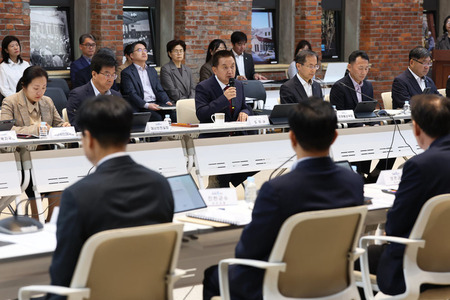
 ▲ 예관 신규식 선생 순국 100주년 기념 학술회의 장면(기념사업추진위원회 제공) (C) |
예관 선생은 편지를 마무리하며 “일에 대해 말하면 가슴이 아플 뿐”이라며 당시 복잡한 마음을 표현하기도 했다.
일제가 선생의 동향을 사찰한 극비문서 20여점도 눈길을 끌었다. 또 선생이 상하이 망명 당시 지참했던 당시 2000엔(현재 가치 추산액 3억원)으로 파악한 자료도 전시되었다.
예관신규식선생순국100주년기념사업추진위원회는 9월 23일 오후 2시에 충북미래여성플라자 문화이벤트홀에서 ‘한국독립운동과 신규식’을 대주제로 학술회의를 개최했다.
이번 학술회의에선 예관 선생이 단재 신채호 선생과 함께 설립한 것으로 알려진 문동학교(1901년)와 덕남사숙(1903년)의 설립연도를 1908년과 1914년으로 바로잡는다.
이에 덕남사숙은 두 인물이 망명한 이후 설립된 학교로 그들의 국내 행적에 대한 논의와 충북근대교육사 서술도 수정이 불가피할 것으로 보인다.
*글쓴이/신상구
충청문화역사연구소장, 국학박사, 시인, 향토사학자.
*아래는 위 기사를 '구글 번역'으로 번역한 영문 기사의 [전문]입니다. '구글번역'은 이해도를 높이기를 위해 노력하고 있습니다. 영문 번역에 오류가 있을 수 있음을 전제로 합니다.<*The following is [the full text] of the English article translated by 'Google Translate'. 'Google Translate' is working hard to improve understanding. It is assumed that there may be errors in the English translation.>
The life, achievements and commemoration project of the anti-Japanese independence activist and educator Yegwan Shin Ki-sik
-Shin Sang-gu, Ph.D.
1. The life and achievements of Ye-Kwan Shin-Sik
▲ Shin Sang-gu, Ph.D.
On September 25, 2022, to commemorate the 100th anniversary of the death of Ye-gwan Shin Ki-sik (申圭植), a memorial service and academic conference are being held, drawing attention from the media.
Shin Ki-sik, an educator and anti-Japanese independence activist, was born on January 13, 1879, in Inchar-ri, Gadeok-myeon, Sangsang-gu, Cheongju-si, Chungcheongbuk-do, as the second son of his father Shin Yong-woo and mother Jeonju Choi.
His father, Shin Yong-woo, served as a medical officer in the Chuo Won. His last names were Shinjeong (申檉), Shinseong (申誠), and Shinmokseong (申檠), and his surnames were Gongjip (public house), and his last names were Yegwan, Yeoseo, Ilmin, Ilmin, and Jiggong. ) and Koreans, the main building is from the Goryeongshin clan (高靈申氏).
▲ Father of the Provisional Government, Ye-gwan Shin Ki-sik
At that time, there were about 31 members of the Goryeong (Sandong) Shin clan who lived in Cheongju, including three geniuses of Joseon: Yegwan Shin Ki-sik, Danjae Shin Chae-ho, and Gyeongbu Shin Baek-woo. A patriot was born. All of them lived the lives of later anti-Japanese and republican independent revolutionaries.
As a child, Shin Ki-sik was born and raised in a relatively relaxed Confucian family, and studied Chinese studies.
He moved to Tokyo in 1895 and resided in Jeongseonbang-dong, Jungseon-dong, Hanseong-bu (now Unni-dong, Jongno-gu, Seoul). On April 20, 1896, he entered the government Chinese language school, where he studied Chinese, Korean history, and geography for three years.
On September 14, 1900, he entered the Military Academy, received military education, and graduated on September 20, 1903, working as an officer.
In 1905, he was promoted to the 6th rank, and in 1906 he was promoted to the 3rd rank. After that, while he was promoted to the position of Bubu (副 尉), he heard the news that the Eulsa Treaty was forcibly signed in his hometown in 1905.
He then attempted suicide by poisoning, but saved his life and instead lost sight in his right eye. Still, he participated in patriotic enlightenment groups such as the Korea Rehabilitation Association and the Korea Association, and established educational institutions such as the Middle East School, Bronze School, and Mundong School.
In 1909, he returned to Daejonggyo and ran a mine, but in 1910 he heard the news of Gyeongsulgukchi and tried to commit suicide again.
After exile to Shanghai, China, in 1911 While interacting with other countries, he joined the China Alliance, participated in the Xinhai Revolution in China as a Korean, and continued to fight for independence in China.
As a result of this relationship, the Provisional Government of the Republic of Korea that was later established was supported by Sun's Hobeop government and his successor, Chiang Kai-shek's Nationalist Party of China.
Military education was also encouraged, so that young Koreans were admitted to military schools in various parts of China.
In July 1912, he organized Dongjesa (同濟 社), meaning 'Dongju Mutual Aid' (同舟共濟), and led the republican independence revolution in general. He organized the Shina Dongjesa to build friendships with the Shinhae revolutionaries in the East Sea.
The new children's rites included President Baek Am, Park Eun-sik, Woosa Kim, Gyu-sik, Shin Chae-ho, Gyeongjung, Jo So-ang, Byeok-cho, Hong Myeong-hee, and Mongyang (夢阳) Yeo Woon-hyeong (呂運亨), Yoo Jeong (榴亭) Jo Dong-ho (趙東祜), and Sohae (宵海) Jang Geon-sang (張建相, aka 張明相4) joined the group.
In July 1917, they announced the Daedong Unity Declaration, a republican declaration of independence.
In 1918, prior to the end of World War I, US President Thomas Woodrow Wilson announced the 14 Articles of National Self-Determination and organized the New Korean Youth Party. In 1919, when the Provisional Government of the Republic of Korea was established, he took office as the Attorney General.
On November 3, 1921, he played a decisive role in gaining the approval and support of the Provisional Government from the Government of the Republic of China led by Sun Yuan. In 1922, due to internal disputes in the Provisional Government, a bill of no confidence in the president of Syngman Rhee (李承晩, first name: 李承龍) was passed in his absence.
As a result, he fasted for 25 days in the hospital and left a will to pray for independence. On August 10, 1993, his ashes were buried in Cemetery No. 8 of the Provisional Government Elements of the Seoul National Cemetery.
His books include 『Korean Soul』, a compilation of speeches made when Dongjesa was formed, and 『Amok Lu (兒目淚)』, a collection of poems from Yugoslavia. In 1962, he received the Presidential Medal of the Order of Merit for National Foundation from the Korean government.
With the 100th anniversary of the martyrdom commemoration and academic conference held as an opportunity, it is expected that the life and achievements of Kwan-Sik Kim will be widely known at home and abroad, and creatively inherited and developed.
2. Remembrance project and academic conference held by Yegwan Shin Shin-sik
To commemorate and inherit Yegwan's spirit of independence and unity, the Committee for Commemorating the 100th Anniversary of the Martyrdom of Ye-gwan Shin-sik held a memorial service and a special exhibition at Cheongnam University's Provisional Government Memorial Plaza on September 22 to commemorate the 100th anniversary of the death of Ye-gwan.
And the next day, an academic conference was held at the Future Women's Plaza in Chungbuk Province to illuminate the Korean spirit and independence movement of Mr.
The memorial ceremony was held at Cheongnam University’s Provisional Government Square in Cheongnam University, co-hosted by the 100th Anniversary Project Promotion Committee of Ye-gwan Shinsik and Cheongnam University.
Hwang Won-chae, head of the Daejeon Provincial Veterans Affairs Office, passed on the family relations department of Mr.
▲ Scene of the memorial ceremony for the 100th anniversary of the martyrdom of Yegwan Shin Shin-sik (Photo provided by Chungcheongbuk-do)
According to the Act on Respect for People of Independence Merit enacted in 2008, the Family Relations Department of Mr. Ye Gwan, who remained without loss after exile in Shanghai, was established by the Seoul Family Court based on the official records of the people of independence.
The commemoration ceremony was held in the following order: a tribute by Park Geol-soon, chairman of the promotion committee, a tribute by the guests, a performance by the Ilshin Girls' High School choir, and flowers.
The special exhibition to commemorate the 100th anniversary of Yegwan Shin Shin-sik’s 100th anniversary is composed of nine sections, including the life of Shin Kyu-sik and the independence movement, the independence activists from the Shandong (Goryeong) Shin clan, and the Chinese literature of Ye-gwan.
In the special exhibition, a picture taken with his wife Jo Jung-wan and reader Sang-ho was first published in the late 1910s. Four months before his death, he also presented a handwritten letter expressing his feelings to his son-in-law, Min Pil-ho.
In closing her letter, Ye-gwan also expressed her complicated mind at the time, saying, “Talking about work only hurts my heart.”
About 20 top secret documents from the Japanese imperialism examining the teacher's trends also drew attention. Also exhibited were materials that the teacher brought with him during his exile in Shanghai for 2,000 yen (currently estimated value of 300 million won).
The 100th Anniversary Commemorative Project for the 100th Anniversary of the Martyrdom of Teacher Ye-gwan Shin Gyu-sik held an academic conference with the main theme of ‘Korean Independence Movement and New Ceremony’ at 2 pm on September 23rd at the Cultural Event Hall of the Chungbuk Future Women’s Plaza.
At this conference, the establishment years of Mundong School (1901) and Deoknam Sasuk (1903), which are known to have been established by Ye-gwan together with Danjae Shin Chae-ho, are corrected to 1908 and 1914.
As a result, Deoknam Sasuk was established after the two men fled into exile, and it seems inevitable that the discussion of their domestic activities and the description of the history of modern education in North Chungcheong will be revised.
*Writer/Sanggu Shin
Director of Chungcheong Cultural History Research Institute, Doctor of National Studies, Poet, Local Historian.
원본 기사 보기:브레이크뉴스대전충청