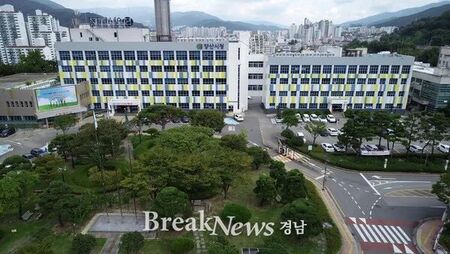
▲ 김건희 여사 의혹을 수사하는 민중기 특별검사팀이 통일교 압수수색에 들어간 18일 오후 경기 가평군 통일교 천원궁(아래부터), 천승전, 천정궁박물관 모습. 2025.07.18. ©뉴시스 |
정치권을 상대로 펼쳐진 통일교의 전방위적 금품 로비 정황에 대한 특검 도입 찬성 여론이 압도적인 것으로 집계됐다. 국민의힘 등 야권은 ‘통일교 특검’ 도입을 연일 강력 요구하고 있으나, 이에 대해 더불어민주당 지도부는 정치공세라며 반대하고 있다.
한국갤럽이 지난 16~18일 전국 만 18세 이상 남녀 1001명 대상 ‘통일교 특검 도입’ 관련 조사에서 62%가 '필요하다'고 응답했다. 반면 '필요 없다'는 응답은 22%에 그쳤다. 무려 세 배 가량 특검 도입에 찬성한 셈이다. '모름·응답 거절'은 16%였다.
이는 지역·성별·연령대·지지 정당 여부를 가리지 않고 특검 도입 필요성에 대한 공감대가 형성돼 있는 것으로 나타난다. 특히 더불어민주당 지지층에서도 특검 도입 찬성이 67%에 달했다. 여권 최대 지지기반인 광주·전라 지역 또한 62%가 찬성했다.
이를 연령대별로 보면 40대 76%, 30대 68%, 60대 63%, 50대 60%, 18세~20대 54%, 70세 이상 47% 순으로 찬성 비율이 높았다. 정치 성향별로는 보수층 61%, 진보층 67%, 중도층 65%를 보였다. 성별로는 남성 59%, 여성 64%가 찬성했다.
한편 국가보안법 존폐에 대해서는 '유지해야 한다'가 55%로, '폐지해야 한다'의 21%에 비해 두 배 이상 높았다. 국민의힘 지지층은 81%, 무당층은 66%가 유지 의견을 나타냈다. 더불어민주당 지지층에서는 '유지' 31%와 '폐지' 37%로 팽팽했다.
이러한 점은 지역과 연령대 등 전반에서 국가보안법 유지 찬성 응답이 높은 것으로 나타났다. 특히 18~29세에서 가장 높은 63%, 30대는 61%를 보였다. 광주·전라에서도 '유지' 응답이 45%로, '폐지' 응답 25%에 비해 두 배 가량 높았다.
향후 1년간 우리나라 경제 전망에 대해서는 '좋아질 것' 31%, '나빠질 것' 40%, '비슷할 것' 25%, '의견 유보' 4%였다. 전월 대비 낙관론은 9%p 줄어든 반면, 비관론은 5%p 늘어났다. 이재명 정권 경제정책 전반에 대한 불신이 높아진 것으로 풀이된다.
살림살이 전망도 전월에 비해 더 비관적인 것으로 집계됐다. 향후 1년간 살림살이에 대해 '좋아질 것' 22%, '나빠질 것' 28%, '비슷할 것' 48%였다. 이재명 정권 출범 직후인 지난 6월에 가장 긍정적인 수치를 기록했으나 8월부터는 꺾이는 추세다.
한국갤럽은 이와 관련 "살림살이 전망은 경기 전망보다 변동성이 작은 편이다"고 전제하는 가운데 "집값·환율 불안정, 고금리·고물가 현상이 지속돼 개개인 일상생활에서는 뚜렷한 변화를 체감하기 어려운 탓으로 짐작된다"고 밝혔다.
해당 여론조사는 무작위 추출된 무선전화 가상번호를 이용한 전화 조사원 인터뷰 방식으로 진행됐다. 표본오차는 95% 신뢰수준에 ±3.1%p, 응답률 10.8%다. 자세한 내용은 한국갤럽 및 중앙선거여론조사심의위원회 홈페이지를 참조하면 된다.
* 필자 : 정성태(시인/칼럼니스트)
*아래는 위 기사를 '구글 번역'으로 번역한 영문 기사의 [전문]입니다. '구글번역'은 이해도 높이기를 위해 노력하고 있습니다. 영문 번역에 오류가 있을 수 있음을 전제로 합니다.<*The following is [the full text] of the English article translated by 'Google Translate'. 'Google Translate' is working hard to improve understanding. It is assumed that there may be errors in the English translation.>
Public opinion overwhelmingly supports the introduction of a special prosecutor into the Unification Church's extensive lobbying of politicians, a survey shows. The People Power Party and other opposition parties have been strongly demanding the introduction of a special prosecutor, but the leadership of the Democratic Party of Korea has opposed this, calling it a political offensive.
In a Gallup Korea survey conducted from the 16th to the 18th, 62% of 1,001 men and women aged 18 and older nationwide said the special prosecutor was necessary. Conversely, only 22% said it was not necessary. This represents a staggering threefold increase in support for the special prosecutor. Only 16% responded that they did not know or declined to answer.
This indicates a broad consensus on the need for a special prosecutor, regardless of region, gender, age, or political affiliation. Notably, 67% of Democratic Party supporters supported the special prosecutor. 62% of respondents in the Gwangju and Jeolla regions, the largest support base for the ruling party, also supported the special prosecutor.
By age group, support was highest among those in their 40s (76%), followed by those in their 30s (68%), those in their 60s (63%), those in their 50s (60%), those in their 18s and 20s (54%), and those aged 70 and older (47%). By political affiliation, support was highest among conservatives (61%), progressives (67%), and moderates (65%). By gender, 59% of men and 64% of women supported the bill.
Meanwhile, 55% of respondents supported maintaining the National Security Act, more than double the 21% who supported its abolition. 81% of People Power Party supporters and 66% of independents supported maintaining it. Among Democratic Party supporters, the vote was evenly split, with 31% supporting maintaining it and 37% supporting its abolition.
This finding reflects the high support for maintaining the National Security Act across all regions and age groups. The rate was particularly high among those aged 18-29, at 63%, and among those in their 30s, at 61%. In Gwangju and Jeolla Province, the "maintain" response was 45%, nearly double the 25% who "abolished" it.
Regarding the outlook for Korea's economy over the next year, 31% said it would "improve," 40% said it would "worse," 25% said it would "remain similar," and 4% said they were "undecided." Compared to the previous month, optimism decreased by 9 percentage points, while pessimism increased by 5 percentage points. This suggests a growing distrust in the Lee Jae-myung administration's overall economic policies.
The outlook for financial well-being was also found to be more pessimistic than the previous month. 22% said it would "improve," 28% said it would "worse," and 48% said it would "remain similar." The survey reached its highest level in June, shortly after the Lee Jae-myung administration took office, but has been declining since August.
Gallup Korea stated, "The outlook for living conditions is less volatile than the economic outlook," and added, "This is likely due to the continued instability of housing prices and exchange rates, as well as high interest rates and inflation, making it difficult to perceive significant changes in individuals' daily lives."
The survey was conducted via telephone interviews using randomly selected mobile phone numbers. The margin of error is ±3.1 percentage points at a 95% confidence level, and the response rate is 10.8%. For more information, please refer to the websites of Gallup Korea and the National Election Survey Deliberation Commission.
* Author: Jeong Seong-tae (Poet/Columnist)