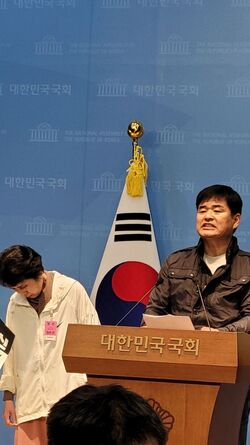
▲ 국가철도공단 양근율 미래전략연구원장이 KTCS-3 통합실험실 개소식에서 축사를 하고 있다.[사진=국가철도공단] (C) 김환일 |
국가철도공단이 차세대 열차제어시스템 선로변 인프라 구축을 마무리하고 현차시험에 나선다.
현차시험은 실제 차량을 이용해 속도향상을 위한 시험이나 새로운 기능을 확인하는 시험이다.
철도공단은 20일 차세대 열차제어시스템*(이하 KTCS-3) 통합시험실 개소식을 갖고 현차시험에 들어갔다.
공단은 차세대 열차제어시스템을 국가R&D 과제로 설정하고 지난 2018년부터 2020년까지 3년에 걸쳐 지상장치(RBC)와 차상장치(KVC)를 개발했다.
지난해부터는 통합시험을 위한 시험실을 구축하고 올해부터 2024년 말까지 본격적인 성능 검증을 추진한다.
KTCS-3의 성능검증은 통합시험설비를 이용한 시뮬레이션 시험과 유럽 공인시험기관의 통합시험 결과검증을 통해 적합 유무를 확인하고 실제 차량으로 현장에서 시험하는 과정 순으로 진행된다.
공단은 KTCS-3가 궤도회로를 이용하지 않는 이동폐색방식기반으로 개발됨에 따라 신호설비를 최소화 할 수 있어 건설비용 및 유지보수비 감축 등 경제적 효과가 클 것으로 기대했다.
특히, 기존의 일반·고속철도 등 국가철도망에 없는 자동운전기능이 있어 휴먼에러 예방과 정시성 확보에 크게 기여할 것으로 예상했다.
국가철도공단 김한영 이사장은 “KTCS-3는 KTCS-2와 함께 향후 한국을 대표하는 K-철도신호시스템으로 브랜드화 될 것으로 기대된다.”며, “앞으로도 철도신호시스템 기술을 주도하여 세계시장을 선점하기 위해 노력하겠다.”고 말했다.
*아래는 위 기사를 '구글 번역'으로 번역한 영문 기사의 [전문]입니다. '구글번역'은 이해도를 높이기를 위해 노력하고 있습니다. 영문 번역에 오류가 있을 수 있음을 전제로 합니다.<*The following is [the full text] of the English article translated by 'Google Translate'. 'Google Translate' is working hard to improve understanding. It is assumed that there may be errors in the English translation.>
[Next-generation train control system, start performance verification
National Railroad Authority, field application test of train control system capable of automatic operation]
The National Railroad Authority is completing the construction of the next-generation train control system trackside infrastructure and is going to test the current vehicle.
The current vehicle test is a test to improve speed or to check new functions using an actual vehicle.
On the 20th, Korea Railroad Corporation held an opening ceremony for the next-generation train control system* (hereafter referred to as KTCS-3) integrated test room and started testing the current vehicle.
The corporation set the next-generation train control system as a national R&D task and developed ground device (RBC) and onboard device (KVC) over three years from 2018 to 2020.
From last year, a laboratory for integrated testing will be established, and performance verification will be carried out in earnest from this year to the end of 2024.
The performance verification of the KTCS-3 proceeds in the order of checking conformity through simulation tests using integrated test facilities and integrated test result verification by European accredited test institutes, and then testing on site with actual vehicles.
As KTCS-3 was developed based on a mobile blockage method that does not use track circuits, the corporation expected that signal facilities could be minimized, resulting in significant economic effects such as reduction in construction and maintenance costs.
In particular, it is expected that it will greatly contribute to preventing human errors and securing punctuality as it has an automatic driving function that is not found in the national railway network, such as existing general and high-speed railways.
“KTCS-3, along with KTCS-2, is expected to be branded as Korea’s representative K-rail signal system in the future,” said Kim Han-young, chairman of the National Railroad Corporation. I will work hard for it,” he said.
원본 기사 보기:브레이크뉴스대전충청